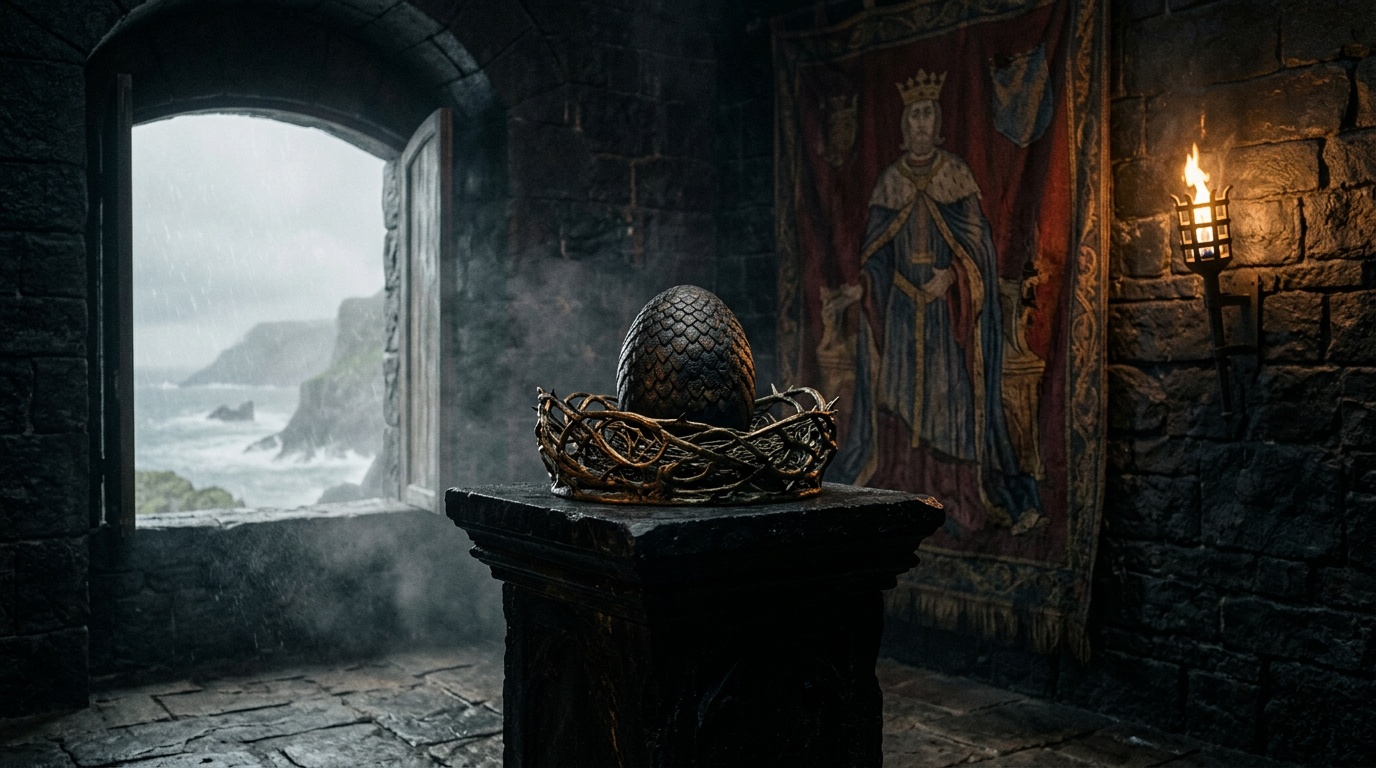
Dragon Eggs Sent to Pentos as Dynastic Failsafe
THE ARGUMENT
Rhaenyra has already run the losing scenario to its end, and the Pentos mission is what that conclusion looks like in practice: she is moving irreplaceable dynastic assets beyond the reach of any Westerosi outcome and installing a bonded Targaryen rider there by promising Rhaena a hatchling. The offer to Rhaena has no military value in the current war. It only makes sense as an appointment designed to function after Rhaenyra is gone.
How This Theory Works
The structure of the Pentos mission makes its purpose hard to argue away. Rhaenyra sends multiple dragon eggs out of Westeros entirely, explicitly framing the dispersal as deliberate risk management rather than routine caution. She is not hedging. She is removing her most irreplaceable dynastic assets from any outcome the Dance can produce. A queen who believed she was going to win would not do that. A queen who had privately concluded she might not would do exactly that.
The promise to Rhaena is where the strategy becomes specific. Rhaena has no dragon, which is the stated reason she cannot contribute to the war effort. Rhaenyra's solution is to tell her she may bond whichever egg hatches in Pentos. That is not consolation. A Targaryen with blood and bond, positioned abroad, outside the reach of the conflict entirely, is a rider installed for a purpose that has nothing to do with the current war. It has obvious purpose in a war that has already been lost.
Rhaenyra's pattern of restraint at the Black Council fits the same interior logic. She refuses to commit dragons offensively, citing the risk of losing them. That restraint is most commonly read as caution, but it is caution in service of a specific horizon. She has been entrusted with Aegon the Conqueror's prophecy, which frames the survival of dragons as an obligation that outlasts any single claimant. That mandate does not tell her how to win the Dance. It tells her what must survive it. The Pentos eggs are where that obligation becomes operational rather than abstract.
This also sharpens what the Dragonkeeper seedings from earlier in the conflict were doing. Those eggs were positioned to produce bonded riders for a prolonged war within Westeros. The Pentos arrangement is different in kind, not degree. It removes eggs from Westeros entirely, places them beyond the reach of any Westerosi outcome, and assigns a keeper whose bond would make her a Targaryen claimant entirely outside the Dance's logic. That is not the same strategy extended further. It is the strategy that activates when the first one fails.
The sharpest implication is this: Rhaena, bonded and abroad, is not a contingency Rhaenyra invented under pressure. She is the heir the war cannot reach, appointed quietly by a queen who understood before anyone around her admitted it that the Targaryen line might have to be picked up somewhere other than Westeros. The gap between the confidence Rhaenyra projects to her council and what she is arranging in Pentos is not a contradiction. It is the most honest thing she does in the entire conflict.
Is this theory convincing?
Key Evidence
Dragon Eggs Dispatched to Pentos
Rhaenyra sends multiple dragon eggs with Rhaena to Pentos alongside her younger sons, physically removing them from the theater of war.
Rhaena Promised a Dragon Bond
Rhaenyra tells Rhaena she may keep and bond whichever egg hatches, effectively installing a Targaryen dragonrider in Pentos outside Westeros.
Eggs Spread Against Single-Point Loss
Rhaenyra's reasoning explicitly includes not keeping all her strategic assets concentrated in one place, framing dispersal as deliberate risk management rather than routine caution.
Rhaena's Dragonless Status as Rationale
Rhaenyra acknowledges she is sending Rhaena because Rhaena has no dragon and cannot contribute to the war, which makes the promise of a hatchling bond in Pentos a pointed structural appointment.
Rhaenyra's Pattern of Restraint
At the Black Council, Rhaenyra refuses to deploy dragons offensively, citing the risk of losing them entirely, a posture consistent with treating dragon preservation as a long-term dynastic obligation rather than a near-term military tool.
This theory was evaluated using Theory Atlas editorial standards, including evidence review, narrative fit, and competing interpretation analysis. Learn how Theory Atlas evaluates theories →
Other Theories for S2E03

Harrenhal Selects for Fire, Processes Through Alys, and Destroys Through Recognition
Harrenhal operates as a three-stage trap: it admits claimants through fire as a structural criterion, uses Alys Rivers as its active processing mechanism to engineer the psychological sequence that follows, and delivers its killing blow not through spectral violence but through the one confrontation Daemon has organized his entire life to avoid.
Larys Manufactured the Threat He Sold Aegon
Larys Strong manufactured the council conspiracy rumor he presented to Aegon as a warning, engineering the very threat he claimed to be exposing in order to secure the Master of Whisperers appointment that now gives him control over the king's entire information supply.
The Meeting Rhaenyra Is Engineering Is the One Alicent Cannot Survive Without a Confession
Rhaenyra is quietly protecting a direct approach to Alicent from her own council, drawn to it not by strategic logic but by unresolved guilt over a false oath sworn at the most vulnerable moment of their friendship.
A Local Feud Ignites the Dance of Dragons
The Dance of Dragons does not spread through the Riverlands by royal command but through feudal hatreds that use the succession crisis as permission to activate.
Simon Strong's 'Prince' Is a Power Move
Ser Simon Strong's repeated use of 'my Prince' instead of 'Your Grace' is a calculated refusal to recognize Daemon's kingship, not an old man's oversight.
Rhaena's Four Eggs Become Daenerys's Three
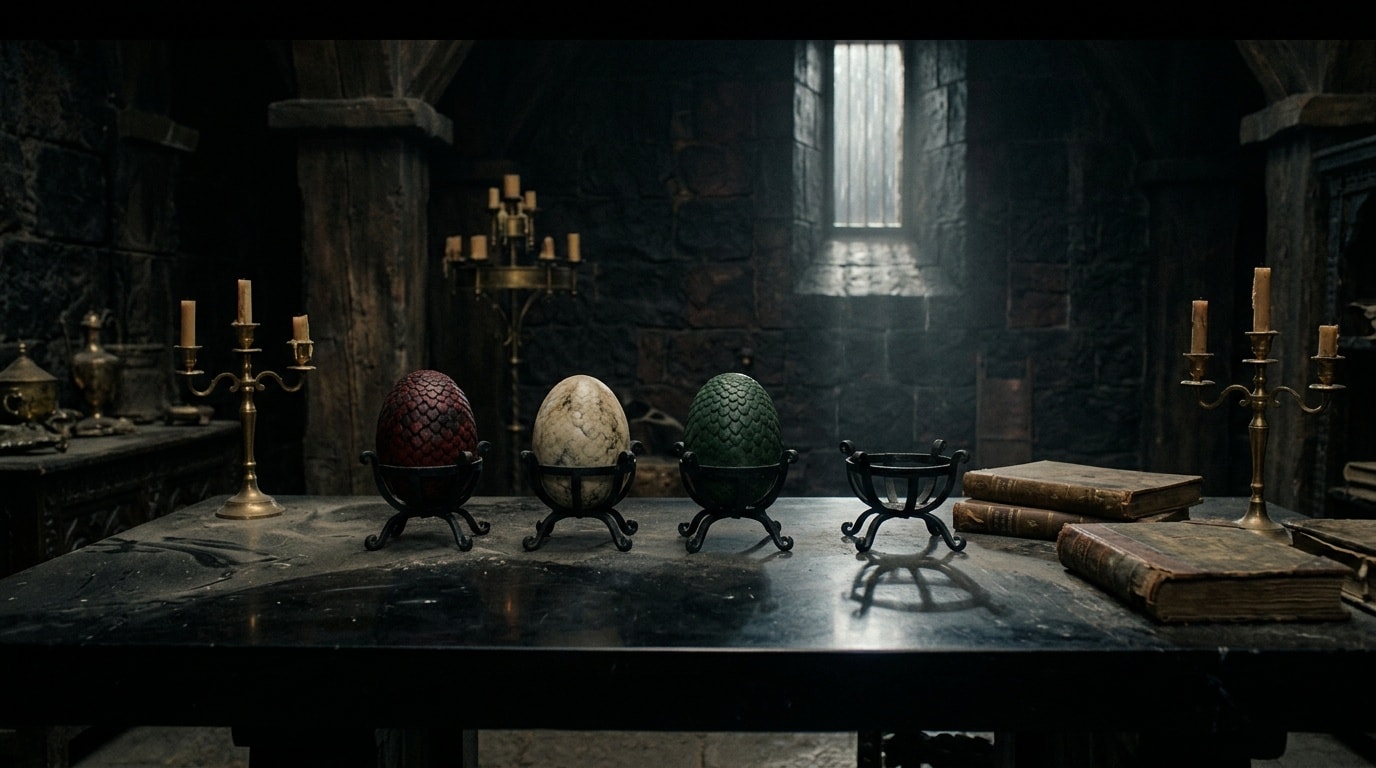
The four dragon eggs Rhaenyra sends with Rhaena to Pentos are the same clutch that hatches into Drogon, Viserion, and Rhaegal at Daenerys Targaryen's wedding, with one egg lost somewhere in the intervening two centuries.