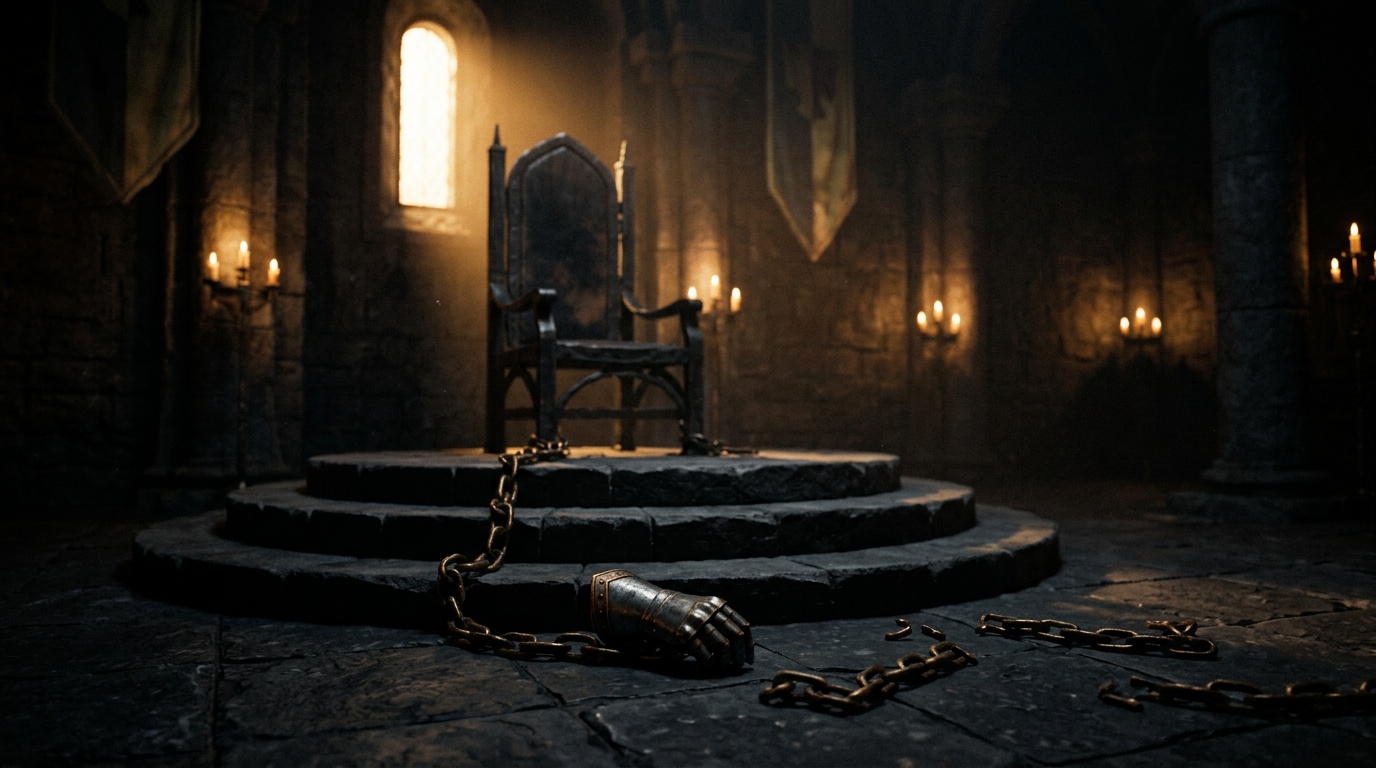
Jace's Last Order Doomed the Black Fleet
THE ARGUMENT
Jacaerys's order to lock Rhaenyra in her chambers was an unauthorized transfer of command authority executed through a named knight, leaving the Black fleet without sovereign direction at the Battle of the Gullet. The show confirms the order, names its executor, and then delivers catastrophe, stopping just short of closing the causal link between the two. If that link holds, the Black fleet was destroyed by a command vacuum Rhaenyra's own heir created and her own knight enforced.
How This Theory Works
A son who issues a command through a named knight to physically confine his mother, the reigning queen, has executed a transfer of command authority without sanction, in the middle of a war, at the moment of maximum consequence. The show confirms the order, names the executor, and then delivers a catastrophe. It stops short of closing the causal link, and that restraint is doing real argumentative work.
Ser Lorent Marbrand is the detail that carries the most weight. His presence names the chain of command that bypassed the queen. Jace did not plead or persuade. He issued an order, someone obeyed it, and Rhaenyra was physically prevented from exercising her authority as commanding monarch. That is institutional circumvention, and the show has introduced a named agent of the lock order without giving that agent any further narrative function. His purpose, structurally, is to establish that what happened was formal and enforceable. He exists to show this was a sanctioned enforcement action, not a son's desperate gesture that happened to succeed.
Rhaenyra's own stated desire to go makes her removal unambiguous. Before being locked away, she explicitly wanted to command at the Gullet. Her absence was imposed, and the show takes care to establish that before showing the fleet's destruction. The sequential structure matters: no intervening scene establishes an alternative cause for the catastrophe. The disaster follows directly from the removal, and the editing declines to fill the space between them with any other explanation. That structural choice quietly implicates the lock order without the show ever stating the implication aloud.
What Rhaenyra is left with, when she stands over Jace's body and asks what happened at the Gullet, is a question the show frames as unanswered within the narrative. The cause of the disaster remains unresolved. That openness is the argument. A queen who was locked away by her own heir and then watched her navy destroyed carries a specific kind of grief: loss compounded by the unresolvable possibility that her removal from command was the proximate condition of the catastrophe, issued by the very person whose death she is now mourning. The show withholds the answer she would need to be certain either way, and that withholding keeps the causal accusation alive without the narrative having to state it.
Is this theory convincing?
Key Evidence
Rhaenyra Locked from Battle Command
Jacaerys's final act before the Battle of the Gullet was to order Rhaenyra locked in her chambers, physically preventing her from commanding the fleet during the engagement.
Ser Lorent Marbrand Executes Lock Order
Ser Lorent Marbrand is specifically identified as the knight who carried out Jacaerys's last order, establishing a named chain of command that bypassed the queen's authority.
Rhaenyra's Question Over Jace's Body
When Rhaenyra encounters Jace's body, she asks what happened at the Gullet, a question the show frames as unanswered, implying the cause of the disaster remains unresolved within the narrative.
Rhaenyra's Stated Desire to Command
Before being locked away, Rhaenyra explicitly wanted to go to battle, establishing that her absence was not voluntary but imposed by her own son's order.
Gullet Disaster Follows Lock Sequentially
The Battle of the Gullet's catastrophic outcome for the Black fleet follows immediately after Rhaenyra's removal from command, with no intervening scene establishing an alternative cause.
This theory was evaluated using Theory Atlas editorial standards, including evidence review, narrative fit, and competing interpretation analysis. Learn how Theory Atlas evaluates theories →
Other Theories for S3E02
Grief Makes Rhaenyra Cross the Final Line
Rhaenyra took King's Landing as a mother shattered by grief, and the execution of Otto Hightower, performed while she wept openly, was the first life she had ever personally taken.

Otto Hightower Was Left Alive on Purpose, and the Execution Was Staged Before the Wrong Audience
Larys Strong left Otto Hightower alive in the Red Keep dungeons as what may have been a calculated act of sabotage timed to detonate Rhaenyra's alliance with Alicent at its first test.
Otto's Death Breaks the Deal Permanently
Alicent almost certainly reads Otto's execution as confirmation that Rhaenyra held him prisoner throughout their negotiations, staging his death as a public demonstration of power.
Rhaena Rode Sheepstealer and Lost Jace
Rhaena rode Sheepstealer at the Battle of the Gullet, lost control of the dragon under combat pressure, and bears direct responsibility for Jace's death as a consequence.
Alys Rivers Already Knew Aemond Was Coming
Alys Rivers used Daemon's presence at Harrenhal as a step in a sequence she had already mapped, extracting what she needed from his visit and discarding him the moment he served his purpose.