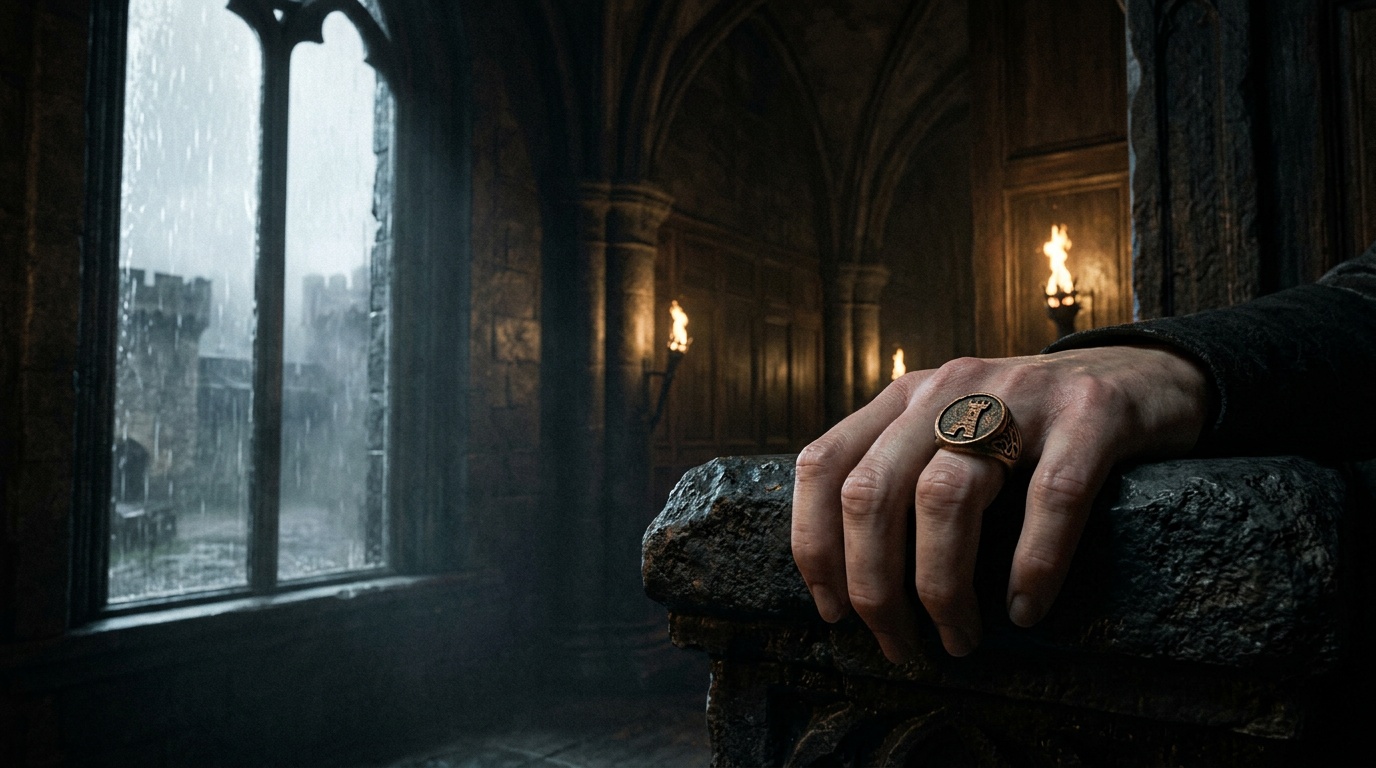
Otto's Death Breaks the Deal Permanently
THE ARGUMENT
Alicent almost certainly reads Otto's execution as confirmation that Rhaenyra held him prisoner throughout their negotiations, staging his death as a public demonstration of power. The show withholds Alicent's spoken conclusion deliberately, leaving that suspicion to harden in silence. If it has hardened, the peace agreement is already void in Alicent's mind, and the season's real question is what she does when a belief she cannot voice and cannot act on finally breaks through.
How This Theory Works
The central unconfirmed claim is that Alicent now believes Rhaenyra held Otto prisoner all along, treating his execution as a premeditated political display. If that reading is correct, the agreement the two women struck has been voided in Alicent's mind before it can be tested, and every future concession Rhaenyra makes will pass through that suspicion like light through a distorting lens.
The visual grammar of the throne room encodes this reading directly. When soldiers bring Alicent and Helaena in, Alicent's gaze goes immediately to her father's body on the floor before rising to find Rhaenyra seated on the throne. The show presents this without dialogue, giving us the sequence and letting it sit. Her eyes tell us the order in which she is processing what happened: first the corpse, then the woman who permitted it. When the two finally make eye contact across that distance, neither speaks. The show withholds Alicent's spoken interpretation deliberately, leaving her conclusion structurally open for the rest of the season. That silence is the pivot point of the theory. It is the moment Alicent decides what she believes, and the audience is denied the right to dismiss whatever she has concluded.
The question of Rhaenyra's own agency in the killing presses the theory harder. Accounts of the scene emphasize that Rhaenyra did not want to execute Otto but felt compelled to, because everyone in the room was watching and her authority required immediate, legible demonstration. That framing describes a political act performed under the cover of reluctance, and Alicent is perceptive enough to read it that way. Whether or not Rhaenyra knew Otto was imprisoned there when she agreed to negotiate, the optics confirm every suspicion Alicent carried into the arrangement. A deal made to end bloodshed now has a corpse at its center. The friendship, always fractured along the original fault line of Viserys's choice, now has a body literally between the two women who were supposed to have ended things.
Alicent's position as an intercepted escapee sharpens the bind further. She and Helaena attempted to leave King's Landing before being captured and returned to the throne room, which means they witnessed the execution as prisoners. Their presence there was coerced. This matters because it strips away any pretense that Alicent's continued compliance represents something chosen. From the moment she is brought back into that room and made to watch, her cooperation exists under compulsion, and she knows it.
The deeper trap is structural. If Alicent believes the negotiation was staged, she cannot say so openly without confessing that she was credulous enough to walk into it. She cannot act on it without violating an agreement she entered publicly. That bind is functionally worse than open conflict would have been. Rhaenyra has not only killed Otto; from Alicent's perspective, she has removed the one person in King's Landing who would have helped Alicent think her way clear of precisely this kind of encirclement. Every act of cooperation Alicent performs under the agreement becomes, in her own accounting, either evidence of her captivity or evidence of her complicity in something she finds monstrous. The show has built a character who finds that distinction unbearable, which suggests the agreement does not end in an open confrontation. It corrodes from within Alicent, and the season's central pressure is what happens when that corrosion reaches the surface.
The image of Rhaenyra reflected in the gathering pool of Otto's blood on the throne room floor makes the thematic argument explicit: sitting the throne and keeping your word operate under incompatible logics. The peace arrangement collapsed at first contact with actual power, undone by the throne room's own rules, which converted a political necessity into a personal wound. That image is the show's own commentary on the deal's viability, and it lands before either woman has spoken a word about what comes next.
Is this theory convincing?
Key Evidence
Alicent's Eyes Find Otto First
When soldiers bring Alicent and Helaena into the throne room, Alicent's gaze goes immediately to her father's body on the floor before rising to find Rhaenyra seated on the throne, a visual sequence the show presents without dialogue to let the weight of the discovery register.
The Silent Exchange Across the Corpse
Neither Alicent nor Rhaenyra speaks during their final eye contact in the throne room, a deliberate withholding that leaves Alicent's interpretation of the execution unconfirmed and structurally open for the rest of the season.
Rhaenyra's Reluctant Political Execution
Accounts of the scene emphasize that Rhaenyra did not want to execute Otto but felt compelled to because everyone in the room was watching and her authority needed immediate demonstration, framing the act as political necessity rather than personal intention.
Alicent's Ambiguity About Otto's Imprisonment
Alicent cannot determine whether Rhaenyra kept Otto prisoner throughout their negotiations specifically to stage a public execution upon taking the throne, which reframes the entire agreement as a possible trap.
Escape Attempt Captured Before Witnessing Death
Alicent and Helaena's attempt to leave King's Landing fails when they are intercepted and brought back into the throne room, meaning they witness the execution as prisoners rather than as parties to the agreement, adding a layer of coercion to their already compromised position.
Peace Agreement Built on Proximity to Violence
The arrangement Alicent made with Rhaenyra collapses at first contact with actual power, as Rhaenyra reflected in the gathering pool of her father's blood represents the impossibility of any agreement surviving the throne room's logic.
This theory was evaluated using Theory Atlas editorial standards, including evidence review, narrative fit, and competing interpretation analysis. Learn how Theory Atlas evaluates theories →
Other Theories for S3E02
Grief Makes Rhaenyra Cross the Final Line
Rhaenyra took King's Landing as a mother shattered by grief, and the execution of Otto Hightower, performed while she wept openly, was the first life she had ever personally taken.
Otto Hightower Was Left Alive on Purpose, and the Execution Was Staged Before the Wrong Audience
Larys Strong left Otto Hightower alive in the Red Keep dungeons as what may have been a calculated act of sabotage timed to detonate Rhaenyra's alliance with Alicent at its first test.
Jace's Last Order Doomed the Black Fleet
Jacaerys's order to lock Rhaenyra in her chambers was an unauthorized transfer of command authority executed through a named knight, leaving the Black fleet without sovereign direction at the Battle of the Gullet.
Rhaena Rode Sheepstealer and Lost Jace
Rhaena rode Sheepstealer at the Battle of the Gullet, lost control of the dragon under combat pressure, and bears direct responsibility for Jace's death as a consequence.
Alys Rivers Already Knew Aemond Was Coming
Alys Rivers used Daemon's presence at Harrenhal as a step in a sequence she had already mapped, extracting what she needed from his visit and discarding him the moment he served his purpose.