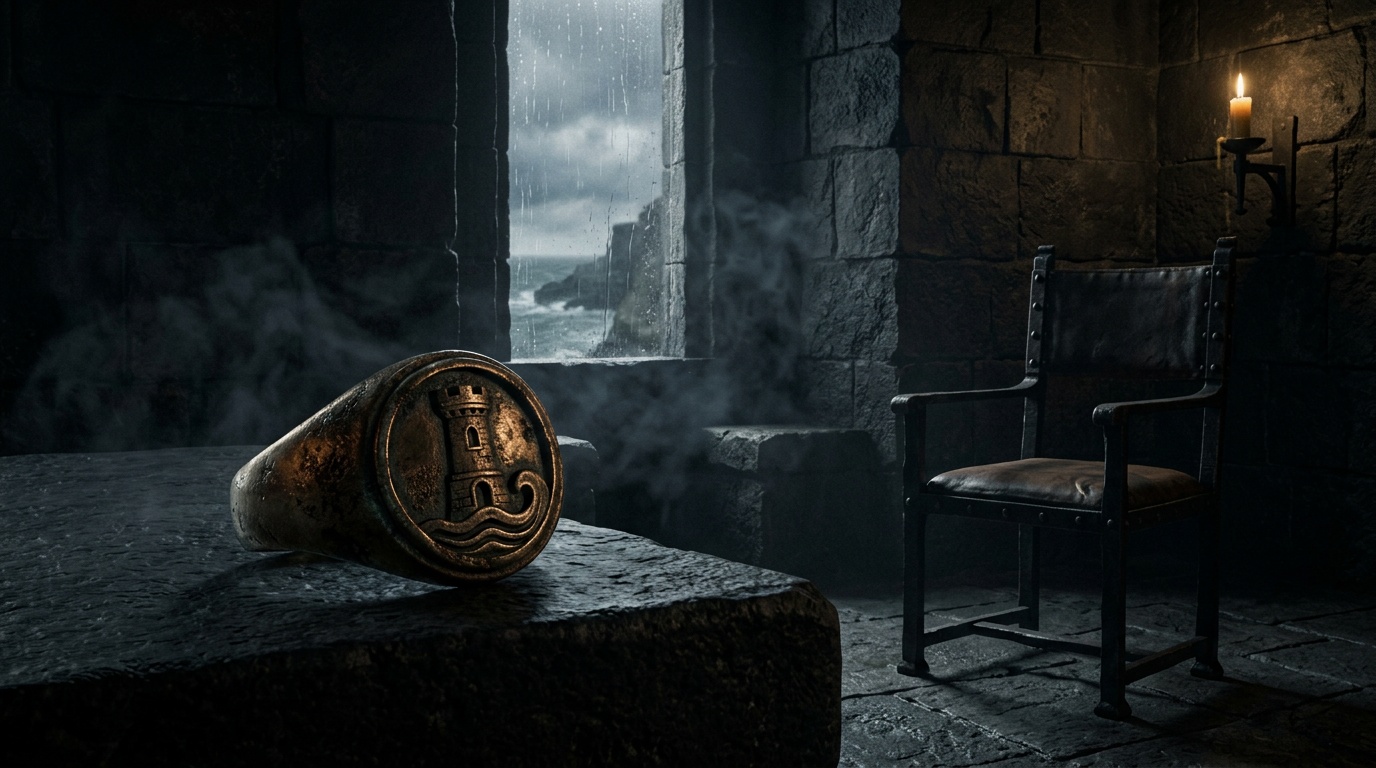
Ormund Took Corlys Alive on Purpose
THE ARGUMENT
Ormund Hightower engineered the ambush on Corlys Velaryon to take him alive as a political asset, and the show's visual grammar is built entirely around a capture. The camera withholds any confirmed killing blow, the attackers close in and surround him without landing a killing strike, and Ormund's earlier dialogue frames Corlys as a prize worth more alive than dead. If the theory holds, Rhaenyra has lost her most capable commander and Hand to an enemy who has already calculated exactly what Corlys is worth as leverage.
How This Theory Works
Ormund Hightower's ambush on Corlys Velaryon was a deliberate capture operation, and the show has withheld the one visual confirmation that would close the question: a killing blow landing on Corlys himself. The camera pulls wide and cuts before any decisive strike, a framing choice the show does not make when it intends death to be read as confirmed. The attackers swarm and surround Corlys, closing around him without landing a killing blow, consistent with orders to take him alive. The final shot places Ser Jon Roxton watching Corlys from a distance, holding position over him as a captive under guard. That is the visual grammar of oversight. The motive sits in Ormund's own dialogue earlier in the episode. He praises Corlys's 'soundness of breeding' and singles him out as one of the few sound decisions Rhaenyra has made in the war. Ormund is assessing Corlys as a prize: a man he respects, whom Rhaenyra depends on, and whose capture would simultaneously gut her war council and hand Daeron's cause a figure of enormous legitimacy. The specific question the evidence raises is this: what standing order, if any, did Ormund give Roxton before the ambush, and does the show intend to answer it by showing Roxton receive a command the audience never heard? That gap is the hinge. If Roxton was acting on prior instructions, the capture was premeditated, and Ormund's praise of Corlys becomes reconnaissance dressed up as admiration. The timing reinforces the logic. Rhaenyra sent assassins disguised as Baratheon envoys to kill Ormund and Daeron; Gwayne exposed and killed them. Ormund's counterstrike against Corlys follows immediately in the same episode. This is retaliation calibrated to wound without burning, consistent with the strategy Ormund has described all season. A dead Corlys is a martyr and a provocation. A captive Corlys is leverage, a potential defector whose name alone would shake loose hesitant houses. Ormund said the patient hunter gets the kill. Corlys Velaryon, alive in Hightower hands, is the kill.
Is this theory convincing?
Key Evidence
Camera cuts before killing blow
The show pulls to a wide shot behind Corlys as he is grabbed and swarmed, cutting away before any decisive strike lands, leaving his fate visually unconfirmed.
Attackers surround rather than strike
Multiple assailants swarm Corlys and his troops in a manner consistent with a capture order, with no confirmed depiction of a killing blow against Corlys himself.
Ormund praises Corlys as Rhaenyra's best choice
Ormund tells Daeron that appointing Corlys Velaryon as Hand was one of Rhaenyra's rare sound decisions, singling out his breeding and capability in a way that frames Corlys as a valued quantity.
Tit-for-tat assassination exchange
Rhaenyra sends assassins disguised as Baratheon envoys to kill Ormund and Daeron; Gwayne exposes them and kills them, and Ormund's counterstrike against Corlys follows immediately in the same episode.
Jon Roxton observing Corlys offscreen
The final shot places Ser Jon Roxton, Ormund's lieutenant, watching Corlys from a distance rather than moving to execute him, which is consistent with overseeing a capture.
Ormund's patient hunter philosophy
Ormund explicitly tells Gwayne that the patient hunter gets the kill, framing his entire strategy as calibrated and deliberate, which supports the reading that his move against Corlys was planned to achieve a specific outcome.
This theory was evaluated using Theory Atlas editorial standards, including evidence review, narrative fit, and competing interpretation analysis. Learn how Theory Atlas evaluates theories →
Other Theories for S3E06
Rhaenyra Sends Alicent to Kill Her Son
Rhaenyra has dispatched Alicent to Harrenhal with an unspoken mandate to reach Aemond through the one vector no soldier can replicate: a mother's access.
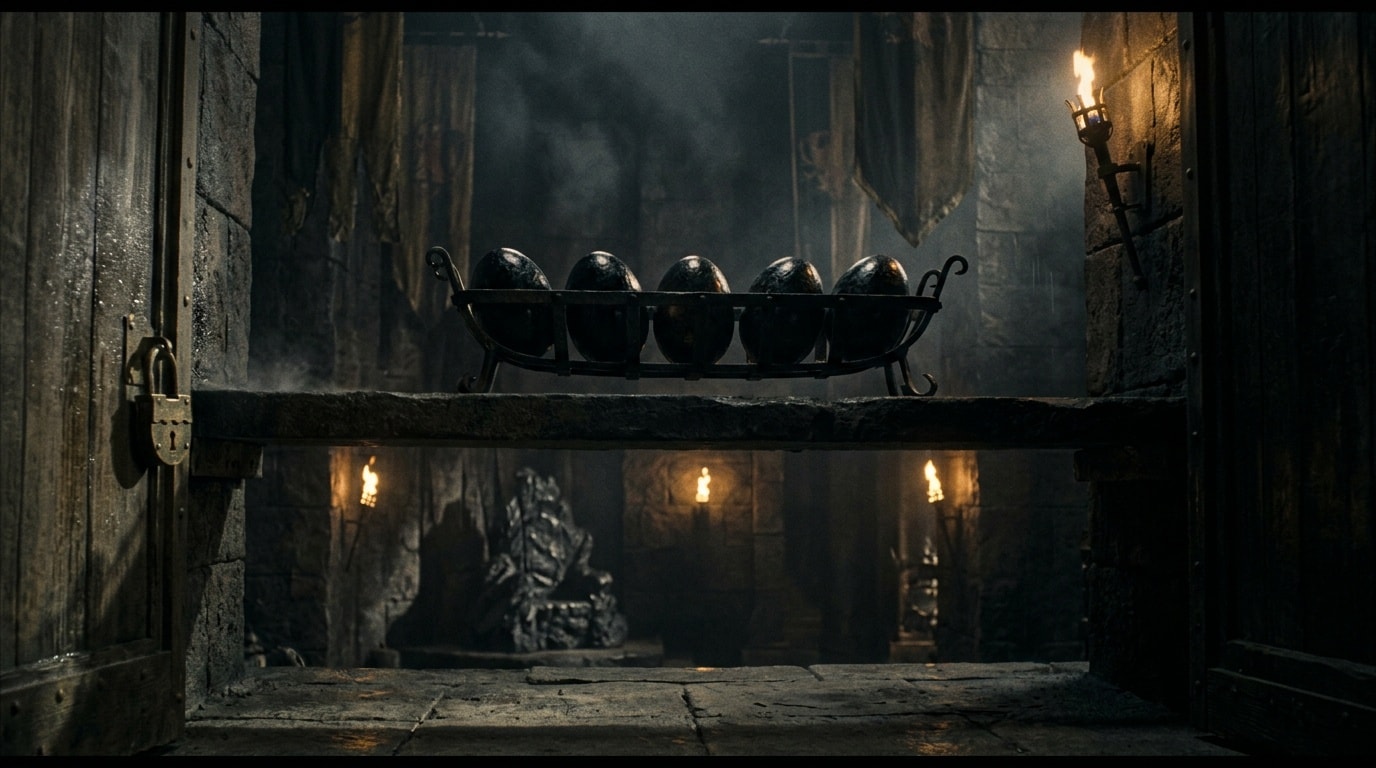
Alys Rivers Is Building a Rival Dynasty
Alys Rivers has been engineering a specific kind of captivity for Aemond at Harrenhal: one built from his own need to be chosen rather than tolerated, with five dragon eggs as the physical proof that she alone prepared a future for him.
The Assassin's Warning Points Inward
The 'kicked dog' message taken from the Tumbleton assassin is addressed to Rhaenyra about her own conduct, and she is already enacting it.

Gwayne's Eye Opens Daeron's
Daeron's trust in Ormund is functionally broken: the assassination scene gave him visible, undeniable proof that the man whose judgment he has been forced to treat as law can be fooled where others cannot.
Daemon Is Losing Faith in Rhaenyra
The distinction that determines what kind of break is coming is this: Daemon's faith is faltering in his own indispensability to Rhaenyra, a separate wound from any doubt in her cause.
Mysaria Runs a Systematic Opacity Campaign
Mysaria is running a deliberate strategy of unauditability against Rhaenyra: withholding the escape attempt, eliminating the only witness to her handling of it, and denying foreknowledge of Helaena's pregnancy afterward.
The Throne Has Already Condemned Her
House of the Dragon is staging Rhaenyra's throne-cuts to produce the exact visual record that Fire and Blood will later call prophecy, with the audience watching the legend being manufactured in real time.
Cole Dies the Death He Dealt Jace
House of the Dragon is encoding moral verdicts at the level of structure, and Criston Cole's arrow death is one of them.