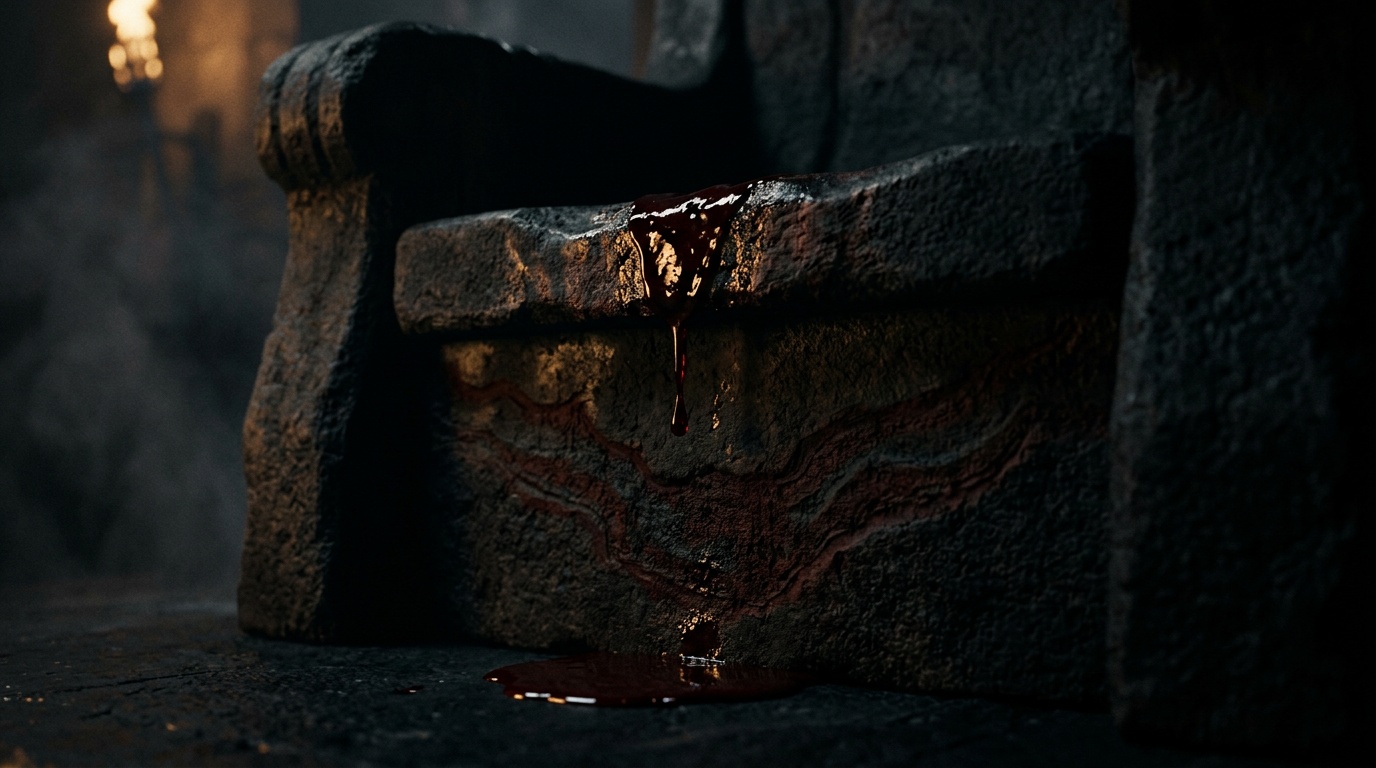
The Throne Has Already Condemned Her
THE ARGUMENT
House of the Dragon is staging Rhaenyra's throne-cuts to produce the exact visual record that Fire and Blood will later call prophecy, with the audience watching the legend being manufactured in real time. The unconfirmed claim is that the show's choreography of silence, blood, and witness is consciously generating its source chronicle on screen, so that what we watch as present-tense crisis is the raw material that hardens, through retelling, into omen. The doom is not foreshadowed. It is being authored.
How This Theory Works
The silent exchange Fire and Blood records, wise men watching Rhaenyra bleed and saying nothing, is already happening on screen. The chronicle entry exists as received history before the show begins, which means the show is not dramatizing a doom already written. It is staging the moment of production: the audience watches the room generate the silence that the maesters will eventually transcribe as prophecy. Every cut, every glance held and released, every courtier who sees the blood and does not speak is contributing to a record the audience is being asked to witness being made.
The show pre-loaded this reading with a full season of Viserys bleeding. His escalating wounds tracked his declining grip precisely enough that the throne-cut became a governing language before Rhaenyra ever took the seat. When she glances toward Viserys's statue after cutting herself, the show closes a circuit. The language is now running on her, the court already knows what it means, and the silence in the room is the silence the chronicle later describes. The audience watches that silence become archival.
The structural alignment between each throne appearance and the political collapse surrounding it is where the argument becomes specific. Rhaenyra holds court while the City Watch deserts, her assassins fail at Tumbleton, and King's Landing requires outside soldiers she cannot produce. She cannot move against Ormund without burning her own subjects. Each audience scene during the city's unraveling adds another entry to a ledger the show is asking us to keep. The cuts are the crisis being recorded on the body of the person holding the seat.
The hardest push of this reading is what it implies about authorship. Fire and Blood is written by maesters working from rumor, symbol, and retrospective meaning. If the show is collapsing the distance between production and chronicle, then Rhaenyra's court and the show's audience are watching the same event from opposite ends of time. What the chroniclers will eventually call omen is what we are watching the room agree to leave unspoken. The doom is authored in that agreement, and the show is making us the only witnesses who know it.
Is this theory convincing?
Key Evidence
Rhaenyra Bleeds on Throne Repeatedly
Rhaenyra has cut herself on the Iron Throne on multiple occasions while holding court, a visual pattern that mirrors Viserys's continuous wounding throughout his reign.
Glance at Viserys Statue
After cutting herself, Rhaenyra looks toward the statue of Viserys, inviting the audience to compare her wounds to his chronic bleeding from the throne and the deterioration of his reign.
Fire and Blood Throne Prophecy
The source text records that blood fell from Rhaenyra as she passed the Iron Throne and that wise men exchanged glances in silence, with the chronicle concluding her days upon it would be few.
Viserys Parallel of Worsening Cuts
In Season 1, Viserys's escalating wounds from the Iron Throne tracked his declining rule; the show established the throne-cut as a governing barometer before applying the same logic to Rhaenyra.
Paralysis During Tumbleton Crisis
In this episode, Rhaenyra cannot act decisively against Ormund without burning her own subjects, cannot locate Aemond without Alicent's intelligence, and cannot secure King's Landing without outside soldiers, embodying the incapacity the throne-cut symbolically predicts.
Audience Scenes While City Crumbles
Rhaenyra holds court and receives petitioners from the smallfolk while crime surges, City Watch members desert, and her assassins fail at Tumbleton, making each throne appearance during collapse a visual accumulation of the omen.
This theory was evaluated using Theory Atlas editorial standards, including evidence review, narrative fit, and competing interpretation analysis. Learn how Theory Atlas evaluates theories →
Other Theories for S3E06
Rhaenyra Sends Alicent to Kill Her Son
Rhaenyra has dispatched Alicent to Harrenhal with an unspoken mandate to reach Aemond through the one vector no soldier can replicate: a mother's access.
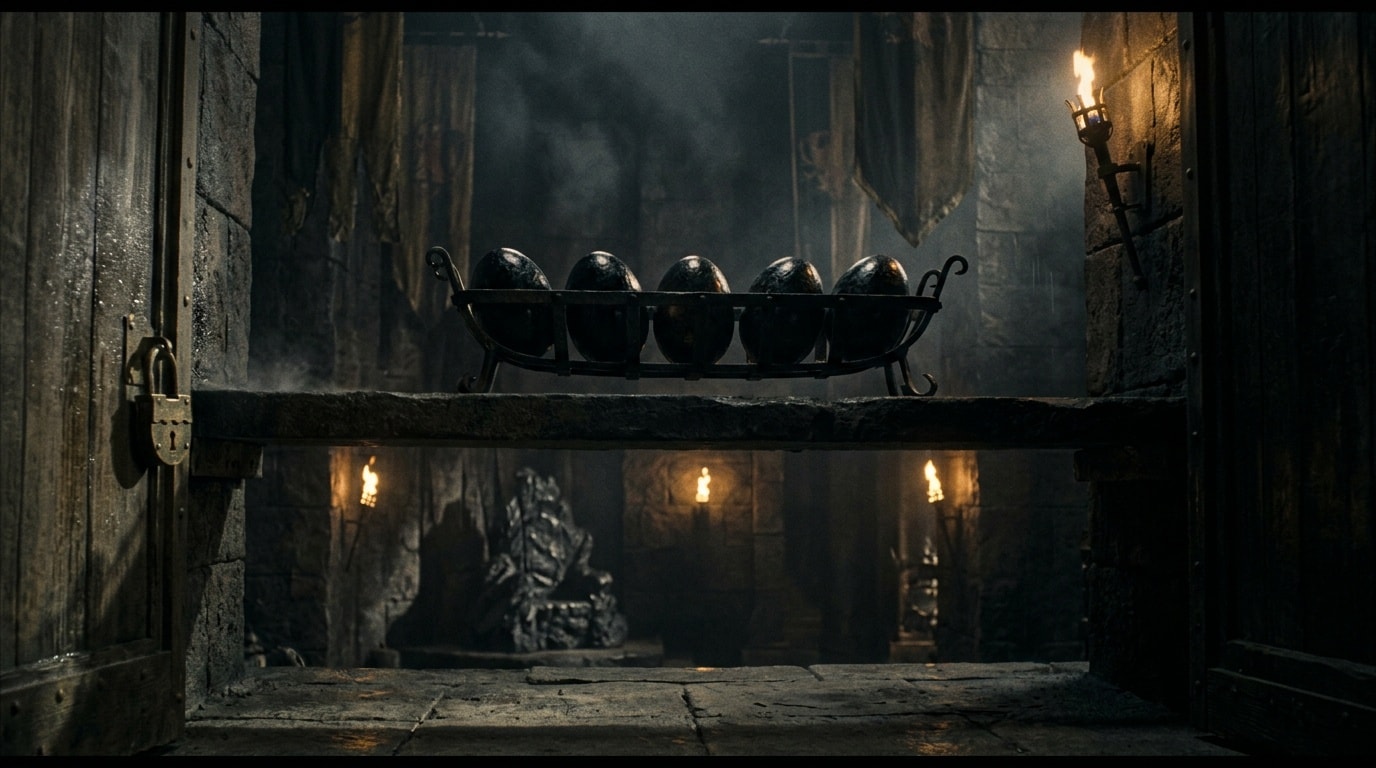
Alys Rivers Is Building a Rival Dynasty
Alys Rivers has been engineering a specific kind of captivity for Aemond at Harrenhal: one built from his own need to be chosen rather than tolerated, with five dragon eggs as the physical proof that she alone prepared a future for him.
Ormund Took Corlys Alive on Purpose
Ormund Hightower engineered the ambush on Corlys Velaryon to take him alive as a political asset, and the show's visual grammar is built entirely around a capture.
Gwayne's Eye Opens Daeron's
Daeron's trust in Ormund is functionally broken: the assassination scene gave him visible, undeniable proof that the man whose judgment he has been forced to treat as law can be fooled where others cannot.
The Assassin's Warning Points Inward
The 'kicked dog' message taken from the Tumbleton assassin is addressed to Rhaenyra about her own conduct, and she is already enacting it.
Mysaria Runs a Systematic Opacity Campaign
Mysaria is running a deliberate strategy of unauditability against Rhaenyra: withholding the escape attempt, eliminating the only witness to her handling of it, and denying foreknowledge of Helaena's pregnancy afterward.
Daemon Is Losing Faith in Rhaenyra
The distinction that determines what kind of break is coming is this: Daemon's faith is faltering in his own indispensability to Rhaenyra, a separate wound from any doubt in her cause.
Cole Dies the Death He Dealt Jace
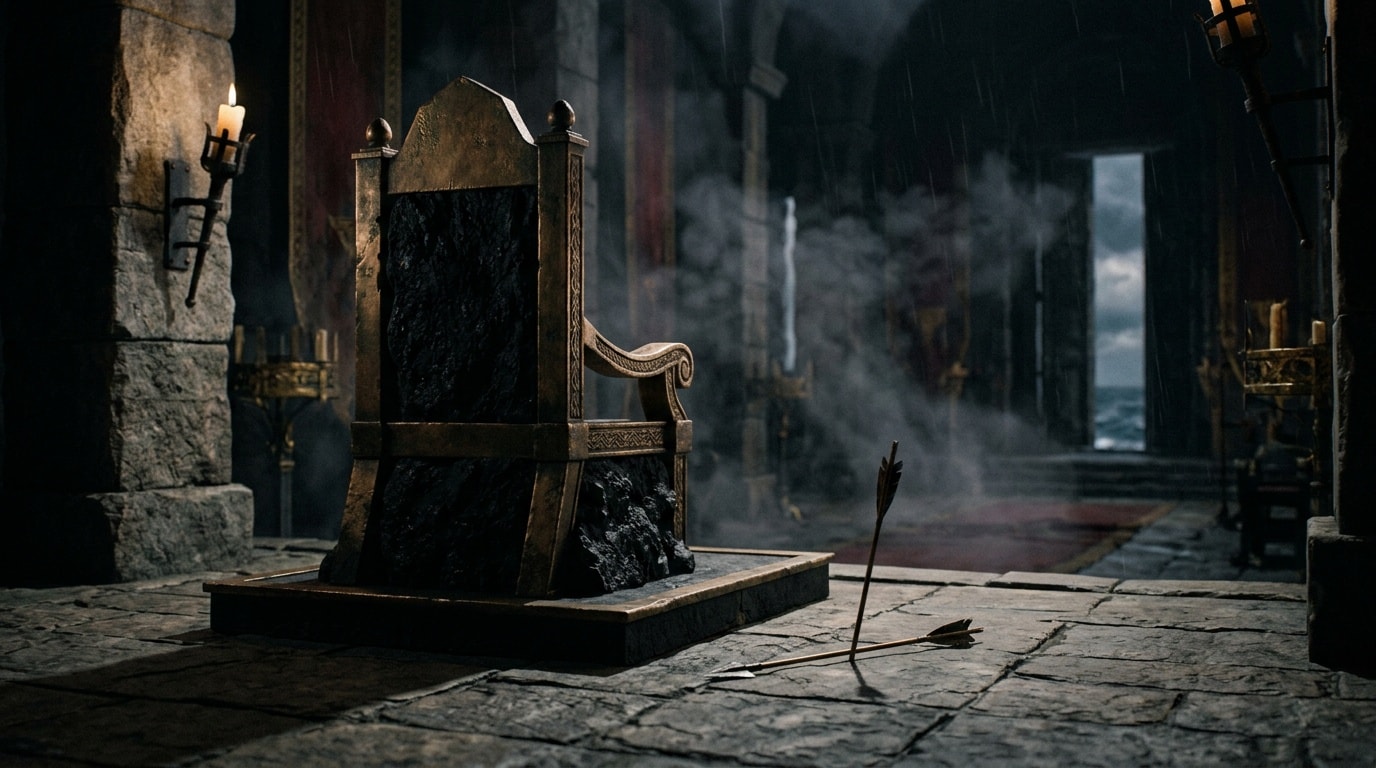
House of the Dragon is encoding moral verdicts at the level of structure, and Criston Cole's arrow death is one of them.