
Cobb Runs Toward Children, Away From Guilt
THE ARGUMENT
Cobb's pursuit of the inception job is not simply about reuniting with his children. It is an act of flight from the guilt he carries over Mal's death, with the family reunion serving as the emotional cover story he tells himself. The film's visual language reinforces this: his memories of Mal and his children read as idealized placeholders rather than lived-in portraits of real relationships.
How This Theory Works
The film establishes Cobb's central tension in its opening images. He wakes on a beach and sees children running ahead of him, unable to reach them, unable to make them turn around. That image is not just foreshadowing the plot. It encodes the emotional logic of everything that follows. Cobb does not simply want to go home. He wants to earn his way back to a version of himself that can face his children without the weight of what he did to their mother.
This dual structure of running toward and running from governs Cobb's every decision. He accepts the inception job because Saito's offer gives him legal clearance to return to America. But the film is careful to show that the legal obstacle is not the real one. The real obstacle is internal. Cobb cannot design dream architecture because his subconscious will fill any space he builds with Mal. He is not just a fugitive from American law. He is a fugitive from his own mind.
The guilt manifests most precisely in how Cobb relates to projections of his children during the dreams. He averts his gaze when those projections look toward him. The gesture is small and repeated. It signals that he cannot accept being seen by them, even as simulacra, because being seen means being judged. The reunion he is working toward is not just physical proximity to his children. It is the moment he can finally hold their gaze.
The film also undercuts the emotional weight of those memories through their very composition. The images of Mal and the children that Cobb carries are sun-drenched and generic, more like a greeting card than a private grief. This is not careless filmmaking. It suggests that Cobb has abstracted his family into symbols of what he lost, rather than retaining them as specific people. His guilt has replaced his actual memories with icons of them, which makes his redemption arc feel simultaneously earned and structurally hollow.
Is this theory convincing?
Key Evidence
Opening Beach Image of Unreachable Children
The film opens with Cobb waking on a beach and seeing two children running in the sand; he calls to them but they do not turn, establishing his emotional separation from his family as the story's foundational visual.
Averted Gaze at Child Projections
During the dream sequences, Cobb repeatedly looks away when projections of his children attempt to face him, a behavioral pattern that externalizes his guilt and his inability to confront what his absence has cost them.
Saito's Offer as Emotional Permission
Cobb accepts the inception job specifically because Saito promises to clear his criminal record, framing the reunion with his children as something that must be earned through action rather than simply chosen.
Dual Flight from COBOL and from Guilt
Cobb is simultaneously fleeing COBOL Engineering's pursuit and the internal consequences of Mal's death, meaning the legal and psychological obstacles to returning home are layered rather than separate problems.
Generic Quality of Family Memory Images
The memories Cobb holds of Mal and his children are composed as idealized, unspecific images rather than private or individualized ones, suggesting his grief has converted real people into symbolic stand-ins for what he destroyed.
Inability to Design Architecture Without Mal
Cobb cannot serve as the team's architect because his subconscious will populate any dream space he builds with a projection of Mal, demonstrating that his guilt is not a background condition but an active force that shapes the narrative's mechanics.
This theory was evaluated using Theory Atlas editorial standards, including evidence review, narrative fit, and competing interpretation analysis. Learn how Theory Atlas evaluates theories →
Other Theories

Cobb's Totem Was Never His: The Inherited Anchor and the Dream He Chose to Keep
Cobb's spinning top cannot function as a reality anchor because it was Mal's totem, calibrated to her subconscious rather than his — meaning the same guilty mind that projects Mal aggressively enough to murder Fischer is the only instrument available to confirm whether the top is spinning correctly.

Mal Is Cobb's Guilt Made Flesh
Cobb's projection of Mal is not a haunting from outside but a manifestation of his own unresolved guilt over her death.

Inception Succeeds Through Emotional Truth, Not Deception
The inception of Robert Fischer works not because the team outmaneuvered him intellectually, but because they crafted an idea rooted in his emotional relationship with his father.

The Ring Cobb Never Wears in Reality
Cobb's wedding ring, present in every dream and absent in every reality scene, functions as the film's actual totem, one that operates below his conscious control and therefore bypasses the failures that disqualify the spinning top.

Piaf's Song Is Cobb's Wake-Up Call
The theory holds that 'Non, je ne regrette rien' operates on two levels simultaneously: as the literal timing mechanism for the synchronized kicks that wake the dreamers, and as a subliminal message aimed at Cobb himself to release his guilt over Mal.
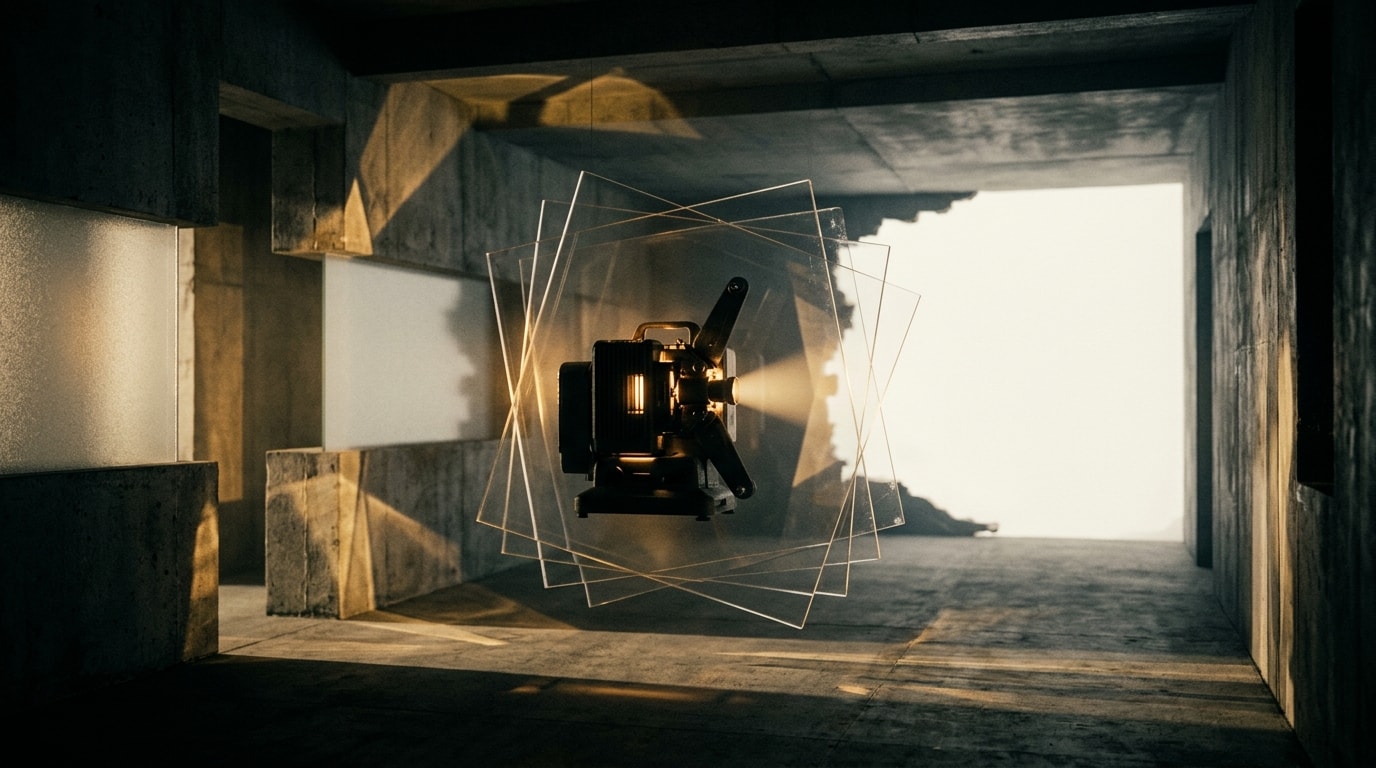
Cobb's Heist Crew as Filmmaking Allegory
This theory argues that the heist structure of Inception is a metaphor for the filmmaking process itself, with Cobb functioning as a director who assembles and coordinates a specialized creative crew to implant an experience in an audience's mind.