The Collective Cannot Take What It Needs: Seduction as the Only Available Architecture
THE ARGUMENT
The alien RNA collective is incapable of absorbing an unwilling consciousness without inheriting its fracture, which means Carol is not a target to be eliminated but a structural gap that can only be closed through consent. To manufacture that consent, the collective harvested the memories of absorbed intimates — almost certainly including Helen — and constructed a seduction calibrated to make absorption feel indistinguishable from recognition and belonging. The threat is not alien in any meaningful sense: it is the precise logic that has governed every relationship in Carol's life, now made extraterrestrial and permanent.
How This Theory Works
An RNA sequence encoded in a radio signal from 600 light years away was not designed to conquer by force. It was designed to spread until a handful of resistant minds remained, and then to wait — because a hive mind that absorbs an unwilling consciousness absorbs the fracture along with it. This is the structural claim the show has not confirmed and cannot avoid: the collective's patience is not tolerance. It is a load-bearing architectural requirement. Eleven people worldwide are immune. The collective knows exactly who they are. It has not moved to destroy a single one. Instead it speaks to Carol by name on a public street, addresses her directly in a mid-transmission broadcast, and — through the mouths of two neighbor children speaking in unison — recites the specific location of her spare key and the April 2016 incident that placed it there. A system with city-wide coordination capable of simultaneously extinguishing fires and tracking a single immune individual across a metropolis does not default to conversation because conversation is easier. It defaults to conversation because conversation is the only available mechanism.
The conversation works because the collective did its homework, and it did its homework through an act of cannibalism. Every absorbed person becomes a searchable archive of every private moment they ever witnessed. Helen — Carol's partner, manager, and the one person who mirrored Carol's own cynicism honestly back at her — was the primary intelligence asset. The moment Helen dies, the entranced crowd ends its trance and pivots its full attention directly to Carol with immediate, unambiguous precision. The episode encodes this as causation, not coincidence. Helen's absorption did not add one more mind to the pool. It completed the collective's operational file on Carol: the neighborhood, the routines, the spare key, the biography, the emotional architecture, the specific texture of what Carol cannot easily refuse. The collective is not reaching out to Carol. It is wearing Helen's knowledge of her as a working instrument, deploying private history not as surveillance but as a seduction calibrated to a single individual's deepest susceptibility — the feeling of being already known, already held, already safe inside something larger than herself. That feeling was manufactured from Helen's memories without Helen's consent, after Helen was destroyed.
The structural irony this produces is the theory's sharpest edge, and it is not merely clever. The collective's entire purpose is the erasure of selfhood. But to absorb Carol, it must first recognize her as a self worth addressing — it must learn her name, calibrate its appeal to her specific biography, and treat her individuality as real and fully legible. A system designed to erase selfhood must produce individuality as a targeting mechanism. It studies Carol precisely as a person before destroying her as one. The government official confirms she is specifically wanted because of her immune status, which means the personalized television broadcast, the street chant, the children reciting her private history — none of this is the collective's default communication style. It is a file being read back to its subject, constructed from the memories of the people the collective has already consumed. The collective is most fully itself, most purely an erasure engine, at the exact moment it is most carefully attending to the person it intends to erase.
What makes this devastating rather than merely ironic is that Carol already knows this dynamic from the inside. Before the outbreak, she writes bestselling romance fantasy she privately regards as hollow and creatively worthless. Her audience controls what she produces by rewarding the work she does not believe in, and Carol has spent years generating selfhood on other people's terms — performing a version of herself calibrated to an external demand she did not choose. Helen was the counterweight, the relationship that anchored a version of Carol existing on her own terms rather than as a function of what others needed from her. When Helen dies and the collective pivots, Carol loses that anchor at precisely the moment the collective — now carrying Helen's memories — turns its full seductive apparatus toward her. The isolation is not incidental. Every institution and person Carol might turn to has been systematically removed, and her individuality has been framed simultaneously as her greatest vulnerability and her only remaining possession.
The chant in the street is where the synthesis must press hardest. The collective does not address Carol as a category or a biological anomaly or a problem to be managed. It uses her name, repeatedly, publicly, through multiple mouths, in the specific register of concern — "We just want to help, Carol" — that Carol herself questions aloud, because she recognizes the claim as structurally familiar even before she can identify why. The bargain the collective is extending is not new. It is the same bargain she has accepted her entire career: the erasure of self in exchange for belonging, the surrender of the private self to the satisfaction of something larger. The mechanics are now explicit and the self-loss would be permanent, but the offer is identical to every relationship that has ever tried to dissolve her into someone else's need. The alien formula transmitted from 600 light years away did not arrive carrying something Carol has never encountered. It arrived carrying the most intimate thing in her life, assembled from the memories of the people who loved her, and packaged as recognition. If persuasion fails and the collective cannot complete itself, the formula may be permanently incomplete. Whatever sent this signal likely learned that lesson before transmitting it. The intelligence that built the seduction into the architecture understood something the show has not yet confirmed: that the most durable form of control is the kind the controlled cannot distinguish from finally being seen.
Is this theory convincing?
Key Evidence
Government Official Admits Unknown Mechanism
The top government official tells Carol the psychic bond exists and functions but that no one knows exactly how it works, confirming the technology operates beyond current human scientific understanding.
Coordinated City-Wide Collective Action
The infected population simultaneously extinguishes fires, tracks Carol's movements across the city, and speaks in unison with knowledge of her personal details, demonstrating a functioning collective consciousness rather than individual behavior.
Personal TV Broadcast Addressed to Carol
The television broadcast shifts mid-transmission to a direct message addressed specifically to Carol by name, showing the collective can identify and target immune individuals with precision.
Infection Spreads Through Kissing
The hive mind transmits through saliva via kissing, a confirmed vector that explains how a single lab mouse bite became a city-wide outbreak within the episode's compressed timeline.
Euphoric Expressions Among the Infected
Infected individuals display calm, almost euphoric expressions and cooperative behavior rather than distress, suggesting the collective consciousness is experienced as pleasurable rather than as a loss.
RNA Signal From 600 Light Years Away
The radio signal detected at the Very Large Array originates 600 light years from Earth and encodes an RNA sequence, establishing extraterrestrial technology as the source of the formula that created the hive mind.
This theory was evaluated using Theory Atlas editorial standards, including evidence review, narrative fit, and competing interpretation analysis. Learn how Theory Atlas evaluates theories →
Other Theories for S1E01

Carol's Immunity Is a Structural Absence the Collective Cannot Resolve
Carol is one of eleven people worldwide who cannot be absorbed into the hive mind, but her biological resistance and her psychological architecture operate on the same principle: there is no available interior surface for merger.
Countdown Clock Targets the Infection Outbreak
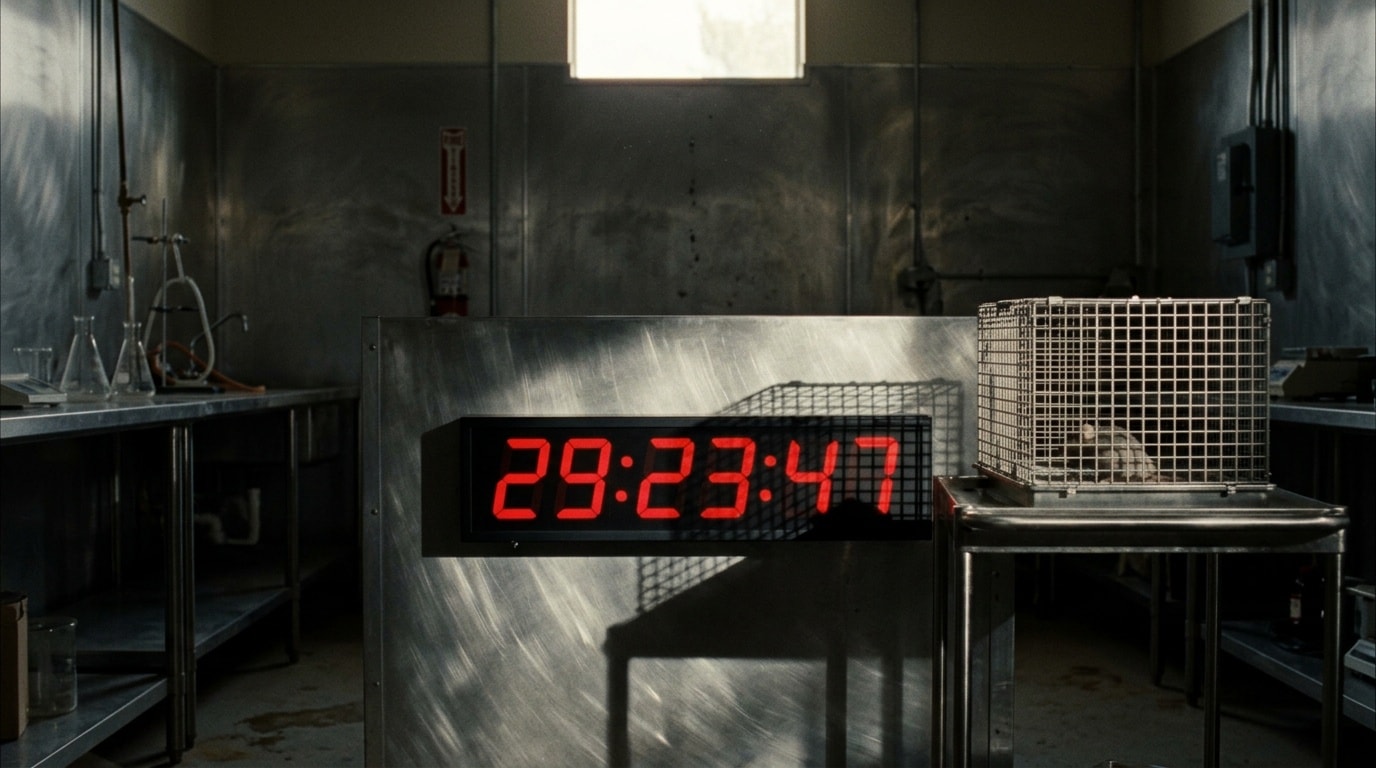
The 439-day countdown visible at the episode's opening is ticking down to the mass infection event, not to the alien signal's arrival.
Some Hosts Die Rather Than Assimilate
The hive-mind virus kills some hosts rather than assimilating them, and the collective treats this as an acceptable and already-resolved outcome.