Carol's Immunity Is a Structural Absence the Collective Cannot Resolve
THE ARGUMENT
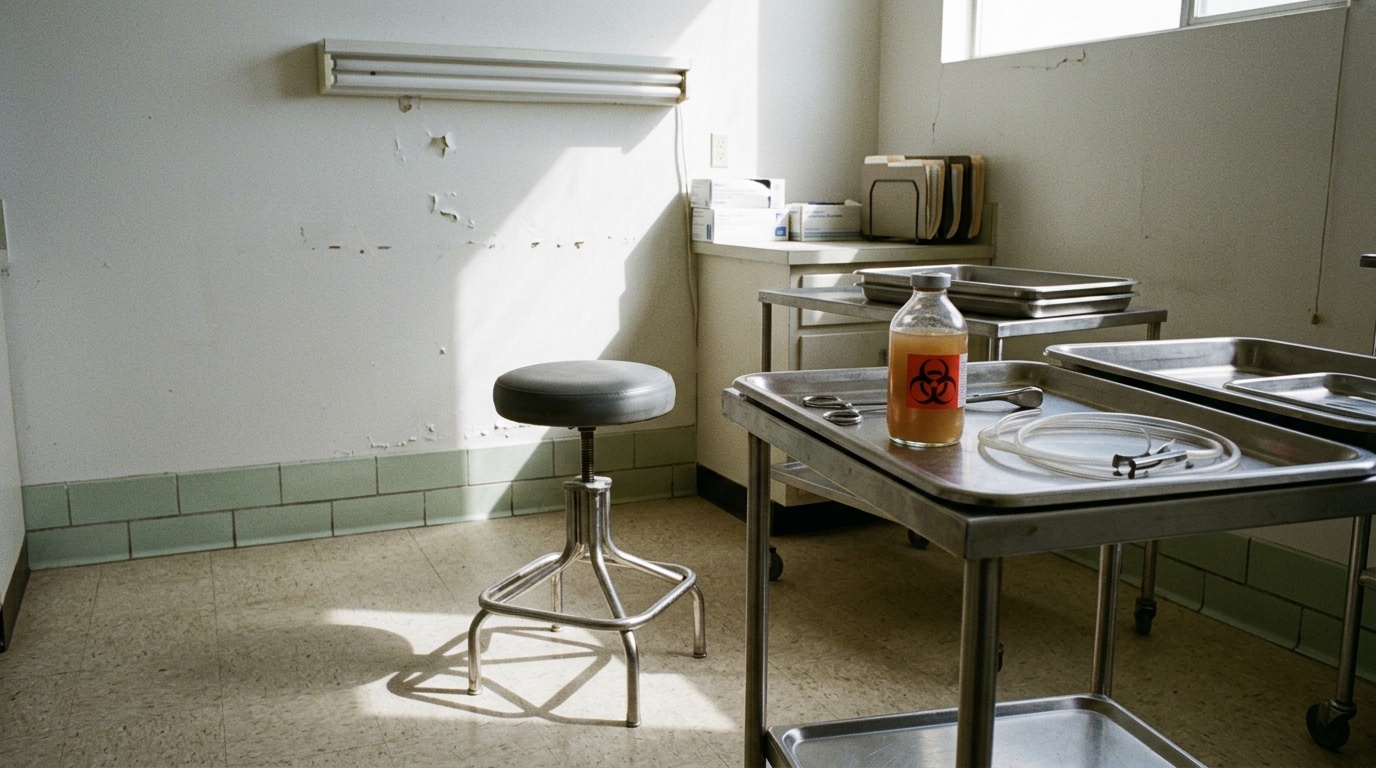
Carol is one of eleven people worldwide who cannot be absorbed into the hive mind, but her biological resistance and her psychological architecture operate on the same principle: there is no available interior surface for merger. The collective's design requires willing arrival from the last holdouts, and Carol's lifelong habit of withholding authentic selfhood makes that arrival structurally impossible — not as an act of resistance, but as a condition that predates the catastrophe entirely. Helen's death is the moment the hive fully registers this problem and shifts from passive spread to active, named pursuit.
How This Theory Works
The mechanics of Carol's immunity are established through direct demonstration rather than exposition. A doctor attempts transmission through a kiss and fails. A government official confirms the number: eleven people worldwide remain outside the collective, and Carol is among them. The hive's response to this fact is immediate and specific — it does not simply move on. It broadcasts a television message addressed to her, has an official phone her with a personal invitation, chants at her by name. The immune are not merely left alone. They are pursued. That behavioral asymmetry is the first signal that Carol's resistance is not an incidental biological quirk but the organizing problem of the collective's project.
Helen's death is the narrative hinge between the two registers on which that problem operates. Before Helen dies, the infected are largely task-oriented — containing fires, collecting samples, moving in coordinated unison. The moment her shaking stops, nearby infected emerge from that trance and redirect their full attention to Carol. The most plausible reading is that the hive, which had access to Helen's perceptions throughout her infection, learned something critical at the instant of her death: Carol cannot be absorbed. That knowledge is not incidental to what follows. It is the trigger. Helen's possible infection — occurring while Carol was outside responding to a car crash, giving someone from the bar a window to reach her — suggests the collective was already moving with some intentionality toward those closest to Carol, using proximity as an intelligence-gathering operation before it knew what it was gathering. Her death completes that reconnaissance and activates the campaign.
But the biological fact alone does not explain why the collective pursues rather than simply waits, or why it frames its overtures as invitations rather than seizures. The answer lies in Carol's psychological architecture, which the show has been mapping since before the first infected body appears on screen. Carol privately regards her commercially successful romance fantasy as shallow. She debates abandoning it for work she actually believes is worth making. When asked who inspired her Corsair character, she answers 'Put George Glenn. It's safer' — offering the crowd a usable fiction instead of naming Helen, the true source. This is not a recent failure of nerve. It is a career-long habit: manufacturing the experience of belonging for audiences while systematically withholding her own. The hive mind does not encounter a woman who has chosen to hold herself apart. It encounters a woman for whom holding apart was the default condition long before any formula arrived. If the collective's design requires the last resistant minds to join willingly — because absorbing an unwilling consciousness would fracture the unified intelligence it has built — then Carol is not simply a holdout. She is an architectural problem it cannot resolve by force and cannot wait out by attrition, because the capacity for the kind of willing surrender the design requires was already absent before the catastrophe made the question urgent.
The show's color grammar makes this argument visually before the theory requires it analytically. Laboratory technicians are coded in individually distinct bright gear while still themselves; once the hive colonizes them, that visual variety collapses into coordinated uniformity. Color differentiation is the show's notation for selfhood at the moment before erasure. Yellow's persistence around Carol — her jacket at the outbreak's peak, her gloves across the episode's early movements — is not a mark of safety. It is a sign that her erasure has not yet completed. She is still yellow because she still has a self available to lose. But her novel's cover art and the purple Sharpies of her signing practice occupy a different register entirely. Purple is the collective's palette. Her creative output enters the world already wearing it. Her biological resistance is coded yellow; the work she releases into the culture arrives pre-colored as already belonging to a system she never consciously joined. What the hive cannot extract from her directly, it receives through the act of publication — and she delivers it herself, one signed book at a time. The colors are not splitting arbitrarily. They are splitting along the fault line that was always there: body outside the collective, output already inside it, a person coming apart in the precise place where authentic selfhood was never fully assembled.
The episode's final images hold this tension without resolving it. Carol hauls Helen's body alone — no cooperative hive infrastructure available to her, immunity experienced as physical isolation in the most literal possible scene. The collective chants that it only wants to help. From Carol's position, that offer is not entirely easy to dismiss: she is surrounded by people operating in effortless coordination while she cannot get her dying partner into a truck without dragging her across the ground. The episode closes with Carol curled into herself, and the visual is precise. The infected technicians lost their distinct colors all at once, a clean erasure. Carol's colors are dividing — yellow for the body the formula cannot reach, purple for the work the crowd already owns. Her immunity is not framed as a triumph of selfhood. It is framed as the diagnostic result of a self that was structurally incomplete before the test arrived. The collective cannot take her. It cannot wait for a self that does not exist in sufficient form to surrender. And the only version of her that was ever genuinely absorbed — the one that signs the books and manufactures belonging for strangers — already belongs to a system that predates the hive by years.
Is this theory convincing?
Key Evidence
Doctor's Failed Kiss Attempt
A doctor inside the bar moves directly to Carol and attempts to transmit the infection through a kiss, but the transmission fails, confirming her immunity through direct on-screen demonstration.
Collective Refocuses After Helen Dies
The moment Helen's death occurs, the nearby infected abruptly emerge from their task-oriented trance and turn their collective attention specifically to Carol, suggesting the hive registered something significant at that instant.
Eleven Immune Worldwide
The government official confirms to Carol that only eleven people globally remain immune to the infection, placing her resistance in a context that makes her both extraordinary and isolated.
Unicorn on Commandeered Truck Hood
The pickup truck Carol takes to escape has an airbrushed unicorn painted on the hood, offering a visual metaphor for Carol as the rare individual who cannot be absorbed into the collective.
Carol Moves Helen's Body Alone
Carol struggles without assistance to haul her dying partner into the truck, a physical scene that makes her isolation concrete and emphasizes that immunity cuts her off from the cooperative infrastructure the infected now share.
Helen's Possible Bar Infection Route
While Carol was outside responding to the car crash, someone from the infected bar may have kissed Helen in her absence, suggesting the collective's spread was already moving with some degree of intentionality toward those close to Carol.
Carol Curled in Fetal Position
The episode closes with Carol curled into herself, a visual that frames her immunity as psychological burden rather than advantage, underlining the emotional cost of being the one person the hive cannot reach.
This theory was evaluated using Theory Atlas editorial standards, including evidence review, narrative fit, and competing interpretation analysis. Learn how Theory Atlas evaluates theories →
Other Theories for S1E01
Countdown Clock Targets the Infection Outbreak
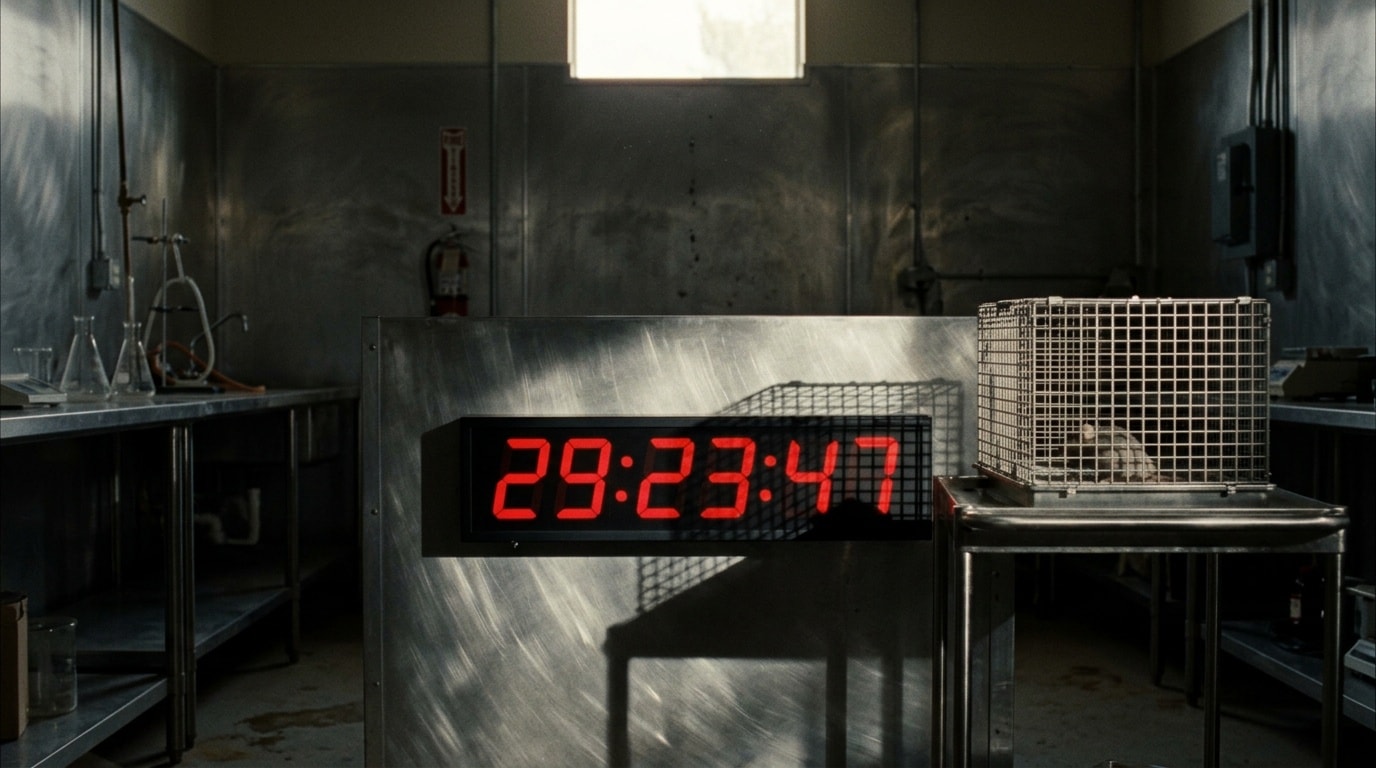
The 439-day countdown visible at the episode's opening is ticking down to the mass infection event, not to the alien signal's arrival.
The Collective Cannot Take What It Needs: Seduction as the Only Available Architecture
The alien RNA collective is incapable of absorbing an unwilling consciousness without inheriting its fracture, which means Carol is not a target to be eliminated but a structural gap that can only be closed through consent.
Some Hosts Die Rather Than Assimilate
The hive-mind virus kills some hosts rather than assimilating them, and the collective treats this as an acceptable and already-resolved outcome.