Paranoia Preserved Helen, But Cannot Restore Her
THE ARGUMENT
Carol's rage and paranoia accidentally preserved Helen's body from processing, but they have also made genuine grief structurally impossible for her: every threat she can fight becomes a reason not to confront the one loss that cannot be fought. Her world-saving missions are not a coping mechanism layered over grief. They are a replacement for it. Helen is gone, and Carol's psychological architecture may be precisely what prevents her from ever fully registering that fact.
How This Theory Works
Carol's anger and paranoia did not just protect Helen's body by accident. They reveal something the theory has not yet said directly: Carol does not know how to exist without a threat to fight. The rage that drove the Others away from the hospital was not incidental to her personality. It was the only mode she had. And the terrible irony is that losing Helen has not given Carol a reason to stop fighting. It has given her an infinite supply of enemies to fight instead, because the one thing she cannot fight is the loss itself.
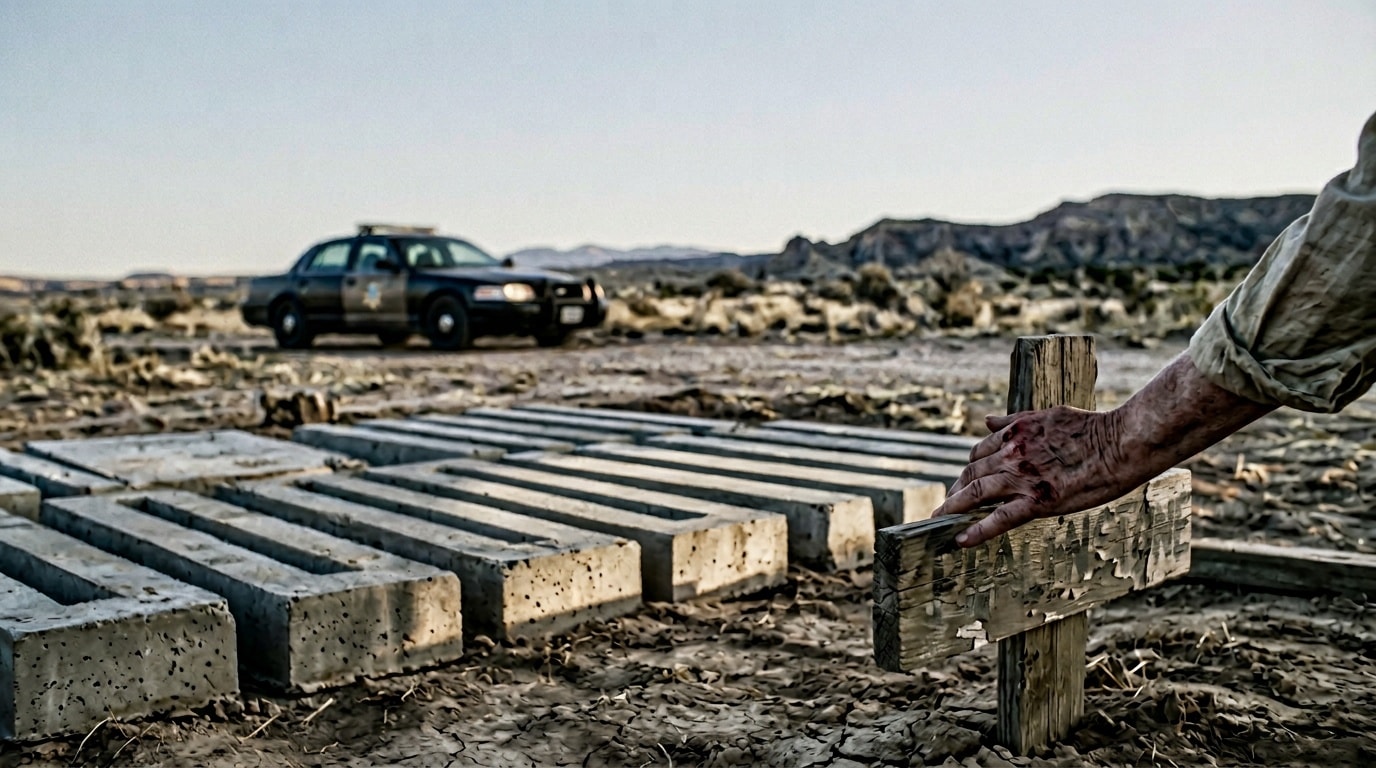
The cost of that protection is visible in this episode's central tension. While Carol investigates milk cartons, traces powder to Agri-Jet, and coordinates drone translations of her research videos, Helen's grave is being dug up by wolves at night. The external mission and the personal wound are literally competing for Carol's attention, and the external mission keeps winning. Carol crashes a police cruiser into her backyard not out of grief but out of desperation to scare off the wolves. She lays heavy tiles over the grave the next morning as a practical fix. The emotional reckoning is deferred again.
This is the mechanism the theory identifies as Carol's defining pattern. Her big plans, the outreach videos, the factory investigations, the coordination with the Others, function as displacement activity. The real crisis is the grave in the backyard and what it represents. Carol cannot bring Helen back. She can protect the body, paint a name on a tile, but the loss itself is irreversible. Every successful mission she completes leaves that fundamental fact unchanged. The show frames this not as a character flaw to be overcome but as the permanent condition of Carol's existence in this new world.
The sharpest edge of this pattern is that Carol's competence makes her situation worse, not better. Every problem she can solve, she solves with speed and ingenuity. Carol is, in the world of the show, extraordinarily effective. But her effectiveness is also the mechanism that keeps her grief at a permanent distance. The more problems she can address externally, the more justified the deferral feels, and the more natural it becomes to treat the grave in the backyard as simply another logistical problem requiring a practical fix. The tiles and the painted name are not a failure of imagination. They are the output of a person who has learned that action relieves unbearable pressure and who has, until now, found enough actions available to keep the pressure from accumulating. What the show is tracking is not grief deferred. It is a person who may be structurally incapable of grieving, because grief requires stopping, and stopping is the one thing Carol's psychology has never allowed.
Is this theory convincing?
Key Evidence
Carol's Rage Blocking the Others
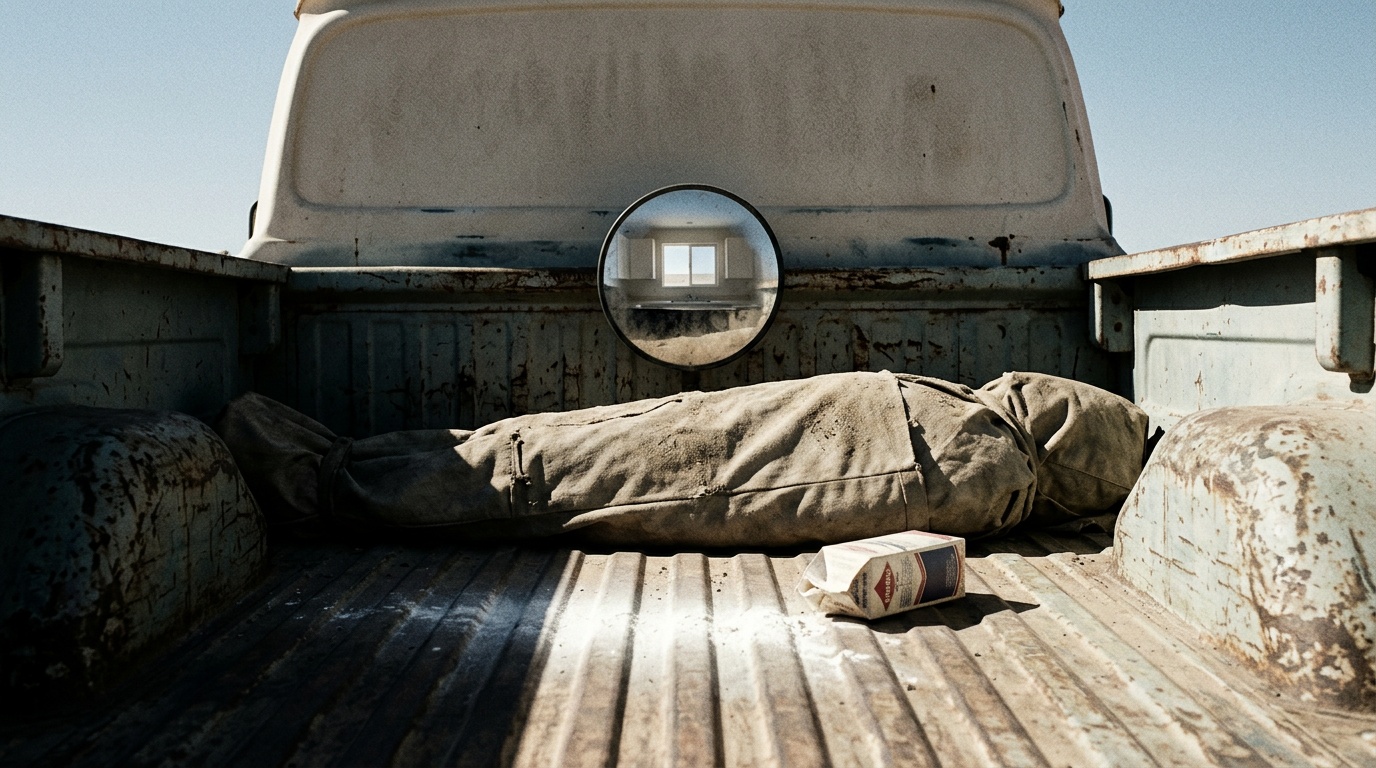
In episode 1, when Others attempted to take Helen's body from Carol's truck, Carol screamed and fought them off, an act of instinctive anger that kept Helen's body from entering the Others' processing system, now revealed in episode 5 to convert bodies into a synthetic white powder.
White Powder Replacing Real Milk
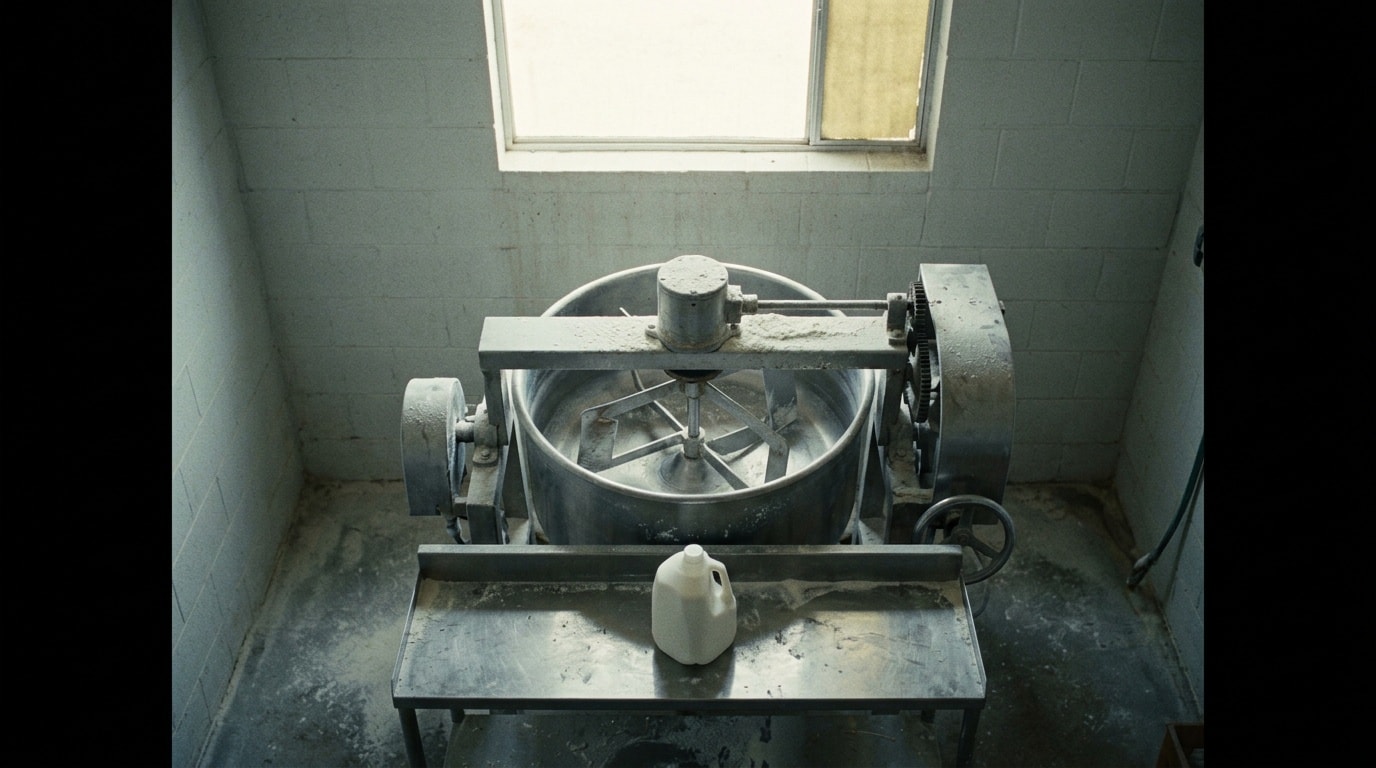
Carol discovers at the factory that the milk cartons contain a liquid made from a neutral-pH white powder rather than actual milk, confirming the Others are producing and distributing a synthetic substance, the same chain Helen's body would have entered.
Wolves Digging Up Helen's Grave
While Carol pursues her broader investigation, wolves return at night to dig up Helen's body, forcing Carol into reactive, practical responses rather than any sustained emotional confrontation with her loss.
Tiles Laid as Emotional Deferral
Carol lays heavy tiles over Helen's grave and paints Helen's name on one as a memorial, actions that are pragmatic and protective but stop short of genuine grief, consistent with the theory that Carol's plans substitute for emotional processing.
World-Saving Plans Crowd Out Grief
In the same episode where wolves threaten Helen's grave, Carol records research videos, coordinates drone pickups, and traces the powder supply chain, her external ambitions consistently taking precedence over the personal loss that sits in her own backyard.
Helen's Loss Is Permanent and Irreversible
The episode makes clear that even Carol's most successful interventions, translating her findings, exposing the factory, organizing immune survivors, cannot undo Helen's death or restore the life Carol had before, framing her grief as a wound with no resolution available to her.
This theory was evaluated using Theory Atlas editorial standards, including evidence review, narrative fit, and competing interpretation analysis. Learn how Theory Atlas evaluates theories →
Other Theories for S1E05
The Milk Is Made From the Dead
The hive is using neural tissue harvested from the 886 million who died during the joining as a delivery mechanism for sustaining hive synchronization in the surviving population, distributed through a coordinated dairy supply chain with no actual dairy in it.
The Hive Fled Its Own Vulnerability and Left the Door Open
The hive's exodus from Albuquerque is simultaneously an emotional wound response, a strategic miscalculation, and an attempt to suppress an internal dissenter — and by collapsing all three into a single panicked withdrawal, the collective accomplished none of them.

The Hive Retreats, But Keeps Its Leash
The hive's evacuation of Albuquerque is a structural recalibration designed to eliminate Carol's only real tool, proximity, while preserving the emotional architecture that keeps her cooperative.
Carol's Grave Defense as Defiant Humanity
Carol's grave-defense sequence encodes the show's argument that the human insistence on the marked, named, defended grave is not a product of social convention but prior to it, an irreducible act of individuation that the hivemind's logic cannot accommodate without erasing personhood entirely.
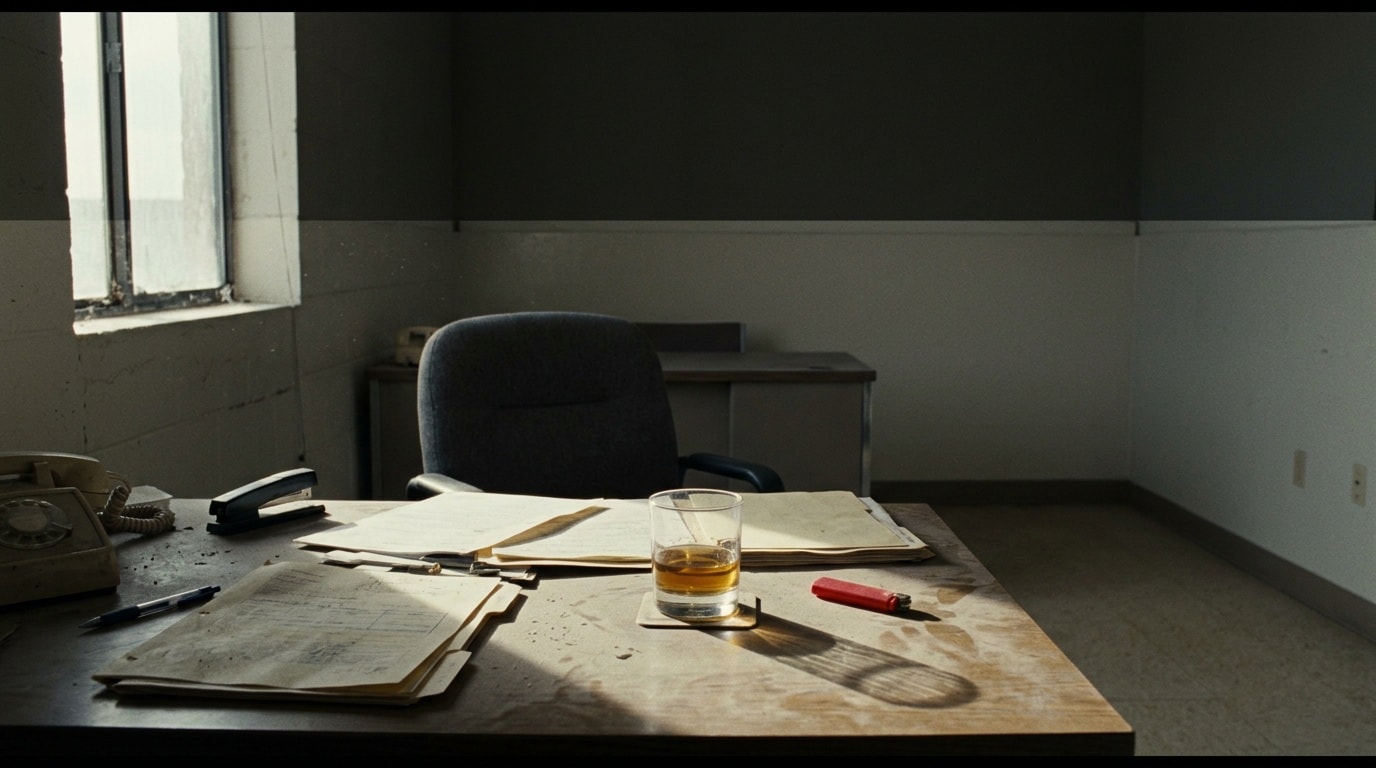
Carol's Drinking Tracks Her Emotional State
Carol's sobriety is not recovery.

Christie Novel Signals Carol's Solitary Fate
The presence of 'And Then There Were None' in Carol's space is the show's structural announcement that Carol's isolation is not a temporary condition to be overcome but a sentence being served.