The Break Room Runs on Impossible Time
THE ARGUMENT
The Break Room operates on a duration that the episode's own clock timestamps cannot accommodate, meaning either Lumon controls time within that room independently of the observable floor chronology, or the show is deliberately concealing how long Helly was actually kept there. The arithmetic gap between 813 day-two repetitions and a sub-two-hour window is not a continuity error but a structural impossibility the show built in by pairing Milchick's precise day-one correction with visible timestamps. Helly's exact count survives only if the time she experienced inside the Break Room and the time that passed outside it are not the same.
How This Theory Works
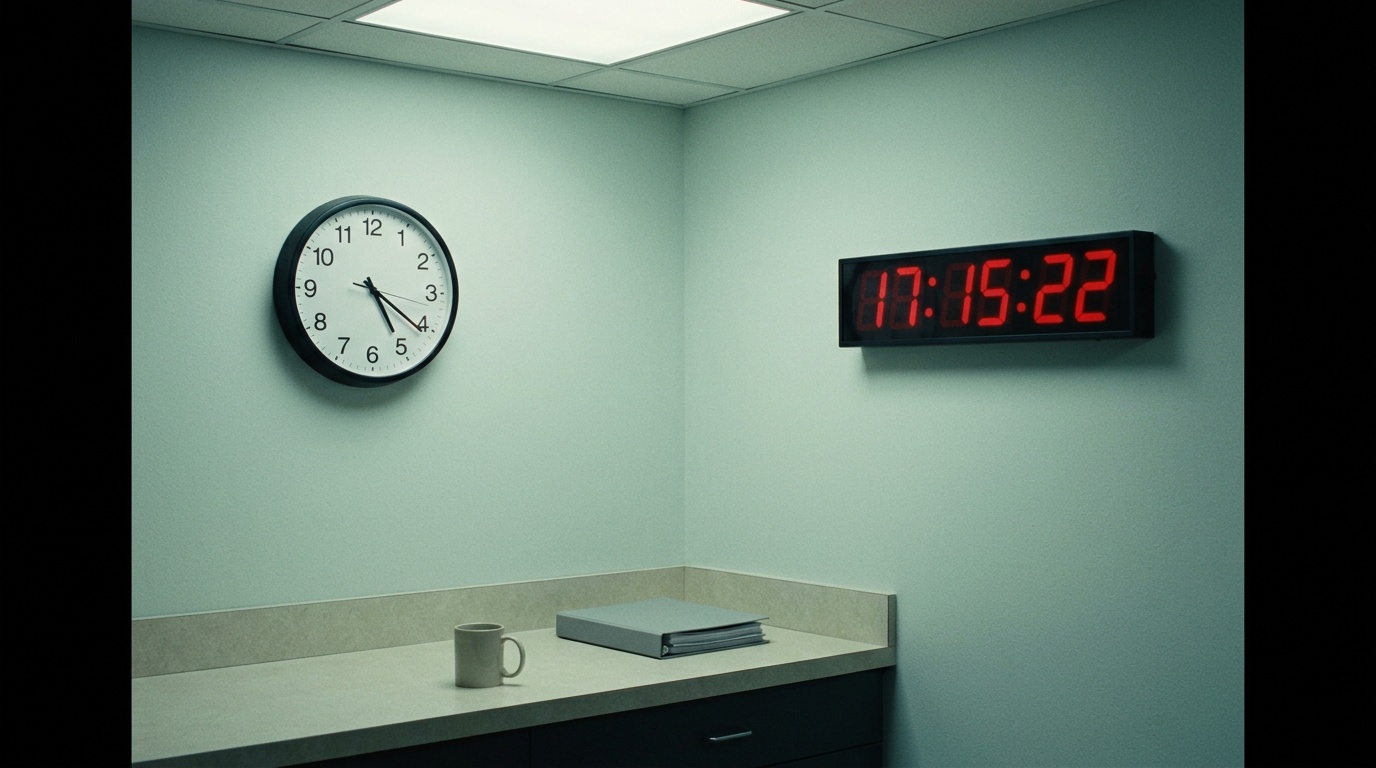
The figure Helly reports does not fit the episode's own clock, and the show made that contradiction unavoidable. On day one, Milchick corrects her count to 259 with bureaucratic precision, establishing that Lumon tracks every repetition. That leaves 813 repetitions attributed to day two, a session the episode's timestamps bracket between 9:05 and before 11:15. At twenty seconds per recitation, 813 readings require more than four and a half hours. The episode allows roughly two.
The show could have given Helly a vague or approximate answer. It did not. It chose a specific, verifiable figure and placed it against visible clock times. That choice is not careless. The precision cuts both ways: if the count is exact, the timeline is broken. The question this raises is not whether the discrepancy exists but what mechanism produces it. Specifically, the show would need to explain whether the Break Room's internal duration is controlled independently of the clocks visible to the audience, and if so, by what means Lumon achieves that desynchronization.
The most uncomfortable reading is that Helly experienced a duration the visible clock cannot account for, and Lumon already knows exactly how much time she was inside. The 1,072 figure is not an error. It is a record. If Lumon tracks repetitions with the precision Milchick demonstrates, then the gap between the count and the clock is not a continuity mistake the show failed to catch. It is a number that survives only if the Break Room runs on time that does not belong to the rest of Lumon's floor.
Is this theory convincing?
Key Evidence
Helly's 1,072 Repetition Count
When Mark asks how many times she read the statement, Helly answers '1,072,' a precise figure rather than an approximation.
Milchick's Day-One Correction
Milchick corrects Helly's self-reported count on day one to exactly 259, establishing that Lumon tracks repetitions with precision and that Helly's totals carry numerical accountability.
Visible Clock Timestamps
The episode establishes that Helly's second Break Room session begins at 9:05 and she exits before 11:15, a window of roughly two hours that cannot accommodate 813 readings at any plausible pace.
Arithmetic Gap Between Count and Clock
813 repetitions at twenty seconds each requires a minimum of four and a half hours, more than twice the time the episode's timestamps allow for day two's session.
Break Room as Suspended Space
The Break Room is already framed as a place where normal innie protections do not apply, making it narratively consistent that its internal duration could diverge from observable clock time.
This theory was evaluated using Theory Atlas editorial standards, including evidence review, narrative fit, and competing interpretation analysis. Learn how Theory Atlas evaluates theories →
Other Theories for S1E04
Mark Shredded Evidence Against His Outie
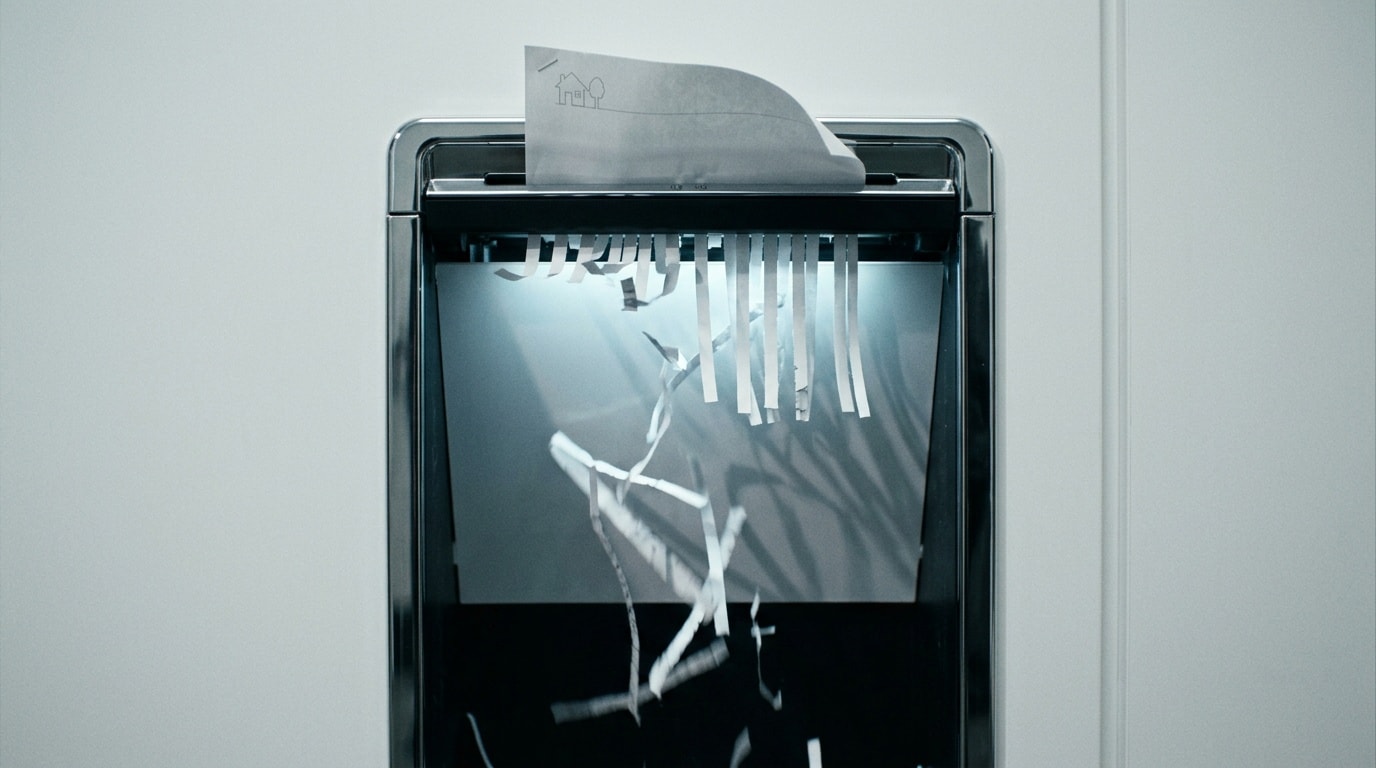
Mark's destruction of Petey's map was not rule-following but a deliberate act of self-erasure against an object that threatened to surface what his outie already knows.
Irving's Retreat Signals Mutual Romantic Feeling
Irving has already developed feelings for Burt strong enough to require escape, and his identity as Lumon's most compliant innie is not incidental but the mechanism of his suppression.
Outie Helly Believes Her Innie Is Not Real
Outie-Helly did not arrive at her denial of her innie's personhood through reluctance or internal conflict.
Irving's Kier Worship Makes Him a Target
Irving's attachment to Kier's mythology is not conditioned loyalty but a structurally manufactured identity -- the only interior life available to a severed employee who has filled the void completely.
Mark's Hands Remember What His Mind Cannot
Mark's innie is not simply ignorant of Gemma's death.
The Signed Book Is Petey's Final Message
Petey placed 'The You You Are' inside Lumon before his reintegration as a deliberate second stage of the communication sequence he opened with the map, using the severed floor's unmonitored lateral spaces as a dead-drop.
Break Room Voices Are Psychologically Personalized Torture
The Break Room generates personalized auditory stimuli calibrated to each innie's specific psychological vulnerabilities, not a shared ambient sound.
Irving and Burt Knew Each Other Before Severance
Irving and Burt's outies likely shared a romantic relationship that both severed themselves to escape, and what reads as a charged first meeting inside Lumon may be the reassertion of an unresolved bond neither man can now identify.