Dylan's Son Converts Him Into Lumon's Enemy
THE ARGUMENT
Dylan's discovery of his son has relocated his primary loyalty away from Lumon in a way the institution's reward and compliance systems cannot reverse, because those systems assume no attachment strong enough to override them exists. The attack on Milchick is not an outburst but the first external expression of a decision Dylan had already made: Lumon forfeited its claim on him the moment it withheld his son's name. His radicalization is not ideological but paternal, which makes it more absolute and less negotiable than anything Lumon's containment protocols were designed to handle.
How This Theory Works
Dylan does not want to defeat Lumon. He wants to be a father. That distinction is what the theory must press into, because it changes the nature of his radicalization entirely. Dylan is not becoming an ideological opponent of the severance program. He is becoming a man with one specific, unresolvable grievance: he has a son whose name he does not know, and the institution that knows it will not tell him. Every act of resistance that follows is not political. It is paternal. Lumon's miscalculation is not that it underestimated his anger. It is that it created a need it cannot fill and then explicitly refused to fill it.
Milchick's response to the Overtime Contingency's fallout reveals how completely Lumon has misread the situation. He walks Dylan off separately, tries to suppress the information, and immediately offers perks. This is Lumon's standard script for containing a liability. But Dylan's question, repeated and escalating, is not about perks. It is about his son's name. Milchick says it is probably better not to know. That answer, offered as a kindness, functions as a confession: Lumon is fully aware the son is the one thing Dylan would act against institutional self-interest to protect. The refusal to name him is not cruelty. It is a quarantine. And it does not quarantine the threat. It confirms it.
It fails. When Milchick wheels in the music cart and tries to dissolve the tension in a scheduled five minutes of frivolity, Dylan sits out. Then he attacks. The sequence matters: Dylan does not snap at a moment of peak confrontation. He snaps at a moment of deliberate institutional cheerfulness, when Lumon is performing normalcy directly over the wound. Milchick draws close during the dance. Dylan bites him. The choice to bite, specifically, carries something that a punch does not: it is primal, unmediated, and impossible to reframe as accidental frustration. Dylan has concluded that Milchick is not a neutral party managing a difficult situation. He is an agent of the system that used his son as a lever and then refused to give him back even a name.
The immediate disclosure to Mark and Helly is the sharpest indicator of where Dylan's allegiance has relocated. Milchick's instruction was implicitly to absorb this privately. Dylan ignores it and treats the information as collective property. This is not an emotional overspill. It is a deliberate reassignment of loyalty: the group now receives what Lumon is owed. Dylan has not decided to fight the institution. He has decided the institution has forfeited its claim on him, and every action since the Overtime Contingency is the behavior of someone who has already made that decision and is simply acting on it.
Is this theory convincing?
Key Evidence
Dylan Reveals He Saw His Son
After the Overtime Contingency wake-up, Dylan tells his MDR colleagues 'I saw my son,' confirming that the off-site activation exposed him to a child he had no prior knowledge of as his innie.
Milchick Refuses to Name the Boy
When Dylan asks Milchick to tell him his son's name, Milchick responds 'it's probably better not to know,' signaling that Lumon's strategy is to withhold identifying information rather than acknowledge the emotional damage already done.
Perks Offered Instead of Answers
Milchick offers Dylan 'special perks' as compensation for the difficult quarter immediately after refusing to name the son, revealing that Lumon believes its material reward system can absorb the emotional trauma of the Overtime Contingency.
Dylan Sits Out the Dance
While Irving and Mark join the Music Dance Experience, Dylan remains at his desk and continues working, marking his refusal to participate in Lumon's rituals of managed positivity as a visible break from prior compliance.
Dylan Bites Milchick on the Floor
Dylan shoves Milchick into the music cart and bites him hard enough to break the skin, an act of physical aggression timed to Milchick's proximity during the MDE that signals his rejection of the institutional relationship entirely.
Dylan Immediately Tells Colleagues
Rather than absorbing Milchick's instruction to stay quiet, Dylan discloses the Overtime Contingency and his son to Mark and Helly, treating the information as something that belongs to the group rather than as a personal vulnerability to protect.
This theory was evaluated using Theory Atlas editorial standards, including evidence review, narrative fit, and competing interpretation analysis. Learn how Theory Atlas evaluates theories →
Other Theories for S1E07

Reghabi Ran This Operation From Inside Lumon
Reghabi's killing of Graner was a planned operational step, not a reactive one, and the keycard she immediately stripped from his body was the mission objective all along.
Petey's Death Was Preventable, Not Inevitable
Reintegration is survivable under proper post-operative care, which means Lumon's implied death sentence around the procedure is manufactured rather than medical.
Dylan Is Commandeering Lumon's Control Architecture From Inside the Fracture It Created
Dylan's mutual blackmail standoff with Milchick is not a personal grievance but a precisely calibrated institutional exploit: Milchick's unauthorized OTC deployment created a chain-of-command corruption that cannot be formally addressed without exposing itself, and Dylan is now using that fracture to position himself as the instrument through which Lumon's own control mechanism can be seized.
New MDR Doors Are a Physical Containment System
Lumon's installation of new MDR doors following the O&D breach reveals that the severance system was always built to require physical containment of innies, not merely psychological control, and that the original architecture assumed compliance would make enforcement unnecessary.
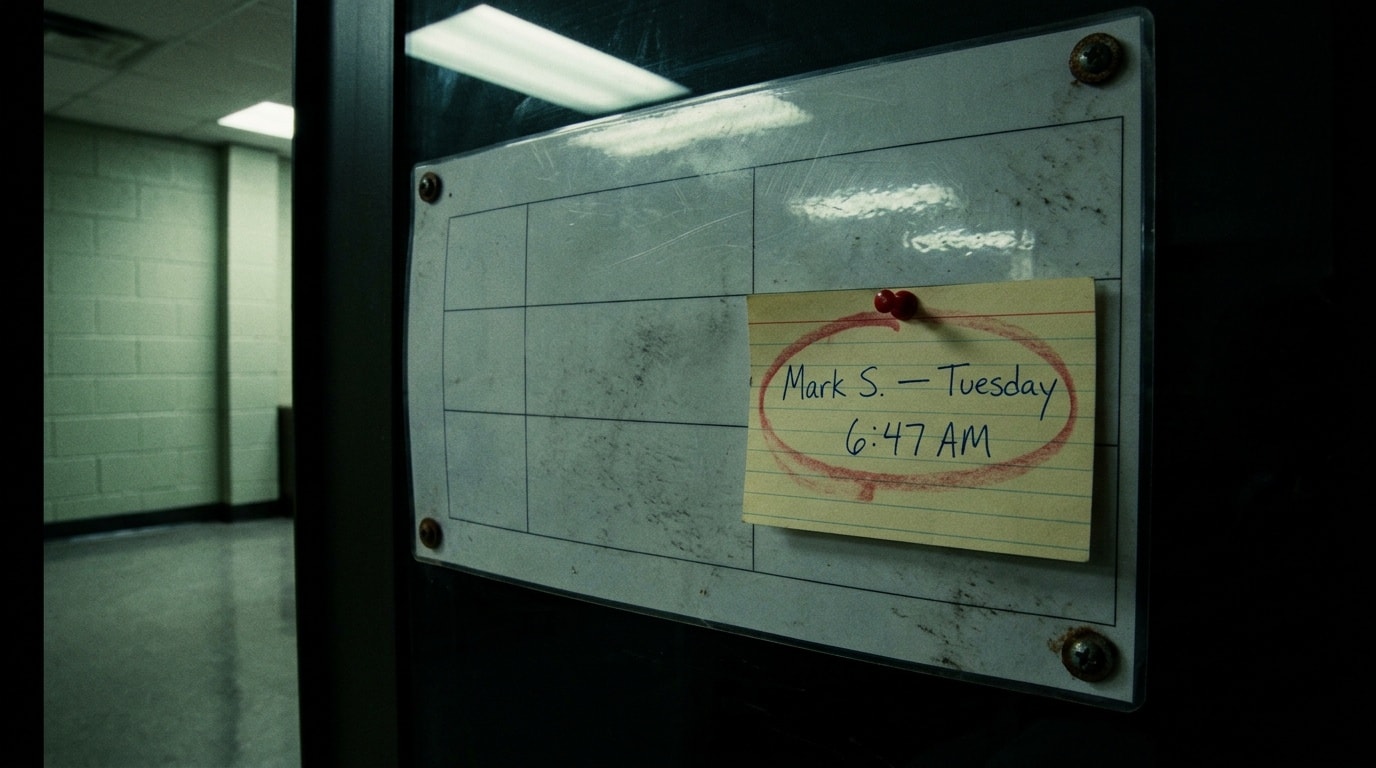
Cobel Knows Mark's Trash Schedule by Design
Cobel's knowledge of Mark's trash schedule reflects a behavioral baseline built through sustained, granular surveillance that exceeds any plausible institutional mandate, suggesting her investment in Mark is personal rather than merely operational.
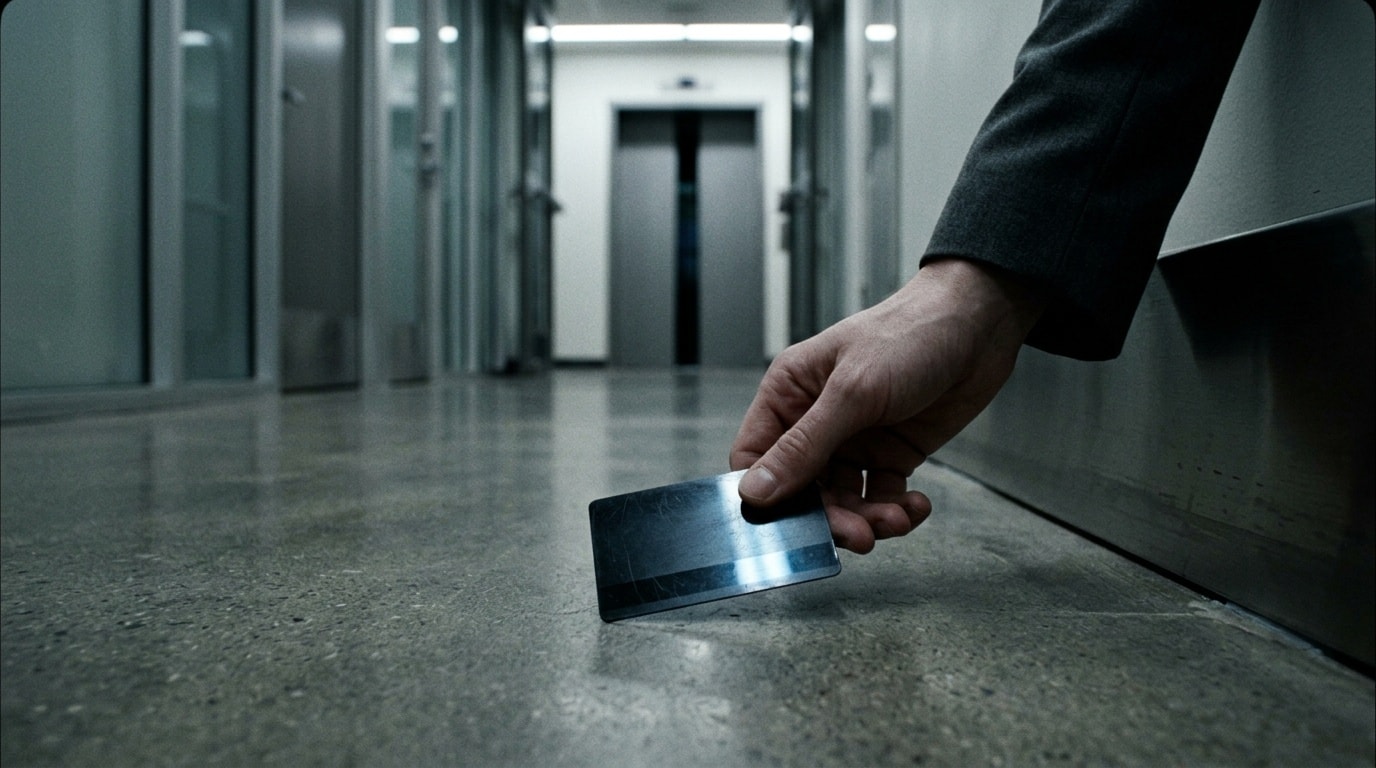
Graner's Death Forces Cobel to the Board
Cobel will walk into her board meeting at the Egan family gallery believing she controls the narrative around Graner's death, but Graner's security keycard is already in Mark's hands without her knowledge, meaning she will present the board with a complete account of an incomplete situation.