Lumon's Compliance Machine Built a Rival Husband
THE ARGUMENT
Lumon's family visitation protocol is a behavioral governance instrument, not a welfare accommodation, designed to convert emotional susceptibility into metered compliance. The system was precise enough to produce loyalty on demand, but failed to account for the comparative data it handed Gretchen: eighteen minutes with a version of her husband who asked about her children by name, expressed pride in his work, and promised to make them proud. Gretchen has already drawn the comparison, and the architecture that made it inevitable cannot revoke what she now knows.
How This Theory Works
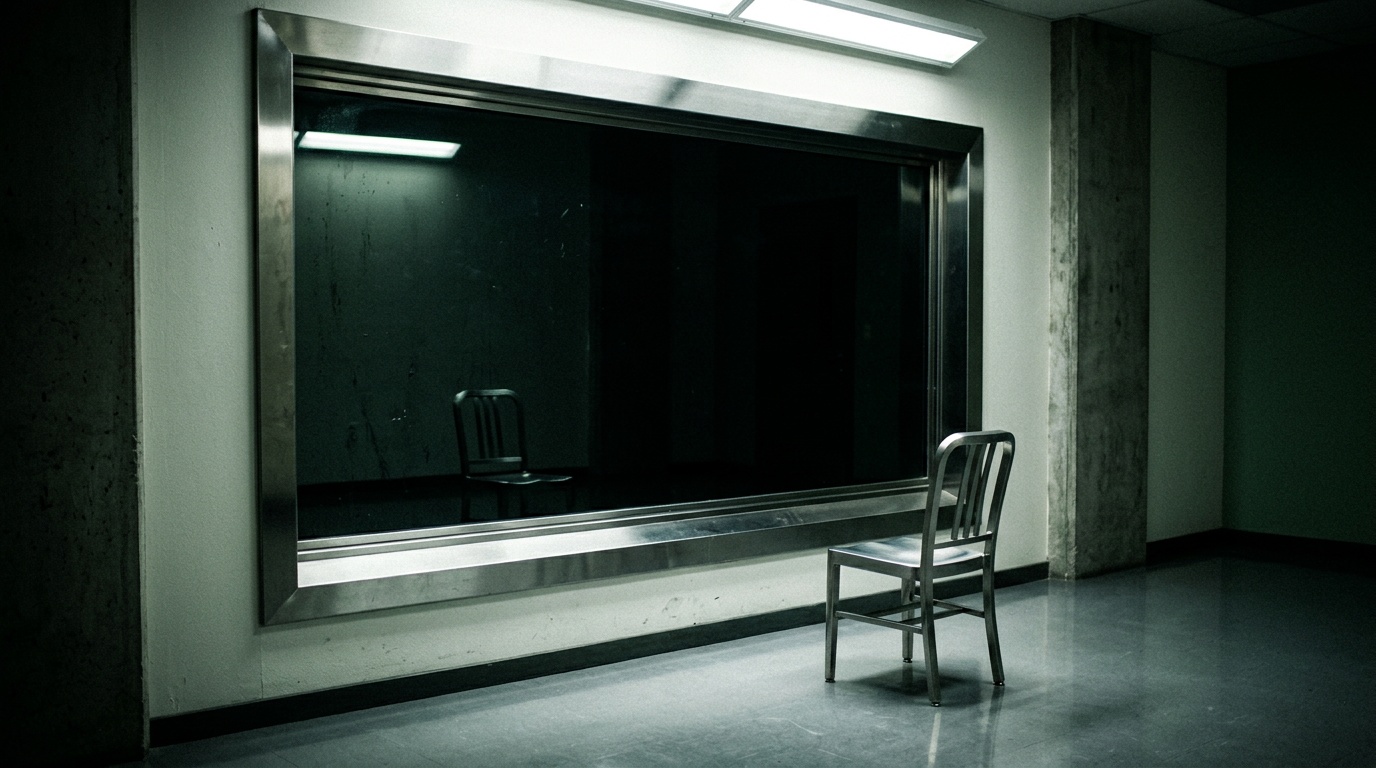
Lumon's family visitation protocol is a governance instrument built on a single architectural insight: that innies, stripped of continuous memory and relational history, remain emotionally susceptible to the people their outies love, and that susceptibility, properly rationed, produces more durable compliance than any threat. Miss Huang does not improvise Dylan's visit. She executes a ready system: eighteen minutes earned through demonstrated output, a stopwatch started at the threshold, surveillance active throughout, an audible interruption the moment any privileged disclosure approaches. Every structural element suppresses spontaneity and enforces Lumon's preferred relationship between emotional exposure and behavioral reward. The family is not given to Dylan. A timed sample of the family is dispensed to him, calibrated to generate loyalty without generating power. That distinction is the mechanism. Dylan leaves motivated to keep earning, which means Lumon retains the lever. The security room staging makes the company's logic visible: family intimacy is placed literally inside Lumon's surveillance infrastructure, surrounded by monitors displaying outie-life imagery, so that the most human moment Dylan has ever experienced occurs at the center of the company's control apparatus. Lumon has commodified love and built a governance structure on the premise that innies are most manageable at the exact moment they feel most human.
What Lumon could not model is Gretchen. The protocol is calibrated to manage Dylan's responses. It has no procedure for managing hers. When Gretchen tells innie Dylan she loves him and then apologizes for the reflex, she introduces a variable the system cannot suppress without revealing itself. Miss Huang's monitoring can interrupt privileged disclosures, but it cannot reclassify love as a sensitivity violation. The apology is the critical detail. Gretchen does not know she has done anything the company would want to contain. She is simply apologizing for an emotion directed at a man she recognizes by face but cannot fully reach. That unrehearsed quality is precisely what Lumon's architecture could not script from the other side. Dylan receives not a managed emotional sample but unmediated evidence that his outie's life contains genuine tenderness directed at him specifically, something no wellness session, perks board, or monitored visit was designed to deliver.
But the protocol's deeper failure belongs to Gretchen, not Dylan. The visit was designed to give Dylan a stake in his outie's life. What it actually produced was a controlled experiment in which Gretchen, for eighteen minutes, received the version of her husband that outie Dylan has apparently never been. Innie Dylan asked about her children by name. He expressed pride in his work. He promised to make the family proud. When he asked her directly whether his outie is a screwup, she did not answer. That silence is the episode's sharpest beat. She is too honest to lie and too careful to wound him with the verdict she has apparently long since delivered to herself. The silence does not protect Dylan. It protects her own emerging distinction between the two men who share his face.
Her description of the visit to outie Dylan afterward, a careful 'it was good,' reads less as contentment and more as deliberate understatement. She is managing information about an encounter she does not yet have language to explain. The apology after 'I love you' was not misdirection. The emotion was accurate and she knows it. Innie Dylan earned something from Gretchen in eighteen minutes that outie Dylan has apparently not earned in years, and Lumon's protocol handed her the comparison. The system rationed access to prevent innies from accumulating power. It did not account for the comparative data a wife accumulates when she watches a man with her husband's face behave like the husband she wanted.
This is the structural vulnerability Lumon designed into its own most sophisticated control mechanism. Dylan's closing promise, that he will be good and make them all proud, is not a pledge to Lumon. It is a pledge to his family. The behavioral output looks identical to what the company required, but the motive has migrated entirely outside corporate authority. Before the visit, Dylan's compliance was transactional. After it, there are specific people whose existence he feels the weight of, and his willingness to act, demonstrated already in the overtime contingency, now has a reason that has nothing to do with Lumon's reward system. The company can extend or withdraw future visits based on output metrics, but it cannot revoke the loyalty structure Dylan already carries, and it cannot undo what Gretchen already knows. The love it weaponized was never its property to calibrate. Gretchen's reflex simply made that fact visible, and visible in the one direction Lumon cannot surveil: inward, in a woman who has already begun to grieve the husband her husband was never allowed to become.
Is this theory convincing?
Key Evidence
Visit Framed as Earned Reward
Miss Huang explicitly tells Dylan that through good behavior and output he has earned an eighteen-minute visit with his outie's wife, Gretchen, framing emotional access as a transactional compliance reward.
Stopwatch Timing of Family Contact
Miss Huang starts a timer when Dylan enters the room and opens the door precisely when his time expires, reducing an emotional family encounter to a metered, monitored exchange controlled entirely by Lumon.
Disclosure Restrictions During Visit
Miss Huang's voice interrupts the visit to warn against sharing anything privileged or sensitive, demonstrating that Lumon actively surveils and constrains the emotional content of the visit.
Dylan's Post-Visit Compliance Pledge
Dylan ends the visit by telling Gretchen he will be good and make them all proud, showing that the encounter produces the precise behavioral outcome Lumon requires without any direct threat or punishment.
Children as Emotional Discovery
Dylan learns for the first time during the visit that he has three young children, generating an immediate and genuine emotional attachment that Lumon can now leverage by controlling future access.
Security Room Setting for Visit
The visit takes place inside a security room surrounded by monitors displaying images of Dylan's outie life, placing family intimacy literally inside Lumon's surveillance infrastructure.
This theory was evaluated using Theory Atlas editorial standards, including evidence review, narrative fit, and competing interpretation analysis. Learn how Theory Atlas evaluates theories →
Other Theories for S2E03
Irving's Dreams Are a Map to the Exports Hall
Irving's outie has been painting a specific hallway that corresponds to a real location on the severed floor: the exports hall in Optics and Design.
Lumon's Loyalty Protocol Destroys What It Was Built to Preserve
Lumon's recanonized Kier paintings are a standardized loyalty protocol that instrumentalizes identity as recursive capture — transforming an employee's own self-image into the mechanism of their containment.
Mark Is Mapping the Severance Switch Itself
Mark's outie is conducting a structured timing experiment on the severance transition itself, using a stopwatch and silent manual count to measure the switch as a quantifiable interval Lumon has never disclosed.

Lorne Knows Ms. Casey Was Not Released
Lorne does not believe Ms.
Lumon Weaponizes Language to Control Innies
Lumon has built a cross-departmental linguistic register that delivers Kier-based ideological conditioning below the threshold of conscious recognition, embedding doctrine not in what employees are told to think but in the grammatical structures through which they are permitted to report thinking it.
Reintegration This Early Changes Everything
Mark pursuing reintegration in episode 3 is a structural signal that the season's central conflict is something the show has not yet named, because no serialized drama spends its finale card this early without believing something worse is waiting.

Cobel Fled Because She Knew the Trap
Cobel reversed in the parking lot not from intuition but from recognition: the board's invitation carried the structural signature of a containment maneuver she had personally used against others, and she identified herself as the target before she reached the entrance.

Mark's Guilt Is Sabotaging His Innie Romance
Mark did not retain knowledge of Gemma by accident.