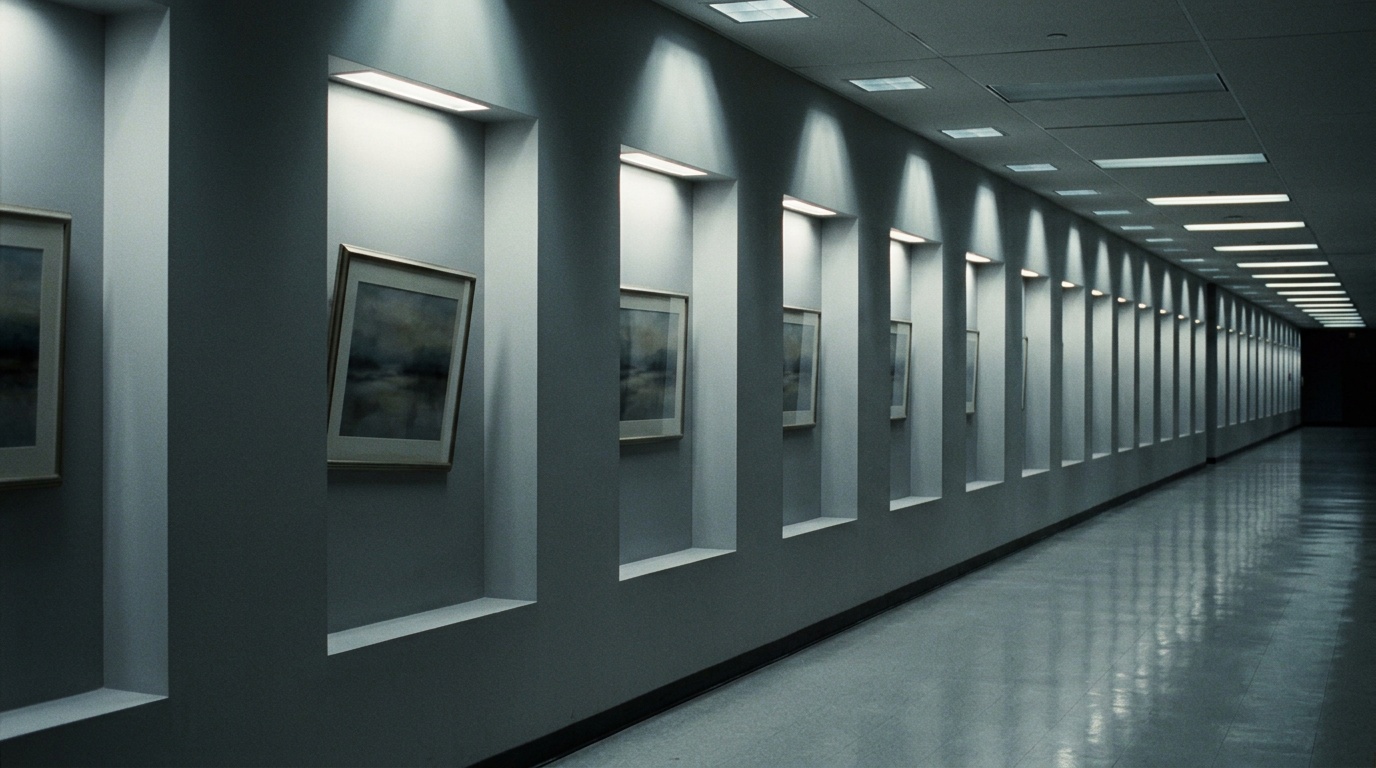
Lumon's Loyalty Protocol Destroys What It Was Built to Preserve
THE ARGUMENT
Lumon's recanonized Kier paintings are a standardized loyalty protocol that instrumentalizes identity as recursive capture — transforming an employee's own self-image into the mechanism of their containment. The protocol fails precisely because it is too legible as a tool: Natalie's disclosure that she received the identical gift converts the gesture from recognition into procedure, and Milchick boxing the paintings rather than displaying them marks a private conclusion that his loyalty was never met with genuine regard, only managed symbolism. The Board has quietly degraded the very mechanism it relies on most without gaining any instrument capable of detecting the shift.
How This Theory Works
Lumon has built its most sophisticated containment tool around a single, elegant premise: if the institution can make an employee's sense of self indistinguishable from its own founding mythology, loyalty becomes structurally self-enforcing. The recanonized Kier paintings delivered to Milchick are not a gesture of inclusion. They are the operational expression of that premise. The Board's framing is explicitly devotional — see yourself in Kier, our founder — language that does not invite Milchick into Lumon's history so much as it collapses the distance between his identity and the institution's, making his commitment to Lumon formally equivalent to loyalty to himself. The revision of Kier's image to mirror whoever holds a position of potential friction is not a correction of the institution's exclusionary structure. It is that structure operating at full sophistication, absorbing difference before it can become resistance.
The protocol's architecture depends on the gesture reading as personal. That dependency is its fatal vulnerability. Natalie's disclosure — that she received the identical recanonized paintings when placed in her current position — does not merely confirm that the gesture is procedural. It retroactively reclassifies everything the paintings were supposed to mean. What presented as Lumon seeing Milchick specifically now resolves into Lumon running a standardized response to a recurring institutional problem: employees whose identity might otherwise produce distance from Kier's historical image. The iconography is instrumentally elastic, revised not to reflect truth but to serve the loyalty needs of whoever currently needs to be caught. Milchick is not being recognized. He is being processed.
This is the sharpest thing the paintings expose, and it is irreversible once legible. Milchick has spent his career performing loyalty so thoroughly that the performance and the belief have become indistinguishable — to the Board and possibly to himself. The gift does not crack that faith from the outside. It reveals that his faith was never the point. The Board's understanding of Milchick is symbolic and categorical, not personal, and the standardized gift makes that visible in a way that years of corridor enforcement did not. He has been performing loyalty to an institution that has been performing regard for him. Neither side has been seen. The mutual performance has simply been running.
Milchick boxes the paintings rather than display them. That act carries the full weight of this argument. A man who puts the symbol of his institutional belonging into storage has completed a private assessment and reached a private conclusion — one he has not externalized, not acted on, not spoken aloud. The theory does not require him to defect, assist MDR, or take any visible action. His value to Lumon is not his obedience on any single occasion. It is the totality of his investment: the fact that he enforces, absorbs, and covers without requiring management. That investment was predicated, however implicitly, on the belief that the institution's regard for him was real. The paintings made the conditionality of that regard legible. Boxing them is the behavioral signature of a man who has registered what he was shown.
The Board has no instrument capable of detecting this. Lumon's enforcement infrastructure is designed to monitor severed workers, not to audit the interiority of the people running that infrastructure. Milchick's performance of loyalty is as intact as it has ever been at the surface. What the protocol has quietly produced is an enforcement layer now running on obligation rather than conviction — the same outputs, a hollower engine. The institution's most sophisticated containment tool failed precisely because it was too legible as a tool. Recursive capture requires the subject not to see the loop. Natalie named the loop. And the Board, having optimized the gesture for scalable deployment, built in exactly the disclosure that would make it visible.
Is this theory convincing?
Key Evidence
Board's explicit 'see yourself' framing
The board tells Milchick the paintings are intended to help him 'see yourself in Kier, our founder,' framing the gift in explicitly devotional terms that conflate personal identity with institutional loyalty.
Kier depicted as Black man
Milchick opens the box to find the entire Kier cycle repainted with a Black man as Kier, a revision of Lumon's canonical founder imagery that the show has never previously presented as flexible.
Natalie's identical prior gift
Natalie reveals she received the same recanonized paintings when placed in her current position, establishing that the gesture is an institutional protocol rather than a personal act of recognition for Milchick.
Milchick's ambiguous verbal gratitude
Milchick thanks the board and says it is meaningful to see himself reflected, a response that is formally correct for a Lumon employee but gives no clear signal whether his feeling is genuine or performed.
Kier as redeemable cult figure
The paintings position Kier as a Jesus-like figure whose likeness can be adapted across identities, suggesting Lumon's theology is designed to be universally absorptive rather than historically fixed.
Revisionist iconography as institutional pattern
The recanonization of Kier's appearance implies Lumon's historical mythology is instrumentally malleable, revised not to reflect truth but to serve the loyalty needs of whoever currently holds authority.
This theory was evaluated using Theory Atlas editorial standards, including evidence review, narrative fit, and competing interpretation analysis. Learn how Theory Atlas evaluates theories →
Other Theories for S2E03
Lumon's Compliance Machine Built a Rival Husband
Lumon's family visitation protocol is a behavioral governance instrument, not a welfare accommodation, designed to convert emotional susceptibility into metered compliance.
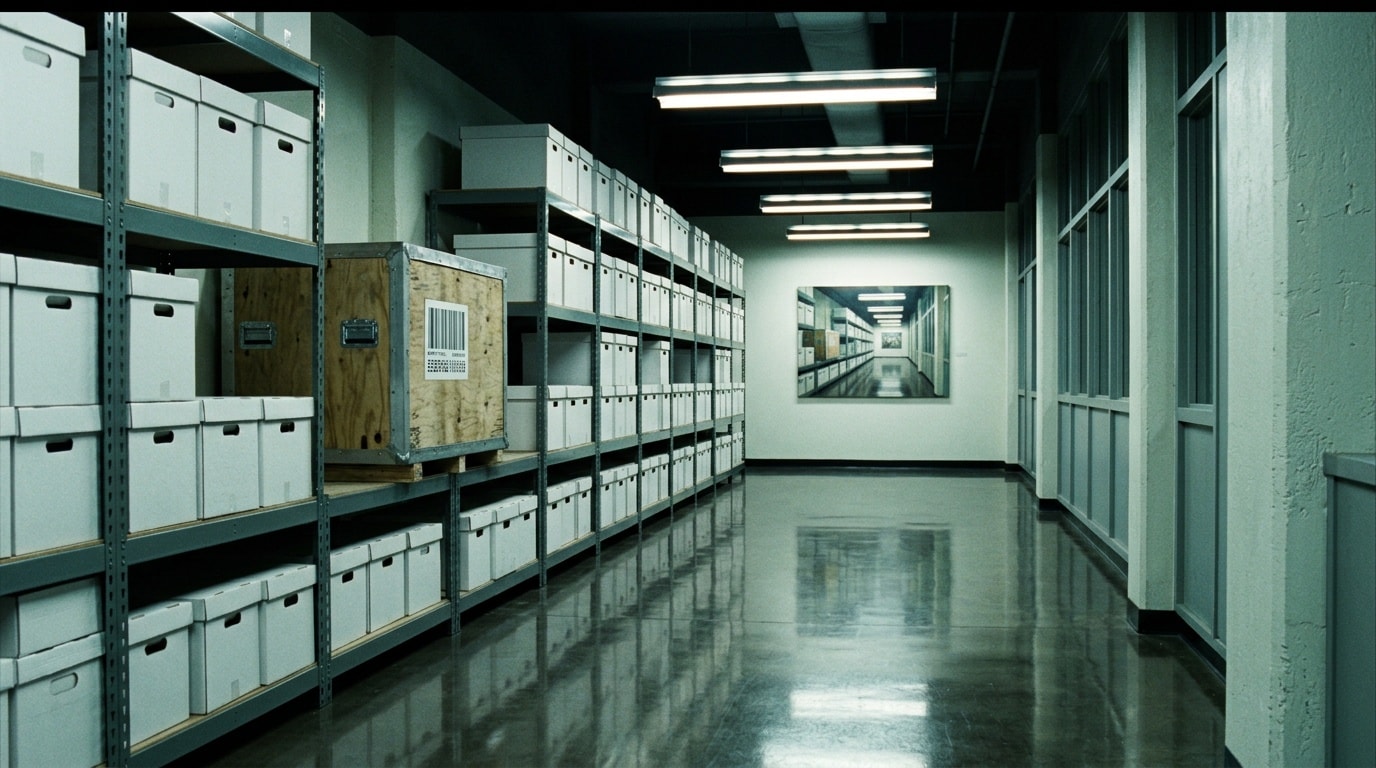
Irving's Dreams Are a Map to the Exports Hall
Irving's outie has been painting a specific hallway that corresponds to a real location on the severed floor: the exports hall in Optics and Design.
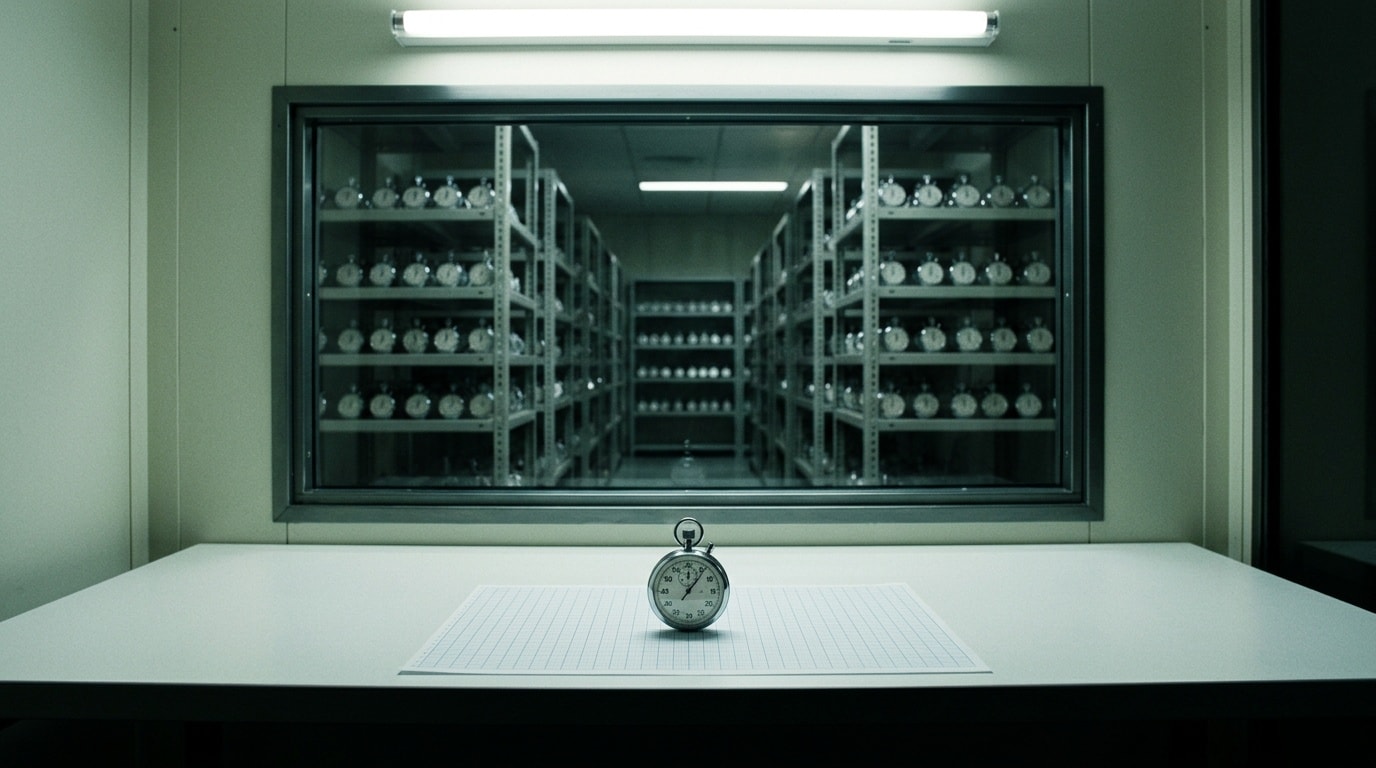
Mark Is Mapping the Severance Switch Itself
Mark's outie is conducting a structured timing experiment on the severance transition itself, using a stopwatch and silent manual count to measure the switch as a quantifiable interval Lumon has never disclosed.

Lorne Knows Ms. Casey Was Not Released
Lorne does not believe Ms.
Lumon Weaponizes Language to Control Innies
Lumon has built a cross-departmental linguistic register that delivers Kier-based ideological conditioning below the threshold of conscious recognition, embedding doctrine not in what employees are told to think but in the grammatical structures through which they are permitted to report thinking it.
Reintegration This Early Changes Everything
Mark pursuing reintegration in episode 3 is a structural signal that the season's central conflict is something the show has not yet named, because no serialized drama spends its finale card this early without believing something worse is waiting.

Mark's Guilt Is Sabotaging His Innie Romance
Mark did not retain knowledge of Gemma by accident.
Cobel Fled Because She Knew the Trap
Cobel reversed in the parking lot not from intuition but from recognition: the board's invitation carried the structural signature of a containment maneuver she had personally used against others, and she identified herself as the target before she reached the entrance.