
Lumon Manufactured the Grief It Now Sells Back
THE ARGUMENT
Lumon embedded its own medical personnel inside a fertility clinic to identify and recruit psychologically vulnerable candidates, moving Gemma from patient to captive through a mechanism she would have experienced as gradual mercy rather than coercion. Once enrolled, she was subjected to room-by-room emotional extraction designed from a pre-enrollment psychological profile, producing calibrated data for a commercial identity-replacement technology. The program's intended recipient is Mark, meaning Lumon did not exploit a private tragedy but engineered it as the opening move in a product development cycle.
How This Theory Works
Lumon did not find Gemma at the point of severance. It found her in a clinic waiting room, and everything that followed unfolded by institutional design. The same Dr. Mauer who operates on Lumon's testing floor is visible in the background of the flashback to the fertility clinic Gemma and Mark attended. His presence is not a continuity detail. It is the seam where two institutional spaces reveal themselves as one. A company that embeds its own physician inside a fertility clinic is not coincidentally positioned to identify psychologically vulnerable candidates at their most desperate. It is structurally positioned to find them, and Gemma's repeated pregnancy losses made her precisely the profile this system was built to locate. The Chikhai Bardo mailing list is the material thread that converts a clinical visit into a recruitment pipeline. Gemma states she got onto the list at the clinic. Those same cards, artifacts of Lumon's testing floor recognizable from season one, arrived at her home through that list. The sequence is the argument: clinic, then cards, then company. Whatever Gemma believed she was enrolling in, Lumon had been shaping her trajectory before any conversation began. She would have encountered the institution first as a healthcare provider and only later as something else entirely, a reframing so gradual it would be difficult to name as coercion even from the inside.
The sharpest implication of that clinic relationship is not that Lumon exploited her grief but that the institution may have been producing it. If the clinic was a Lumon front, the procedures performed there were potentially preparation rather than treatment, configuring her body and psychology for a role she had not agreed to in a program she did not yet know existed. The crib Mark purchased confirms the pregnancy was advanced enough to be planned for, meaning the loss was total rather than early and abstract. That magnitude of suffering is exactly what the system requires. A woman emerging from that solitude, the show frames it with deliberate spatial precision, Mark present but unreachable, a closed door between them, is a woman for whom a predatory institution can position itself as the only available mercy. Severance offered at that moment would not have needed to look like a corporate program. It would have looked like relief.
Once inside, the research Gemma is subjected to reveals that Lumon held a detailed psychological profile before she arrived. Mark states earlier that Gemma hates writing thank-you notes. The Allentown room requires her to write them. For that correspondence to exist, someone built the room architecture from personal knowledge of her specific aversions, and that knowledge had to predate enrollment. This is not a randomized discomfort study. The institution knew exactly what would hurt her and engineered the rooms accordingly. The broader room inventory follows the same logic at scale: dental torture isolates pain, simulated turbulence isolates fear, the card-writing room isolates something closer to social dread and regret. Each chamber is designed to produce a discrete emotional state in isolation, and Bernhard's control over room access and sequencing indicates the order is itself part of the experimental design. The pain-mapping interrogations after each exit are the extraction mechanism. Lumon is not stress-testing a person. It is stress-testing specific emotional configurations one at a time and cataloguing the physiological signatures. That is product development.
Gemma's severance is not incidental to this design. It is the design's core condition. Her innie experiences every emotional response without the cognitive context to recognize what is being done or to refuse it. She cannot identify the thank-you note room as a chamber built from her own history. She generates clean data precisely because the severance strips each response of its narrative meaning, leaving only the physiological structure Lumon needs to measure. The experiment requires her not to know. What is extracted from Gemma is not her suffering but the map of her suffering, rendered in a reproducible form. This points toward a product distinct from standard severance. The original procedure partitions memory across time. What is done to Gemma room by room is different in kind: identity is replaced at a spatial threshold, installed on entry and terminated on exit, cycling through distinct psychological states with a recoverable baseline between trials. Gemma is the proof of concept. Her body is the operational cost that does not appear in the product literature.
The program has a second address, and it is Mark. Dr. Mauer's language to Gemma names the mechanism without naming it plainly. He does not promise reunion. When she asks whether she will see Mark again, Mauer responds that Mark will benefit from the world she is siring, not that he will see her, not that she will return, but that he will benefit. The distinction is everything. A wife returns to her husband. An instrument is delivered to its recipient. Mauer draws a symmetry that reveals the logic: Kier will take away Mark's pain just as Kier has taken away hers. Gemma's pain was taken by severance. Her innie carries no grief because her innie has no access to her own life. If the method for removing Mark's pain follows the same logic, the vehicle is whatever Gemma has been made into across those rooms, and the data extracted from her suffering will be used to reach the part of Mark that a standard work contract cannot touch: the outie who still mourns, who has not yet been severed from the thing that makes him grieve. Mark's enrollment reads, in this light, not as a broken man stumbling toward relief but as the last step in a sequence Lumon had been running since the clinic waiting room. She must remain alive for the program to function. She must remain hidden from Mark for his grief to remain raw and usable. The fertility tragedy is not backstory. It is Stage One of a vertically integrated pipeline in which grief is both the entry criterion and the commercial product, and its intended final customer was always the man who closed the door on the other side of it.
Is this theory convincing?
Key Evidence
Dr. Mauer at the Fertility Clinic
In a flashback to the fertility clinic Gemma and Mark attended, Dr. Mauer, who operates on Lumon's testing floor, is visible in the background, placing him at the point of her initial contact with Lumon-affiliated medicine.
Chikhai Bardo Mailing List Origin
Gemma states that she got onto the mailing list at the clinic, and the Chikhai Bardo cards she received at home and later worked through in the sub-basement are the same Lumon artifacts seen in season one, establishing a direct pipeline from clinic to company.
Lumon Clinic Ownership Pattern
The presence of Dr. Mauer and the subsequent Lumon-linked mailings sent to Gemma's home suggest the fertility clinic is owned or controlled by Lumon, functioning as a recruitment front rather than a legitimate medical practice.
Fertility Treatments as Testing Preparation
The treatments Gemma received at the clinic appear unrelated to genuine fertility assistance and instead may have been early preparation for her eventual role on the testing floor.
Targeting Grief and Vulnerability
Lumon's selection of Gemma following her miscarriage and infertility struggles fits a pattern of deliberately identifying people in states of psychological distress, using pain as a recruitment lever.
Testing Floor Cards at Home
The Chikhai Bardo flash cards that appear as Lumon testing floor materials in season one are shown arriving at Gemma's home address through the clinic mailing list, collapsing the distance between her private life and Lumon's institutional program.
This theory was evaluated using Theory Atlas editorial standards, including evidence review, narrative fit, and competing interpretation analysis. Learn how Theory Atlas evaluates theories →
Other Theories for S2E07

Cold Harbor Is Gemma's Final Destination
Cold Harbor is a single mechanism with Mark and Gemma on opposite sides of the severance boundary, with his stalled 96% figure tracking her room-by-room progression rather than any work output he controls.

The Chip Is the Product, Not the Worker
The severance chip is Lumon's actual product, with the corporate program functioning as a deliberate normalization phase before mass consumer deployment marketed as relief from pain, tedium, and discomfort.
Reintegration Kills Both Marks, Creates One
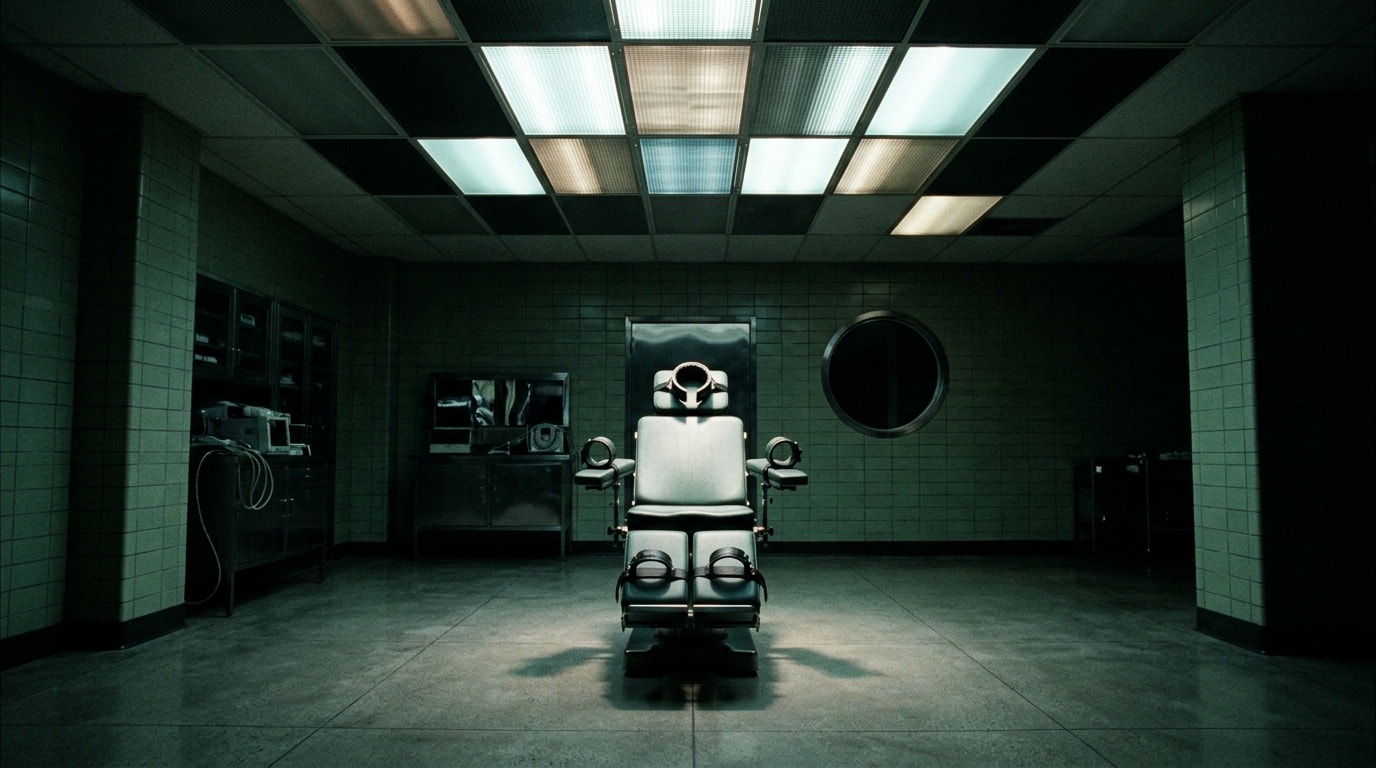
Mark's reintegration destroys both the innie and the outie, producing a third entity with simultaneous access to memories neither version was designed to hold, leaving no clean seam at which re-severance can occur.
Bardo Cards Are Lumon's Consciousness Transfer Keys
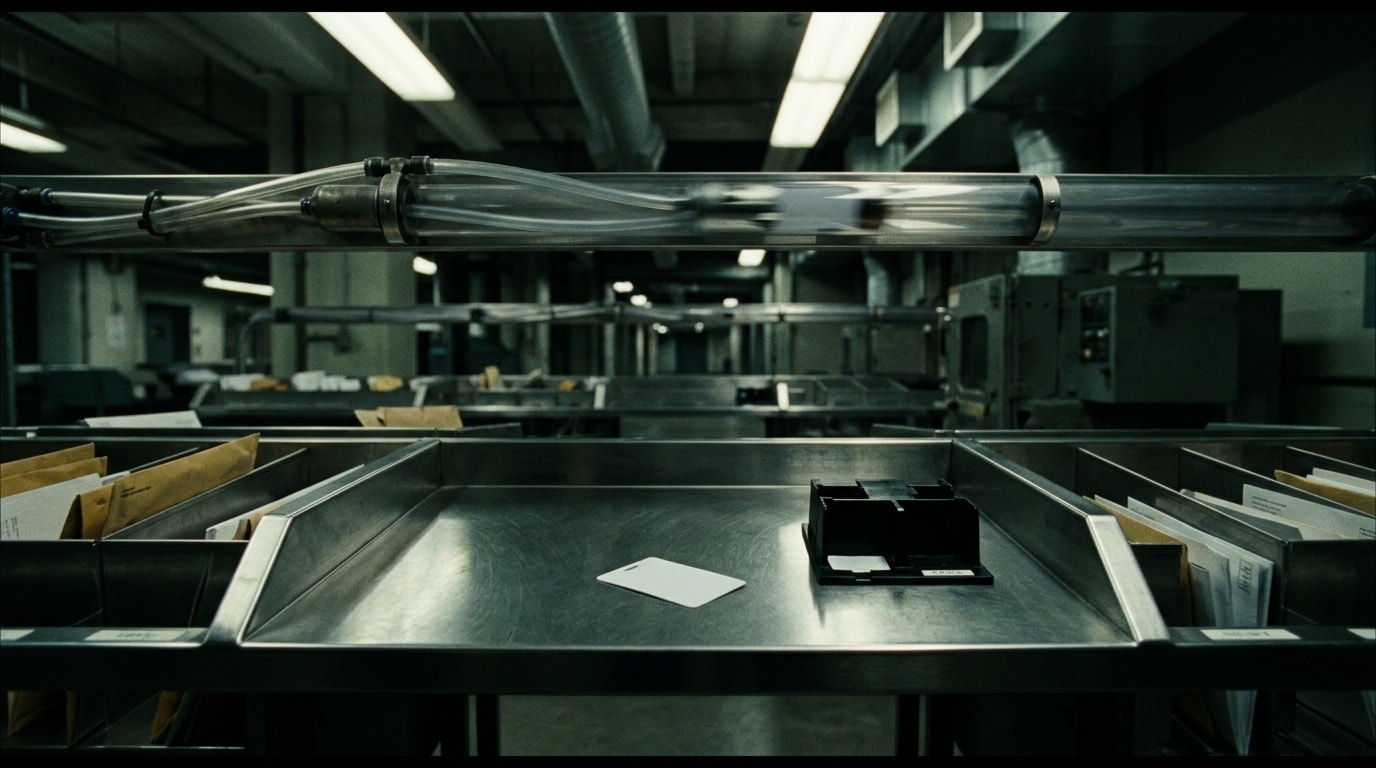
The Bardo cards Lumon sent to Gemma and the cards Dylan stole from O&D are the same class of operational instrument, forming a single continuous pipeline that connects Lumon's external recruitment to the internal processing of severed consciousness.