Beesbury Names the Crime No One Will Investigate
THE ARGUMENT
The Green council's coup rests on a charge its members never rebut: Lyman Beesbury's argument that a king well the night before does not reverse thirty years of succession policy on his deathbed with only the new heir's mother as witness. Criston Cole kills him before he finishes making it, and the council continues without supplying the answer. The silence is not a storytelling gap. It is the point.
How This Theory Works
Beesbury is right, and the show knows it. He had served alongside Viserys longer than any sitting council member. He watched the king defend Rhaenyra's claim for decades without wavering once. When he names the logical impossibility at the center of the Green succession, no one in that room disputes his facts. They dispute his conclusion. The facts themselves, that Viserys was well the previous night, that the only witness to his supposed reversal was Alicent, that Tyland Lannister has just casually referenced the council's long-laid plans as if everyone present already knew about them, go entirely uncontested. The show never provides the mechanism that would resolve this. If Alicent did not fabricate Viserys's final words, what specific circumstance caused a man in apparent health to die the very night the council's preparations were ready to execute? No one feels the need to ask. No one feels the need to answer.
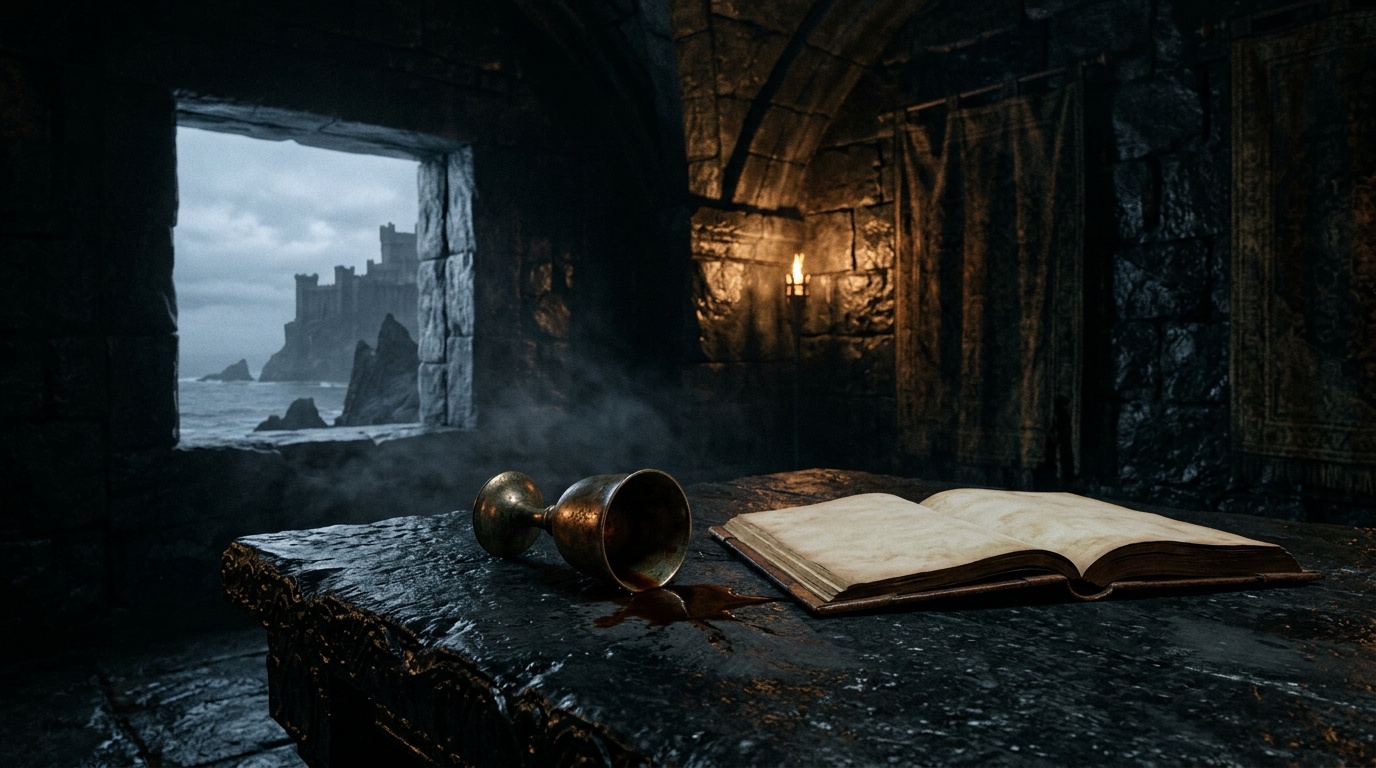
Criston Cole does not silence Beesbury with an argument. He silences him with his hands, slamming the old man's head into the table in a sealed room. Cole frames the act as a defense of the queen's honor, invoking slander. But Beesbury had not slandered anyone. He had made a factual observation and drawn a reasonable inference. The invocation of slander is itself a move: it converts an evidentiary challenge into a personal insult, which can be punished, rather than a logical argument, which must be answered. The show stages this substitution precisely. One kind of response replaces another, and the kind that could actually rebut the accusation never arrives.
What follows confirms the pattern. Otto refuses to let Beesbury's body be removed. The doors stay sealed until the council's business is complete. Harrold Westerling, the one man with both the standing and the sword to demand accountability, resigns instead of acting. Every institutional mechanism that might examine what happened in that room is either locked out, shut down, or walked away from. The council is not suppressing a false charge. It is suppressing the charge itself. That is a different and more damning act. Suppressing a false charge requires concealing the truth. Suppressing the charge itself means the truth has been judged irrelevant before it is even known. The council has structured the coup so that whether or not they killed Viserys, the answer cannot change anything. That is not guilt alone. That is a system designed to make guilt unprovable, and therefore inconsequential, which is the colder and more deliberate crime.
Is this theory convincing?
Key Evidence
Beesbury Names Only Alicent as Witness
Lyman notes that the only witness to Viserys's supposed deathbed change of heart is the new heir's own mother, framing this as inherently suspicious given decades of the king's consistent support for Rhaenyra.
Viserys Well the Night Before
Beesbury explicitly states that Viserys was well enough the previous day, making a sudden death immediately following the council's revelation of their long-laid plans structurally suspicious.
Cole Kills Beesbury Before He Finishes
Criston Cole seizes and slams Beesbury into the table before he can complete his accusation, fatally cracking the old man's skull, which terminates the only direct challenge to the succession's legitimacy inside the council chamber.
Council's Pre-Existing Plot Revealed
Tyland Lannister's comment that they can now proceed with their 'long laid plans' confirms that members of the Small Council had been scheming to install Aegon before Viserys died, lending credibility to Beesbury's suspicion that the timing of the king's death was not accidental.
Body Left in Chamber, Doors Shut
Otto refuses Grand Maester Orwyle's request to remove Lyman's body, ordering the council chamber doors to remain sealed until their business concludes, preventing any outside party from learning what occurred inside.
Westerling Resigns Rather Than Investigate
Lord Commander Harrold Westerling draws his sword at Cole's violence but then resigns from the Kingsguard in protest rather than pursue accountability, meaning no institutional authority will examine either death in that room.
Decades of Succession Advocacy Discarded
Beesbury argues that Viserys spent decades as a tireless advocate for Rhaenyra's right to the Iron Throne, making a spontaneous deathbed reversal implausible on its face and requiring an explanation the council never provides.
This theory was evaluated using Theory Atlas editorial standards, including evidence review, narrative fit, and competing interpretation analysis. Learn how Theory Atlas evaluates theories →
Other Theories for S1E09
Erryk's Conscience Becomes Rhaenys's Exit
Erryk's rescue of Rhaenys is not heading anywhere specific.
Alicent's Ignorance Was Otto's Most Sophisticated Weapon
Otto Hightower ran an active coup apparatus for years before Viserys died, and the conspiracy's most deliberately engineered feature was Alicent's complete exclusion from it.
Mysaria Uses Aegon as Political Bargaining Chip
Mysaria's demand that Otto shut down the child fighting rings was not the point of the exchange.
Rhaenys's Mercy Is a Power Play That Guarantees the War
Rhaenys withholds Meleys's fire not from loyalty to Rhaenyra or scruple about kinslaying, but from a cold, premeditated act of self-assertion by a woman who has already learned what Westerosi power does to female claimants, and who has decided to manage this war rather than serve in it.
Aemond Is Already Positioning Against Aegon
Aemond views Aegon's coronation not as a settlement but as an opening position, and he is already constructing the internal architecture that would allow him to govern from behind or beneath a king he considers illegitimate.
Cole Kills for Alicent, Not the Crown
Criston Cole does not serve the Green faction.
Mysaria Undersold Aegon to Protect Something Else
Mysaria's decision to trade Aegon for the closure of child fighting pits was not a failure to press her advantage but a deliberate refusal to enter the court's economy of power and debt.
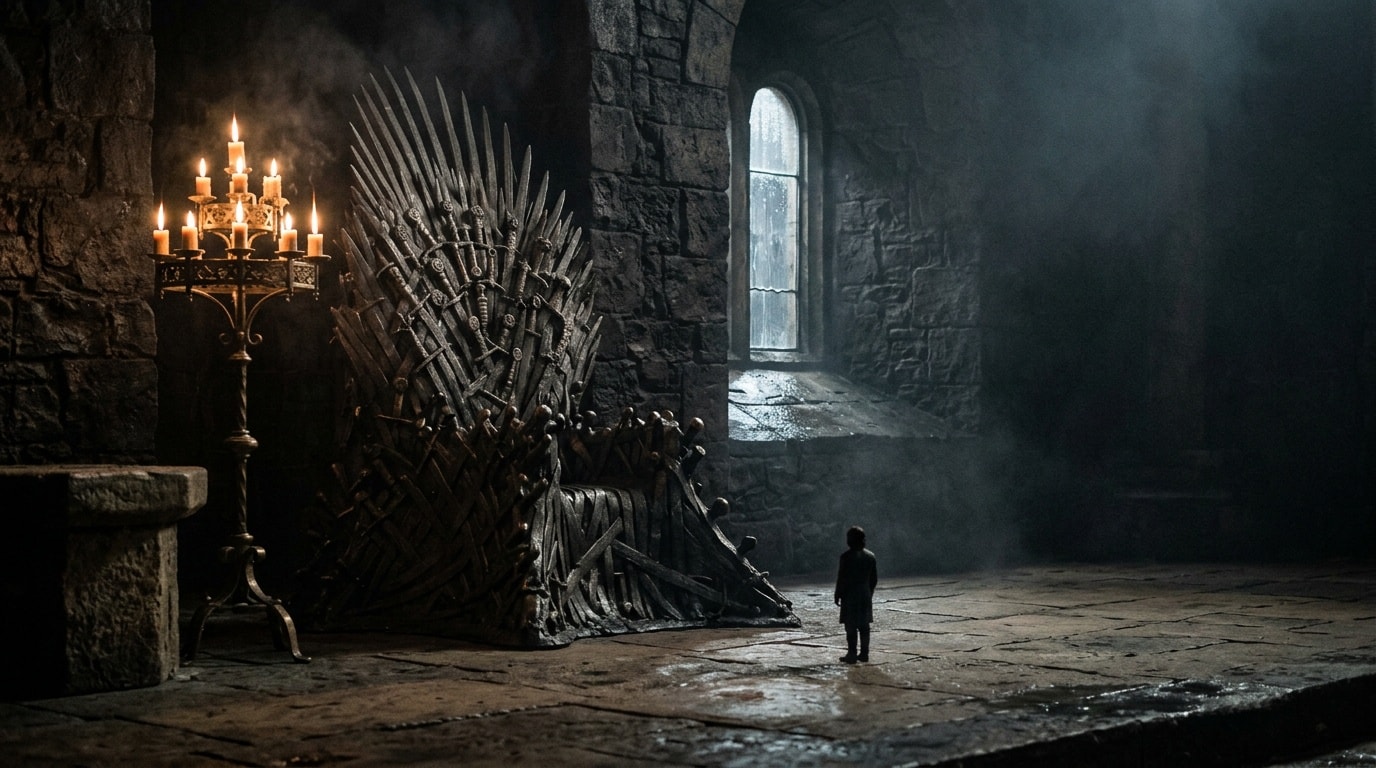
Helaena's Line Predicts the Throne's Fate
Helaena's line 'if one possesses a thing, the other will take it away' is not oblique character texture but a directional prophecy with a specific implied outcome: Rhaenyra will take the Iron Throne from Aegon, and the verb 'take' demands an agent, a deliberate act, and a victor rather than stalemate or mutual destruction.