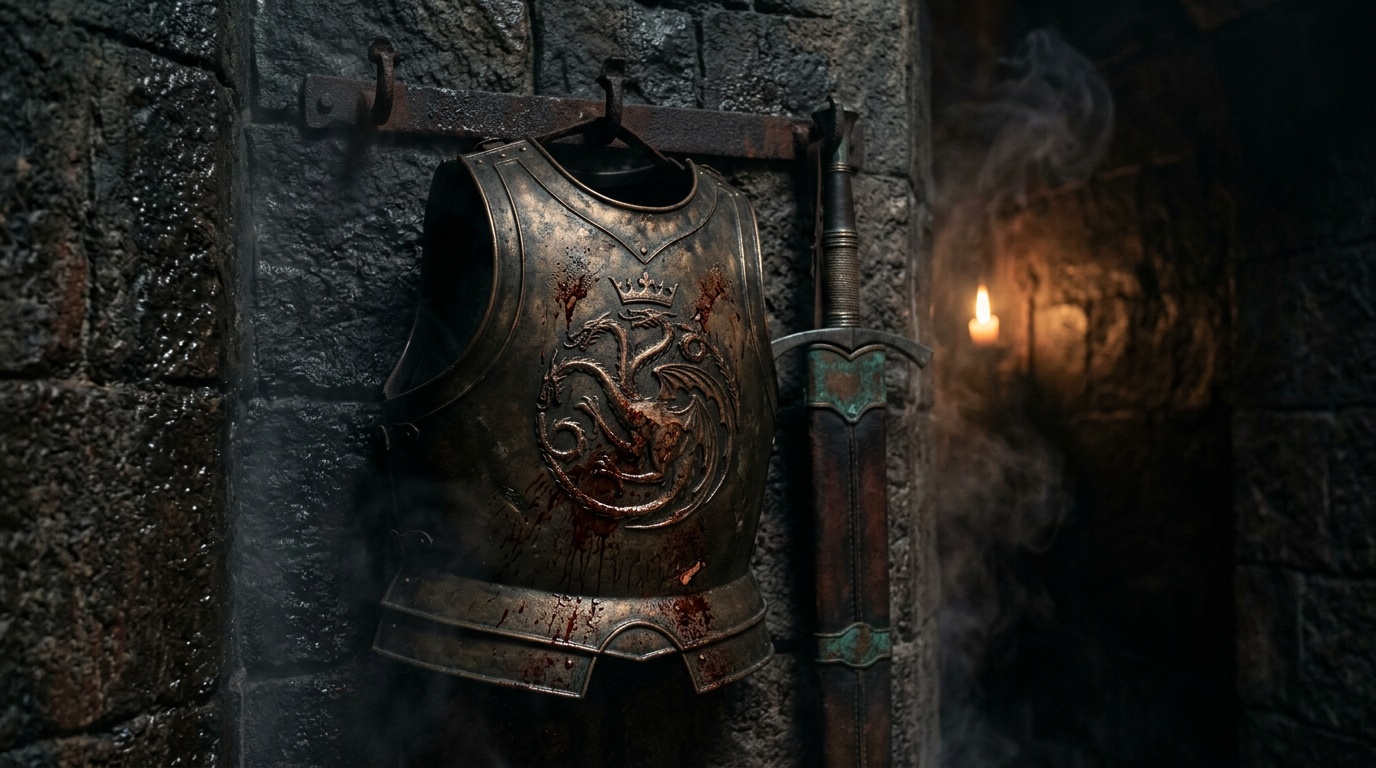
Erryk's Conscience Becomes Rhaenys's Exit
THE ARGUMENT
Erryk's rescue of Rhaenys is not heading anywhere specific. It is fleeing something specific: his own complicity in Aegon's cruelty at the fighting pits. The unconfirmed claim is that when Erryk eventually faces consequences for his defection, the show will treat his motivation as private moral escape rather than political conviction, and Rhaenys will discover she was the instrument of his conscience rather than its cause.
How This Theory Works
The evidence for this reading is sequential and precise. Erryk does not defect after learning about the succession plot. He defects after standing watch while children bled for Aegon's entertainment. His verbal declaration at the pit, that Aegon is unfit to be king, happens before any coup, before any ambush, before any locked door. He has already reached his verdict. What follows is not reasoning toward a conclusion but a conscience looking for an exit.
The shape of his arc confirms this. Fighting pit to verbal dissent to physical refusal to active rescue, all within a single episode, is not the pattern of a man executing a plan. It is the pattern of a man who cannot stop moving away from something. When he breaks into Rhaenys's quarters, he has already refused the Grand Sept ambush and could have simply left the Red Keep. He does not. He turns back. His declaration, that he cannot let the treachery stand, is almost always read as a political verdict on the coup. But Erryk has not said a single word about the succession. What he called treachery, explicitly and out loud, was Aegon at the pit.
The important structural parallel is what this kind of motivation produces downstream. A man acting to escape contamination is not the same as a man acting toward something. The escape is complete the moment he clears the Red Keep. Everything after that, the ride to Dragonstone, the bent knee, the sworn service to Rhaenyra, is the story he tells himself to give the flight a destination. The defection looks like a political commitment from the outside precisely because the man performing it needs it to look that way to himself.
What this points toward is a problem Rhaenys has not yet had to reckon with. She boards that dragon believing she is being freed by a man who chose her side. The show has not confirmed whether she ever learns, or whether Erryk ever tells her, that his defection was an act of self-rescue first. The unconfirmed claim is not about Erryk's past motivation, which the show has already displayed, but about whether that motivation will surface as a liability. A sworn shield who defected to escape contamination rather than to serve a cause is not the same political asset as one who defected out of loyalty. If Rhaenyra's court ever faces a moment that requires Erryk to choose again, the question of what he was actually running toward will matter. And Rhaenys, who accepted his hand in the dark, may be the one standing closest when it does.
Is this theory convincing?
Key Evidence
Erryk Witnesses the Fighting Pit
As Aegon's sworn shield, Erryk was personally required to accompany Aegon to child fighting events in Flea Bottom, giving him direct firsthand knowledge of Aegon's cruelty rather than secondhand report.
Erryk Declares Aegon Unfit Aloud
At the fighting pit, Erryk explicitly states to his brother that Aegon's attendance at such events is proof the prince is not fit to be king, making his moral position clear before any escape action occurs.
Erryk Refuses the Grand Sept Ambush
When Aemond and Criston ambush the Cargylls outside the Grand Sept, Erryk refuses to help deliver Aegon to the throne and flees the scene, marking his formal break with the Green faction.
Erryk Enters Rhaenys's Locked Quarters
Rather than escaping the Red Keep after abandoning the Aegon retrieval, Erryk returns and breaks into Rhaenys's guarded room, declaring he cannot let the treachery stand and demanding she follow him.
Erryk's Declaration Against the Coup
Erryk's explicit words, 'I cannot let this treachery stand,' frame his action as a moral verdict on the coup itself, not merely a personal favor to Rhaenys or a defection of convenience.
Sequential Withdrawal Across the Episode
Erryk's arc moves from fighting pit witness to verbal dissent to physical refusal to active rescue in a single episode, suggesting a conscience that breaks under accumulated evidence rather than a pre-planned defection.
This theory was evaluated using Theory Atlas editorial standards, including evidence review, narrative fit, and competing interpretation analysis. Learn how Theory Atlas evaluates theories →
Other Theories for S1E09
Alicent's Ignorance Was Otto's Most Sophisticated Weapon
Otto Hightower ran an active coup apparatus for years before Viserys died, and the conspiracy's most deliberately engineered feature was Alicent's complete exclusion from it.
Mysaria Uses Aegon as Political Bargaining Chip
Mysaria's demand that Otto shut down the child fighting rings was not the point of the exchange.
Beesbury Names the Crime No One Will Investigate
The Green council's coup rests on a charge its members never rebut: Lyman Beesbury's argument that a king well the night before does not reverse thirty years of succession policy on his deathbed with only the new heir's mother as witness.
Rhaenys's Mercy Is a Power Play That Guarantees the War
Rhaenys withholds Meleys's fire not from loyalty to Rhaenyra or scruple about kinslaying, but from a cold, premeditated act of self-assertion by a woman who has already learned what Westerosi power does to female claimants, and who has decided to manage this war rather than serve in it.
Aemond Is Already Positioning Against Aegon
Aemond views Aegon's coronation not as a settlement but as an opening position, and he is already constructing the internal architecture that would allow him to govern from behind or beneath a king he considers illegitimate.
Cole Kills for Alicent, Not the Crown
Criston Cole does not serve the Green faction.
Mysaria Undersold Aegon to Protect Something Else
Mysaria's decision to trade Aegon for the closure of child fighting pits was not a failure to press her advantage but a deliberate refusal to enter the court's economy of power and debt.
Helaena's Line Predicts the Throne's Fate
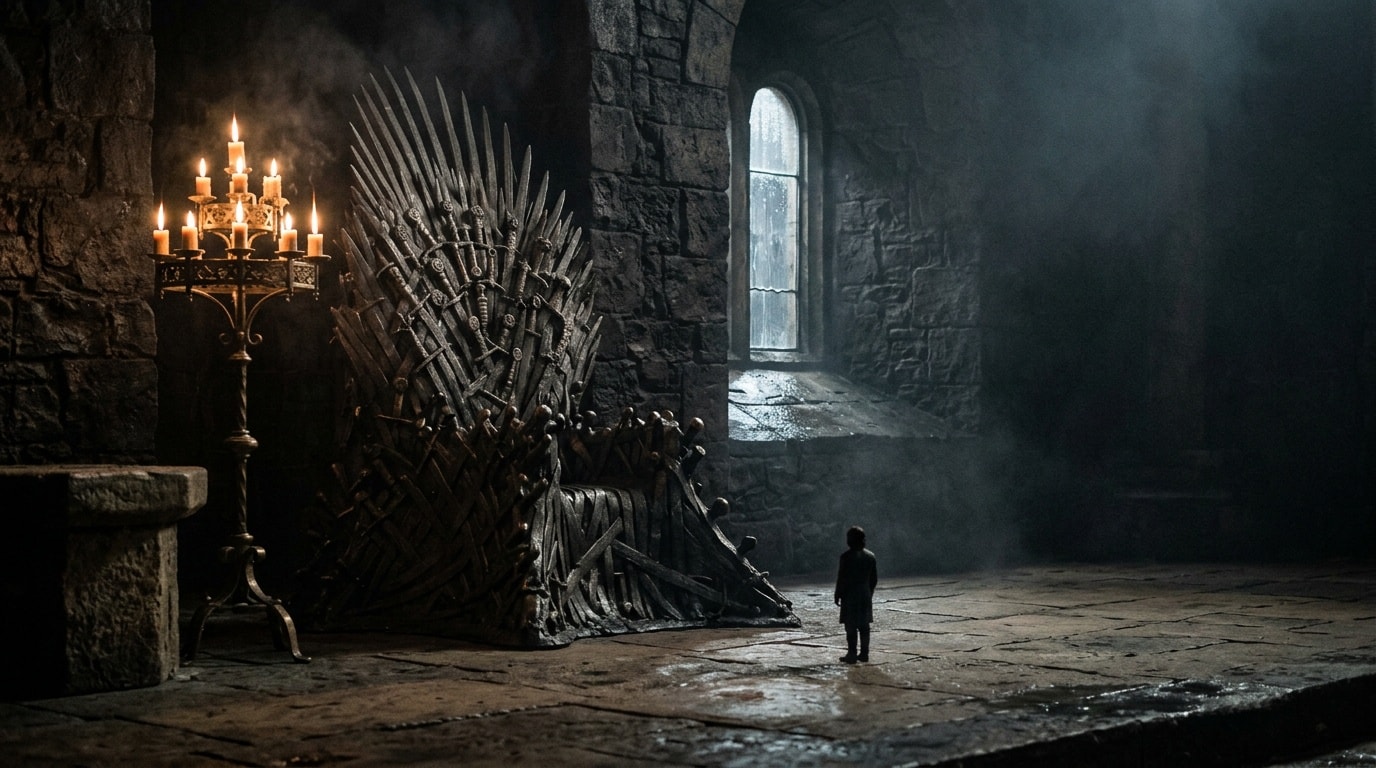
Helaena's line 'if one possesses a thing, the other will take it away' is not oblique character texture but a directional prophecy with a specific implied outcome: Rhaenyra will take the Iron Throne from Aegon, and the verb 'take' demands an agent, a deliberate act, and a victor rather than stalemate or mutual destruction.