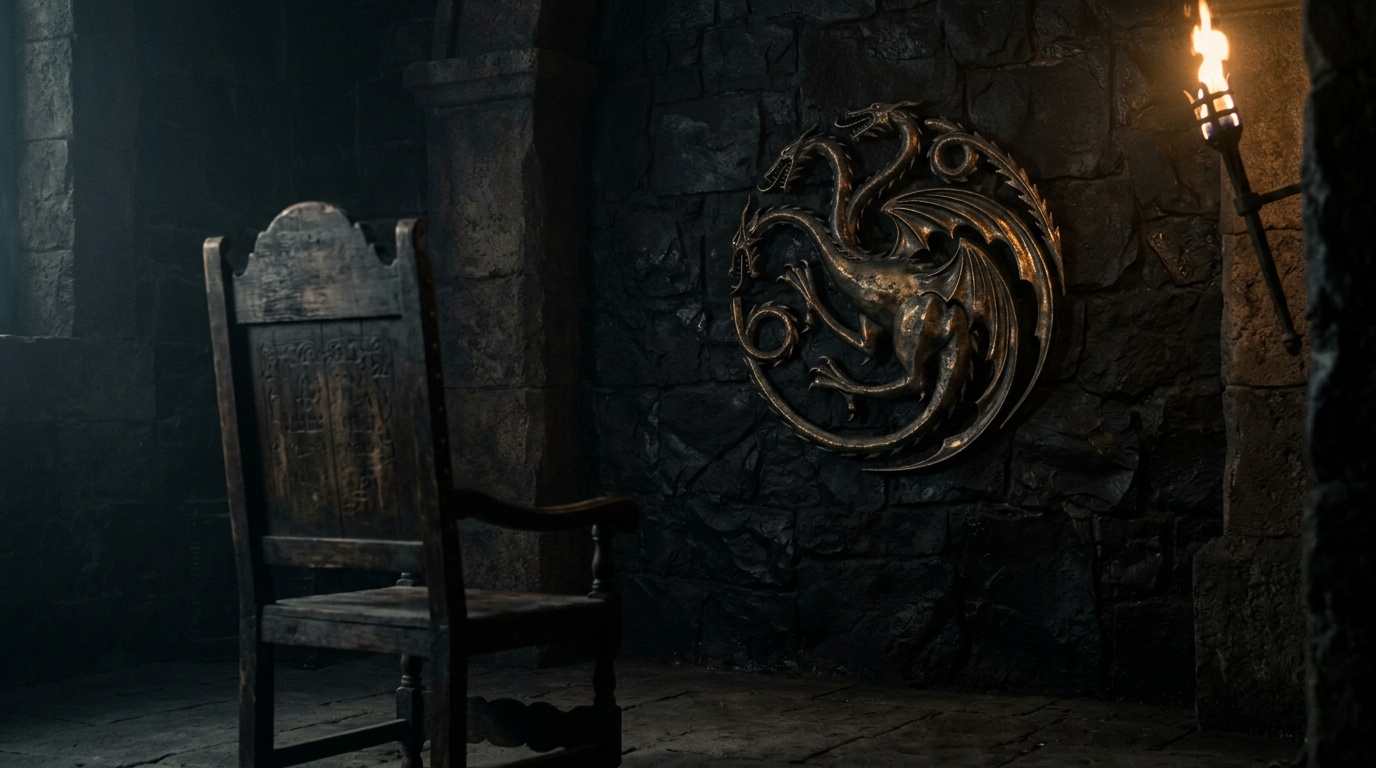
Ormund's Dragon Hunger Betrays His Creed
THE ARGUMENT
Ormund Hightower's condemnation of dragons and Targaryen blood is a tool of psychological domination over Daeron, and the evidence suggests Ormund knows it. His plan to make Daeron king depends entirely on Tessarion's military power, meaning Hightower supremacy is predicated on the very inheritance Ormund calls a taint. Ormund's insistence that Daeron suppress his affection for Tessarion reveals that the ideology is fragile, and that Daeron's bond with his dragon is the specific pressure point that could bring the whole structure down.
How This Theory Works
Ormund Hightower's ideology is structurally self-defeating, and the show has not yet forced him to answer for it. The same speech in which he condemns Targaryens as a savage race of inferior intellect whose dark spells created abominations ends with a command for Daeron to deploy Tessarion as the instrument of divine restoration. The theory holds that this contradiction is the character's load-bearing irony, and that the show is building toward a moment where it becomes impossible to ignore.
The mechanism matters because Ormund's ideology is what justifies the war's brutality. If Ormund is aware that he depends on what he despises, then every moral lesson he delivers to Daeron is a performance of superiority with no philosophical ground beneath it. His contempt for Targaryen blood becomes a social weapon deployed to keep Daeron psychologically subordinate while Hightower ambition feeds on Targaryen power. The boy is told his blood is a taint, and then handed a fire-breathing instrument of that taint and told to conquer with it. The execution of Leon staged in front of Tessarion makes this explicit: the dragon Ormund calls an abomination is the prop through which he teaches Daeron what righteous kingship looks like.
Daeron calling Tessarion by name and soothing her is the detail that makes this personal. His affection for the dragon is the one piece of himself Ormund's ideology cannot colonize, which is precisely why Ormund warns him against it. The warning is ideological maintenance. As long as Daeron feels the dragon as a creature to be loved, he is one step away from asking why the creature he loves is an abomination and whether the man who calls her that is telling the truth.
Ormund's insistence that Daeron keep emotional distance from Tessarion is the tell on the entire architecture: a theology secure in its own logic does not need to police the feelings of a fourteen-year-old toward his dragon. The urgency of that policing is a confession that the ideology is fragile. Daeron's bond with Tessarion is the specific crack through which the whole structure could collapse. What the show has not yet committed to is the psychological truth this arrangement requires: Ormund almost certainly knows the contradiction exists, which means his theology of Hightower supremacy was always a tool of domination over Daeron, constructed to keep the boy useful and subordinate rather than to describe the world accurately.
Is this theory convincing?
Key Evidence
Ormund's anti-Targaryen ideology speech
Ormund explicitly tells Daeron that Targaryens are a savage race of poor intellect who used dark spells to create dragon abominations, framing the entire war as a divine restoration of proper order.
Tessarion deployed despite condemnation
In the same conversation where Ormund denounces dragon magic as an abomination, he signals that Daeron and Tessarion are central to his military and political scheme, requiring the dragon's power to achieve his goals.
Daeron named king through dragon power
Ormund reveals his plan to make Daeron king, a plan that depends entirely on Tessarion's military value, meaning Hightower supremacy is predicated on the very Targaryen inheritance Ormund calls a taint.
Leon executed before Tessarion
Ormund forces Daeron to execute Leon in front of Tessarion, using the dragon as a stage prop for his lesson in righteous kingship while simultaneously preaching that dragons are abominations.
Daeron's affectionate bond with Tessarion
Daeron speaks to Tessarion by name, soothes her, and is visibly in an affectionate relationship with his dragon, which Ormund explicitly warns him against, revealing that the ideological contradiction lives inside Daeron himself.
This theory was evaluated using Theory Atlas editorial standards, including evidence review, narrative fit, and competing interpretation analysis. Learn how Theory Atlas evaluates theories →
Other Theories for S3E04

Ormund Plans a Hightower Dynasty Through Daeron
Ormund Hightower has spent twenty years engineering a Targaryen-blooded king whose conscience he already occupies, ensuring that real power flows to Oldtown regardless of who sits the Iron Throne.
Larys Is Engineering a Messianic Return
Larys Strong is holding Aegon in reserve until the story being built around his absence becomes irresistible.

Ormund Built a Trap From Rhaenyra's Legitimacy
Ormund Hightower selected Tumbleton as a reputational trap, embedding his army among civilians in a town that previously swore allegiance to Rhaenyra, precisely because it converts her greatest strength into a paralysis.

Caraxes Hunts Dragon Bonds Autonomously
Caraxes possesses an independent perceptive faculty for locating active dragon bonds and acts on it without Daemon's knowledge or consent.

Gold Cloaks Turn Graffiti Into Grievance
Rhaenyra's enforcement order against the 'Queen of Bastards' graffiti is doing more political damage than the slur ever could, because a coercive institution given open-ended discretion will always expand into the full space of that discretion.
Rhaenyra's Tavern Ban Will Cost Her Vermithor
Rhaenyra's tavern ban has completed the psychological conditions for Ulf the White's defection: she stripped him of the one context that gave his service meaning, granted none of his petitions, and then dispatched him over the enemy camp armed with full operational knowledge of her surveillance plan.

Helaena Concealed Her Pregnancy Deliberately
Helaena's concealment of her pregnancy, hidden even from Alicent, is a deliberate act of political and personal survival: the child carries a Green claim Rhaenyra cannot tolerate, and the timeline of the pregnancy makes Aegon's paternity genuinely uncertain.

Corlys Has Already Left Rhaenyra
Corlys Velaryon's unauthorized departure from court is the outward sign of an allegiance he has already ended in private, using a military campaign as a dignified cover for a withdrawal he decided on once Rhaenyra refused to legitimize his bastard sons while legitimizing her own.