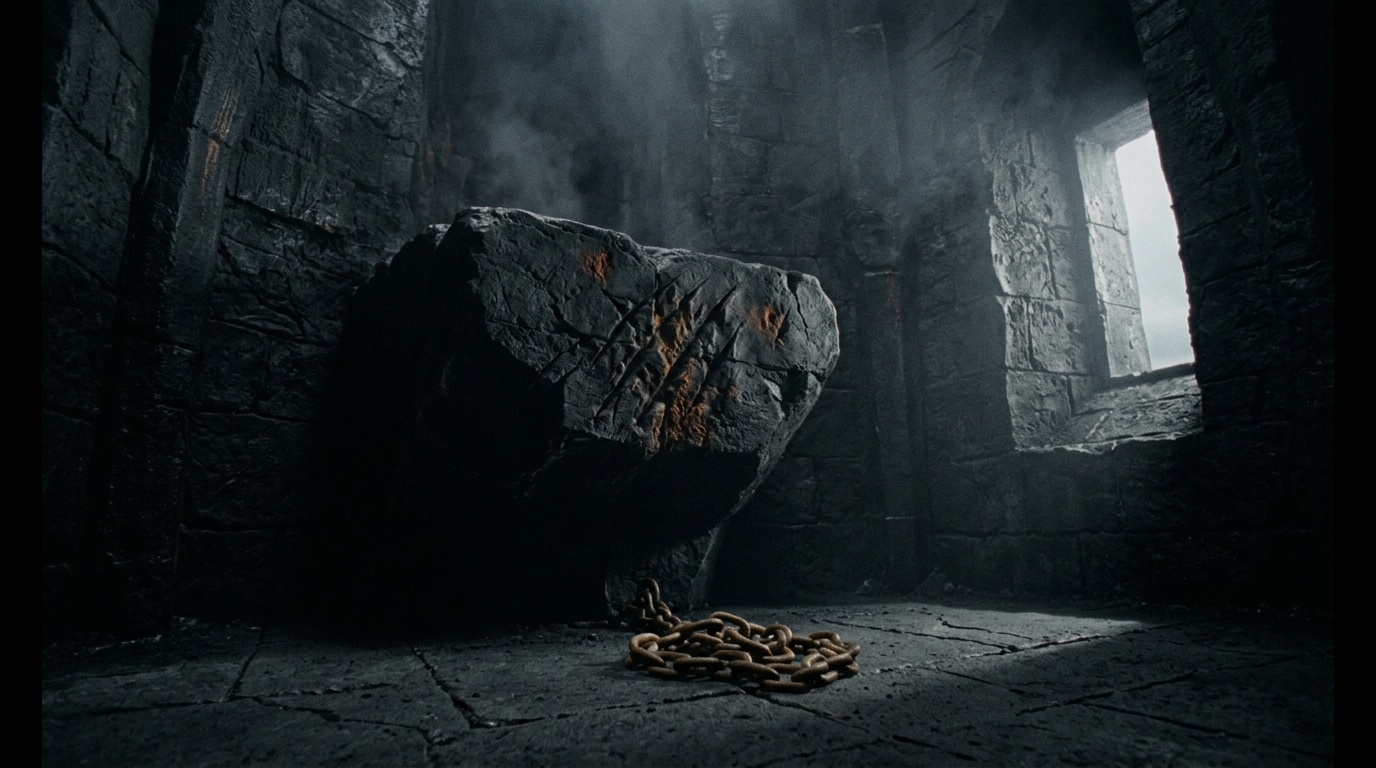
Rhaenyra's Tavern Ban Will Cost Her Vermithor
THE ARGUMENT
Rhaenyra's tavern ban has completed the psychological conditions for Ulf the White's defection: she stripped him of the one context that gave his service meaning, granted none of his petitions, and then dispatched him over the enemy camp armed with full operational knowledge of her surveillance plan. She has never treated Ulf as a person whose loyalty requires reciprocal investment, only as an asset whose compliance can be assumed. Losing Vermithor to betrayal would be the self-inflicted wound of her reign.
How This Theory Works
Rhaenyra has already lost Ulf the White. The tavern ban is the trigger, but what it exposes about her psychology is more damning than the strategic blunder itself.
When Ulf came before her with modest petitions, none of them self-serving in any grand sense, Rhaenyra responded by treating him as an asset to be managed. She forbade his tavern visits, confined him to the Red Keep except for dragon duty, and offered no compensation in return: no title, no land, no acknowledgment of what she was demanding. The scene frames this as tone-deaf condescension from a queen who does not understand what she is holding or how fragile that hold is. The deeper point is that her handling of Ulf is a revelation of how she categorizes people. She reads his petitions as an irritant, his pleasures as a security risk, and his loyalty as a given she can draw on without depositing anything in return. She has never genuinely reckoned with the possibility that a baseborn dragonrider might need to feel like a person with standing inside her cause.
Ulf's entire characterization has been built around the tavern as his natural habitat: the place where he spends freely, basks in recognition, and is celebrated as Ulf the Dragonlord. The show has placed him in that environment consistently enough that the pub life reads as the primary arena of his self-worth, the one context in which he feels powerful on his own terms. The ban eliminates that context entirely, while simultaneously demanding he project loyalty to a queen who just treated his petitions as an inconvenience. His visible shock and dismay at the restriction is framed as consequential, not incidental. The show is not presenting this as a minor grievance Ulf will absorb and set aside.
What sharpens the danger into something close to catastrophe is where Rhaenyra sends him next. Ulf is dispatched to watch Tumbleton and instructed to alert Hugh to the arrangement, which means he arrives above the Hightower forces carrying full operational knowledge of the crown's surveillance strategy. A man who holds no estate, swore no oath older than last week, and has just been stripped of the one pleasure that defined him is now the single aerial asset hovering over the enemy camp with complete awareness of how Rhaenyra is monitoring them. If anyone in that camp offers Ulf what she refused, the calculus is immediate and the information he carries makes him genuinely valuable to the other side.
What Rhaenyra cannot see, because she has never seen Ulf as a subject with a psychology worth reading, is that she has been running a slow conversion process herself. She has given him grievance, given him nothing to weigh that grievance against, and then handed him to the enemy at arm's reach. She is nearly finished with the work.
Is this theory convincing?
Key Evidence
Tavern ban delivered without compensation
Rhaenyra tells Ulf he may no longer frequent taverns and must remain within the Red Keep except for dragon duty, granting none of his petitions in return.
Ulf's visible appall at the restriction
Ulf's reaction to the tavern ban is framed as genuine shock and dismay, signaling that this restriction strikes at the core of what makes his service feel worthwhile to him.
Ulf dispatched to Tumbleton with full plan
Rhaenyra sends Ulf to keep watch over Tumbleton and instructs him to alert Hugh to the arrangement, meaning he carries operational knowledge of the crown's surveillance strategy directly above the enemy.
Tavern as Ulf's defining identity
The show has consistently placed Ulf in tavern environments where he spends freely and basks in recognition, making his pub life the primary arena of his self-worth.
Service demands without meaningful reward
Rhaenyra demands Ulf's loyalty and his dragon while offering no title, land, or reciprocal favor, treating his petitions for allies as an irritant rather than a reasonable exchange.
This theory was evaluated using Theory Atlas editorial standards, including evidence review, narrative fit, and competing interpretation analysis. Learn how Theory Atlas evaluates theories →
Other Theories for S3E04
Ormund Plans a Hightower Dynasty Through Daeron
Ormund Hightower has spent twenty years engineering a Targaryen-blooded king whose conscience he already occupies, ensuring that real power flows to Oldtown regardless of who sits the Iron Throne.
Larys Is Engineering a Messianic Return
Larys Strong is holding Aegon in reserve until the story being built around his absence becomes irresistible.
Ormund's Dragon Hunger Betrays His Creed
Ormund Hightower's condemnation of dragons and Targaryen blood is a tool of psychological domination over Daeron, and the evidence suggests Ormund knows it.
Ormund Built a Trap From Rhaenyra's Legitimacy
Ormund Hightower selected Tumbleton as a reputational trap, embedding his army among civilians in a town that previously swore allegiance to Rhaenyra, precisely because it converts her greatest strength into a paralysis.
Caraxes Hunts Dragon Bonds Autonomously
Caraxes possesses an independent perceptive faculty for locating active dragon bonds and acts on it without Daemon's knowledge or consent.
Gold Cloaks Turn Graffiti Into Grievance
Rhaenyra's enforcement order against the 'Queen of Bastards' graffiti is doing more political damage than the slur ever could, because a coercive institution given open-ended discretion will always expand into the full space of that discretion.
Helaena Concealed Her Pregnancy Deliberately
Helaena's concealment of her pregnancy, hidden even from Alicent, is a deliberate act of political and personal survival: the child carries a Green claim Rhaenyra cannot tolerate, and the timeline of the pregnancy makes Aegon's paternity genuinely uncertain.
Corlys Has Already Left Rhaenyra
Corlys Velaryon's unauthorized departure from court is the outward sign of an allegiance he has already ended in private, using a military campaign as a dignified cover for a withdrawal he decided on once Rhaenyra refused to legitimize his bastard sons while legitimizing her own.