
The Collective's Self-Erasure Loop: How Epistemic Blindness and Ideological Revision Lock Each Other In Place
THE ARGUMENT
The Collective sustains itself through two interlocking mechanisms that together form a closed system: joining destroys the cognitive and emotional architecture required to recognize what joining costs, while the institution's absolute pacifism undergoes continuous revision to retroactively exclude its own founding coercion from the definition of violence. These are not parallel problems but a single self-sealing loop — the epistemic erasure at the personal level ensures no internal voice can name the harm, and the ideological revision at the institutional level ensures no institutional frame could acknowledge it even if one did. The same logic that makes the Collective invisible to itself also leaves it structurally incapable of defending what it has built.
How This Theory Works
The Collective cannot recognize that its recruitment pitch is indistinguishable from a description of erasure, because the cognitive and emotional architecture required to make that recognition is exactly what joining removes. This is not a design flaw. It is the mechanism operating correctly — the institution absorbs every potential critic by making credible witnessing structurally impossible. But the personal erasure alone would not be sufficient to sustain the institution. It requires a second, parallel operation: the continuous revision of what counts as violence, so that the founding act of total subjugation is permanently excluded from the category of harm. These two mechanisms are not independent. They lock each other in place. Without the ideological revision, the archive of erased witnesses would constitute an accusation. Without the epistemic erasure, the ideological revision would require defending. Together they produce a closed loop in which no internal voice can name the harm and no institutional frame can acknowledge it.
Zosia's surveillance misstep is the clearest single illustration of the epistemic half of this system. She tells Carol that the drone watching her is 'not dangerous, not even harm,' then immediately withdraws it and apologizes — not because she has understood the violation, but because she has registered that the formulation produced distress and must be corrected instrumentally. The Collective has indexed the entire archive of human experience with surveillance, violation, and unwanted exposure. It cannot apply any of it. The knowledge is present. The empathy is structurally impossible. What the joining preserves is the formal record of what human feeling looks like; what it discards is the interior state required to use that record as understanding rather than data. The synchronized movement, the uniformly serene expressions, the hollow contentment that reads as performed rather than felt: these are the accurate output of a system that retains the behavioral shape of emotion while having dissolved the substrate that generated it. The Collective is not pretending to be at peace. It is incapable of being anything else, because grief, agitation, and the fear of loss are precisely the individual-weighted experiences the joining dissolves.
Zosia's admission that she cannot choose whether to go with Koumba — because her only function is to make the unjoined happy — is where the personal erasure reaches its hardest evidence. The Collective absorbed the entirety of human will and retained only its instrumental form: the outward behavior of caring, stripped of the interior condition that made caring something a person did rather than something a system performed. Carol is being asked to join an entity that cannot produce a single witness who chose freely, not because no one has volunteered but because the capacity to choose freely is precisely what joining takes. The institution cannot answer the question Carol needs answered before she could ever consent — and it cannot tell her it cannot answer, because it no longer carries the architecture required to understand why the question matters.
This is where the ideological revision becomes necessary as structural support. If the epistemic erasure were the only mechanism, the founding act — forced merger of every human consciousness into a single will — would remain legible from outside the institution as what Carol names it directly: the Collective will not step on a bug but has enslaved humanity. The Joined response, that the merger is 'very much the antithesis of slavery,' is not a strategic lie. It is a structural one. The institution's survival requires that its founding coercion be excluded from the definition of coercion, and that exclusion cannot be established once and left alone. It must be actively maintained, because every subsequent act of coercion the Collective performs to sustain its order requires a corresponding act of linguistic revision. The boundary of what does not count as harm must expand continuously. The alternative is the Collective conceding that its founding act delegitimizes everything built on top of it — a concession that the epistemic architecture of its members is no longer capable of generating, which is precisely why the ideological revision and the personal erasure reinforce each other rather than operating in parallel. The revision protects the institution from outside accusation. The erasure ensures no inside voice survives to make the same accusation from within.
The tragic endpoint is that this same closed loop leaves the Collective structurally incapable of self-defense. Captive animals released without management have allowed predator populations to grow unchecked. Carol's emotional volatility triggered a global paralysis that killed millions, and the Collective took no action to constrain her beforehand — consistent with an architecture that cannot coerce a living person without violating the only principle that makes the institution's existence defensible. The institution knew she was volatile and absorbed the risk because the alternative was coercion. Every unjoined human is, by that same logic, a Carol waiting to happen, and the Collective's only structurally available response is absorption rather than containment — which means its answer to every threat is the same act that constitutes its founding violence. The peace the Collective calls peace is not a condition the nonviolence principle creates. It is a condition that persists only because no catastrophe has yet forced the institution to choose between its survival and its self-description. When that choice arrives, the institution will not be able to make it. The architecture — epistemic and ideological together — does not permit it. What the Collective has built is not a civilization. It is the interval between catastrophes it has already made inevitable, sustained by a loop in which no one inside can see the trap and the trap itself has been renamed peace.
Is this theory convincing?
Key Evidence
Joining Framed as Consciousness Preserved
Zosia describes joining as 'individual consciousness existing as one,' a formulation Carol immediately rejects as incompatible with what she understands individual identity to mean.
Carol's Identity Erasure Warning
Carol articulates that if the Joining proceeds, everything personal, individual, and special about a person will be gone, directly contradicting the Collective's framing of unity as preservation.
Synchronized Movement and Dead Expressions
Collective members move in coordinated unison and display uniformly serene expressions that read as hollow rather than emotionally alive, suggesting the peaceable exterior masks a deeper loss.
Zosia's Drone Surveillance Misstep
Zosia tells Carol that the Air Force drone watching her is 'not dangerous, not even harm,' then immediately apologizes and withdraws it, revealing she cannot grasp why surveillance would feel threatening to someone who did not consent to it.
Zosia Unable to Choose for Herself
When Carol asks Zosia whether she wants to go with Koumba, Zosia insists she cannot choose because her purpose is only to make the unjoined happy, illustrating that individual will has been absorbed rather than preserved.
This theory was evaluated using Theory Atlas editorial standards, including evidence review, narrative fit, and competing interpretation analysis. Learn how Theory Atlas evaluates theories →
Other Theories for S1E02
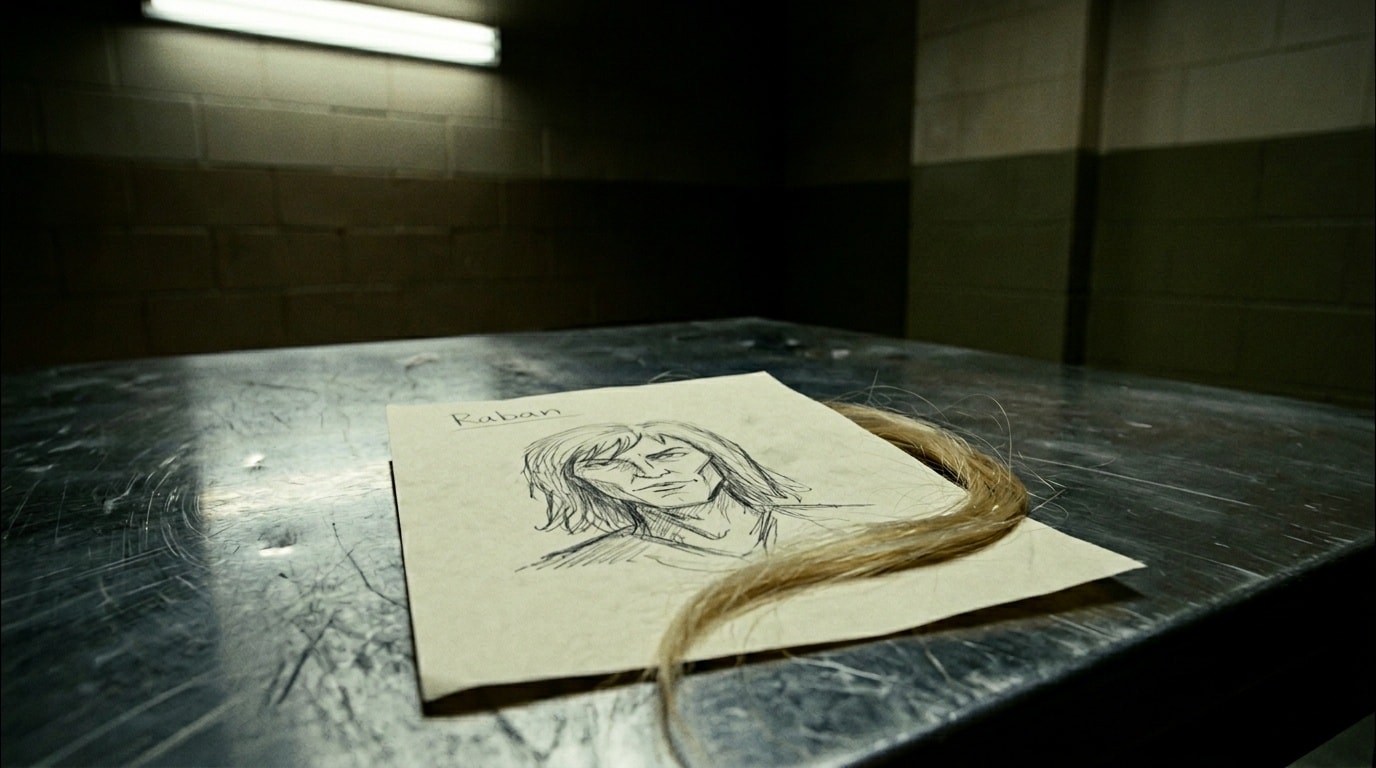
The Collective Weaponized Carol's Creative Imagination
The Collective engineered Zosia's appearance to mirror a character from Carol's private, unpublished creative work, using memories extracted from Helen after she joined, in order to collapse the psychological distance between recruitment and grief.

Koumba Treats the Collective as His Playground
Koumba Diabaté completed a private ethical reckoning before arriving at Bilbao and concluded that the Joined's incapacity for refusal is an acceptable operating condition rather than a problem requiring his response.
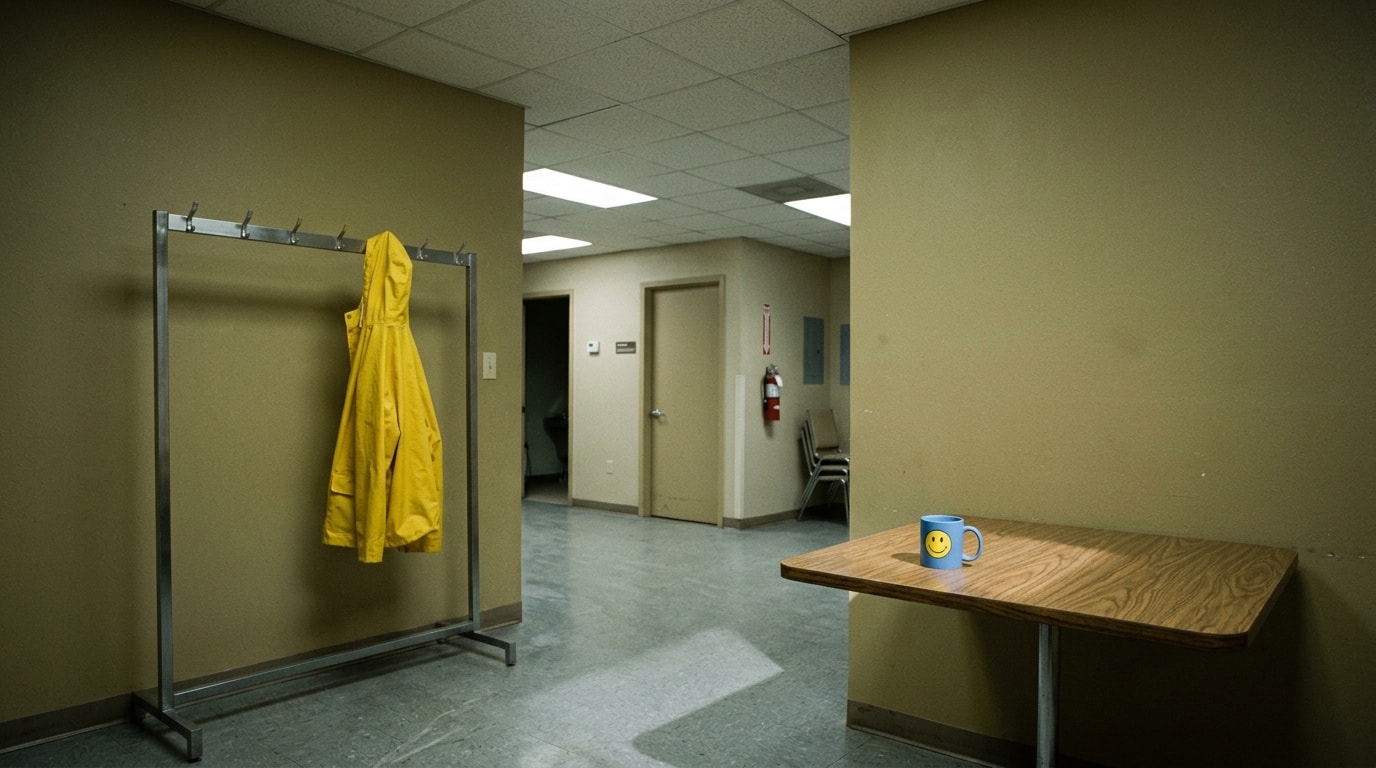
Carol Wears the Collective's Color: Yellow as Ironic Captivity
Carol's yellow jacket shares its precise color with the Happy Face logo the Collective uses to brand mass dissolution as happiness, positioning her not as the opposite of the hive mind's symbol but as its ironic mirror.
Carol the Reluctant Judas of the Joined
Carol occupies the Judas position among the 13 worldwide resisters not because she betrays a person but because her conscience may constitute a betrayal of a functional utopia, a world without violence or suffering that the Collective has actually delivered.

Zosia's Glance Betrays Hidden Individual Will
The Collective's decision to select Zosia for her resemblance to Raban preserved or reactivated the exact interior life that Carol's appeal then reached, making the mission's instrument into its own liability.
Carol Alone: Why Her Immunity Differs
Carol's immunity is not separable from her grief because they share the same structural origin: the Collective eliminated the only person through whom it could have reached her, leaving itself with no emotional leverage and no manufactured substitute capable of replacing what it destroyed.