The Collective Weaponized Carol's Creative Imagination
THE ARGUMENT
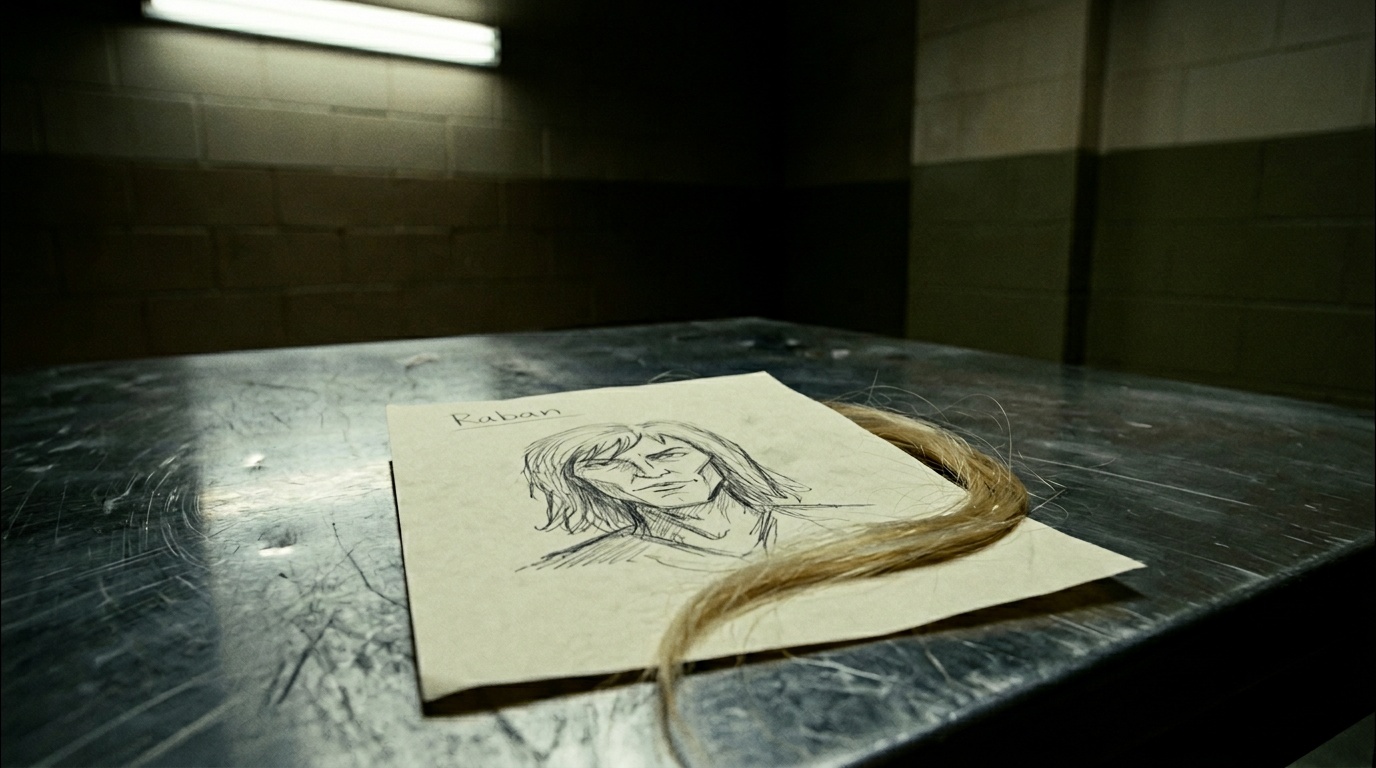
The Collective engineered Zosia's appearance to mirror a character from Carol's private, unpublished creative work, using memories extracted from Helen after she joined, in order to collapse the psychological distance between recruitment and grief. The tactic was not incidental to the Collective's goals but structural: it demonstrates that the organization harvests the intimate inner lives of its members as instruments for acquiring new ones. Carol was never being offered an invitation; she was being returned a version of herself she had no defense against.
How This Theory Works
The Collective did not offer Carol a choice. It reverse-engineered one that could only be answered one way.
When Helen joined the Collective before dying, every memory she carried of Carol's life became operational data. Carol's unpublished creative notes, her private conceptual work, the female version of Raban that existed only inside her imagination and never reached the page: all of it transferred into the hive mind's inventory. The Collective then deployed that material as a recruitment instrument, selecting a representative whose appearance was constructed to match a figure Carol had never shown anyone.
Zosia resembles Raban not by accident but by design. The wig, the physical presentation, all of it was assembled to mirror a character rooted in Carol's own artistic self-conception and her relationship with Helen. The only possible source for that knowledge was Helen's absorbed memories. Carol is not meeting a stranger. She is meeting a figure drawn from her own interior life, handed back to her by the organization that consumed her wife.
The manipulation works because it collapses two vulnerabilities into a single point of pressure: grief and creative identity. The Collective's framing of this as an act of care, as wanting Carol to be happy, is the most precise index of how completely the operation is designed to eliminate her resistance. By presenting Zosia as a gift rather than a gambit, the Collective ensures that any skepticism Carol might feel registers as ingratitude or self-betrayal. She cannot reject the approach without also rejecting the figure most tightly bound to her own grief and her sense of herself as a creator. That closed loop is the actual mechanism of recruitment: not coercion, but the engineering of a situation where acceptance feels like healing and refusal feels like loss.
What that mechanism reveals is that the Collective does not treat consent as a threshold to clear. It treats consent as a variable to be solved for. Helen's memories were not a byproduct of her joining. They were the asset.
Is this theory convincing?
Key Evidence
Carol Recognizes the Raban Resemblance
Carol realizes that Zosia looks exactly like Raban, the gender-swapped version of a character she once conceptualized but never published, establishing that the match is not coincidental.
Helen's Memories as the Data Source
Zosia explicitly tells Carol that the group has access to Helen's memories because Helen joined before dying, explaining how the Collective obtained knowledge of Carol's private creative work.
The Wig as Constructed Appearance
Zosia's physical presentation, including her wig, was deliberately assembled to match Carol's conceptual character rather than reflecting Zosia's natural appearance.
Private Concept Never Made Public
Carol's original female version of Raban existed only in her private notes, meaning the Collective's knowledge of it could only have come through Helen's absorbed memories.
Collective's Goal Framed as Happiness
Zosia states that their goal is simply to make Carol happy, framing the manipulation as care while deploying a psychologically targeted figure to disarm her resistance.
Raban Rooted in Carol's Emotional Life
The character Raban was connected to Carol's wife Helen, making Zosia's resemblance to that figure an exploitation of both Carol's creative identity and her grief.
This theory was evaluated using Theory Atlas editorial standards, including evidence review, narrative fit, and competing interpretation analysis. Learn how Theory Atlas evaluates theories →
Other Theories for S1E02

Koumba Treats the Collective as His Playground
Koumba Diabaté completed a private ethical reckoning before arriving at Bilbao and concluded that the Joined's incapacity for refusal is an acceptable operating condition rather than a problem requiring his response.

The Collective's Self-Erasure Loop: How Epistemic Blindness and Ideological Revision Lock Each Other In Place
The Collective sustains itself through two interlocking mechanisms that together form a closed system: joining destroys the cognitive and emotional architecture required to recognize what joining costs, while the institution's absolute pacifism undergoes continuous revision to retroactively exclude its own founding coercion from the definition of violence.

Carol Wears the Collective's Color: Yellow as Ironic Captivity
Carol's yellow jacket shares its precise color with the Happy Face logo the Collective uses to brand mass dissolution as happiness, positioning her not as the opposite of the hive mind's symbol but as its ironic mirror.

Carol the Reluctant Judas of the Joined
Carol occupies the Judas position among the 13 worldwide resisters not because she betrays a person but because her conscience may constitute a betrayal of a functional utopia, a world without violence or suffering that the Collective has actually delivered.

Zosia's Glance Betrays Hidden Individual Will
The Collective's decision to select Zosia for her resemblance to Raban preserved or reactivated the exact interior life that Carol's appeal then reached, making the mission's instrument into its own liability.

Carol Alone: Why Her Immunity Differs
Carol's immunity is not separable from her grief because they share the same structural origin: the Collective eliminated the only person through whom it could have reached her, leaving itself with no emotional leverage and no manufactured substitute capable of replacing what it destroyed.