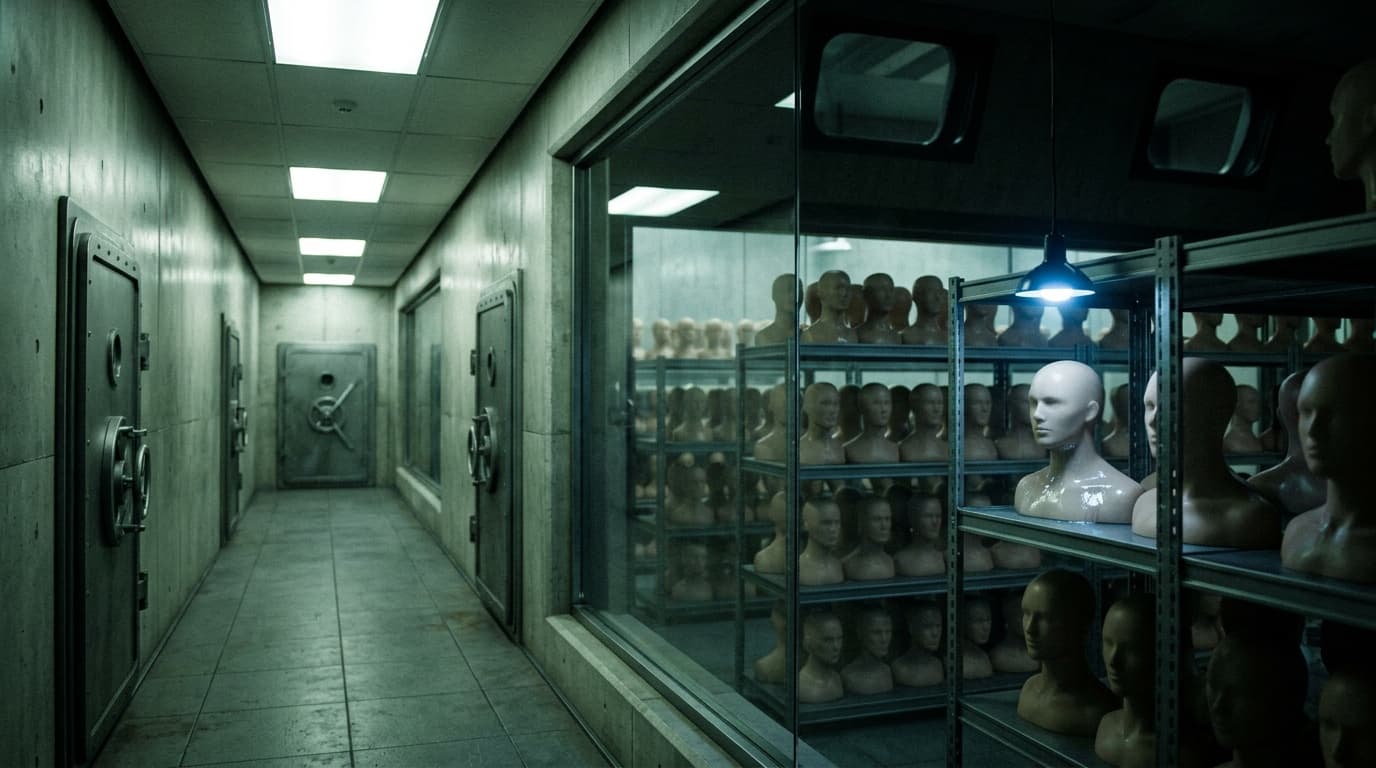
Woe's Hollow Was Always a Simulation
Plausibility Score
(?)Convinced
(?)#728
of 1000 theories
Theory Ranking
(?)READER VERDICT
Is this theory convincing?
Trend builds after 10 votes.
Be among the first to weigh in.
THEORY ASSESSMENT
The uncabled television and disappearing doppelgangers are genuinely unexplained by the episode ground truth and create meaningful inferential space for this theory, but the episode does not actively push the simulation reading and most events are consistent with a real but heavily managed outdoor location.
WHY THIS MATTERS
If the retreat was a simulation, then Lumon solved the innies' deepest longing, the desire to see the world outside, by constructing a technically perfect enclosure and calling it the outdoors. The architecture of containment was made indistinguishable from its absence, which means every future gesture Lumon makes toward employee freedom carries the same question.
Other Theories for S2E04
Helena Eagan Has Been Helly All Along
The person the MDR team has accepted as innie Helly throughout Season 2 is actually Helena Eagan, her outie, running an extended impersonation on the severed floor -- feeding information to Lumon management and using the retreat to surveil how far the group will go in defiance.
Grief Cannot Be Severed From the Body
The severance chip blocks information, but grief is not stored as information.

Kier Killed Dieter and Buried the Evidence
Kier Eagan murdered his twin brother Dieter and authored the Fourth Appendix as the sole surviving account, engineering a grotesque punitive myth that redirected culpability onto the victim.
Lumon's Retreat Is a Ritual Conviction System
The wilderness retreat in 'Woe's Hollow' functions as a closed theological system designed to make innie defiance impossible to experience as morally neutral.
Dieter Is Kier's Repressed Self, Not His Brother
Dieter Eagan was Kier's psychological projection, not his brother, a constructed figure through whom Kier could externalize and ritually destroy the desiring, undisciplined parts of himself that threatened his commercial identity.

Irving's Outdoor Past Was Never Erased
Irving's innie is not protecting a secret he was told about but one that has crossed the severance barrier without his knowledge, surfacing as instinctive defensiveness rather than retrievable memory.
Helena Slept With Mark for Reasons She Cannot Name
Helena Eagan did not sleep with Mark to secure her cover.
Lumon's Small Lies Are the Big Control
Lumon's severance procedure does not just erase memory; it surgically removes the social and epistemic infrastructure through which employees could challenge any claim the company makes.