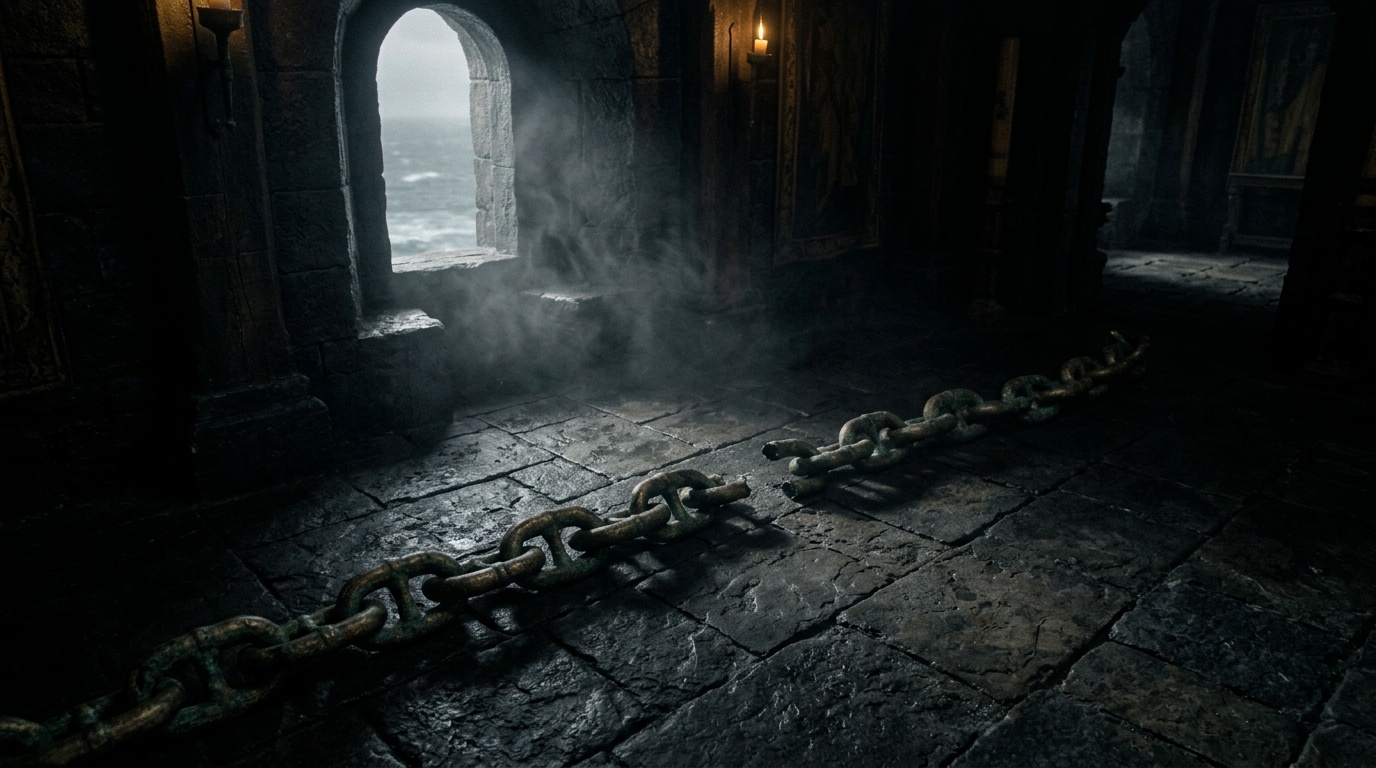
Rhaenyra's Bastard Hypocrisy Will Cost Her Navy
THE ARGUMENT
Rhaenyra's refusal to grant Addam of Hull the Velaryon name has made Corlys's continued loyalty structurally untenable, and his departure would lift the naval blockade that underpins her hold on King's Landing. Corlys has lost his wife, his legitimate children, and his castle fighting for her cause, and has now been told his surviving son is worth less than her own contested bastards. The show has not confirmed the break, but the conditions for it are fully assembled.
How This Theory Works
Rhaenyra will lose Corlys Velaryon because she has made his continued loyalty structurally impossible. She knighted the dragonseeds, including Addam of Hull, then refused to grant him the Velaryon name, citing fear that formalizing Corlys's bastard sons would compromise her own children's claims. The show has not resolved what Corlys does next. But the conditions for betrayal are fully in place.
The confrontation between them is worth sitting with. Corlys names Joffrey, Lucerys, and Jacaerys to Rhaenyra's face and demands she explain aloud why her children deserve what his cannot have. She cannot answer that question honestly without admitting that her refusal is grounded in self-protection rather than principle. Her children's legitimacy was always contested, and she accepted that fiction as political necessity. Now she declines to extend the same courtesy to the man who commands her fleet and whose legitimate heirs are dead. The hypocrisy Corlys surfaces is not rhetorical flourish; it is the logical structure of her governing position laid bare.
This contradiction connects to a broader pattern in how Rhaenyra has governed. Her working assumption has always been that symbolic recognition costs more than the material thing itself, which is why she could absorb her sons' contested legitimacy as a private arrangement while refusing to make Addam's status a formal public act. The distinction between quietly tolerating a fiction and formally authorizing one has served her until now. Corlys has made that distinction untenable. The Velaryons have twice confronted her with the same accusation, and twice she has responded by silencing rather than resolving it. Vaemond she could silence. Corlys she cannot, and the parallel to Vaemond matters precisely because it shows the house has been carrying this grievance since before the war turned desperate.
The military pressure this creates is the sharpest edge of the argument. Rhaenyra holds King's Landing under naval blockade, and that blockade is Corlys's fleet. Her position depends on sea power she does not independently control, and losing his cooperation would remove a capability she cannot replace with dragons alone. The dragonseeds she did knight, Addam included, owe their position and real allegiance to Corlys rather than to the crown. If Corlys withdraws or turns, he plausibly takes that loyalty with him, stripping Rhaenyra of riders she has already committed to her war.
The weight of this falls hardest when placed against what Corlys has already surrendered. He has lost his wife, his legitimate children, and his castle in service of her cause. His demand for legitimization is proportional to that total sacrifice, and she has declined it to protect claims she privately knows are contested. A man with nothing left to lose who has just been told his surviving son is worth less than the queen's bastards is not weighing whether to defect. He is weighing when, and in what form: a quiet withdrawal of the fleet, a direct approach to the Greens, or a demand Rhaenyra cannot meet without destroying the very fiction she has built her children's claims on. The show has spent several episodes assembling this pressure without resolving it.
Rhaenyra already governs with an empty treasury, faces religious resistance to her coronation, and has alienated significant portions of the nobility through populist redistribution. She cannot absorb the Sea Snake as an enemy. If Corlys moves the blockade, she does not hold King's Landing. That is the claim this theory is built on, and the evidence assembled so far suggests the show is building deliberately toward that rupture rather than away from it.
Is this theory convincing?
Key Evidence
Corlys Names Rhaenyra's Bastard Sons
Corlys confronts Rhaenyra by naming Joffrey, Lucerys, and Jacaerys as bastards and demanding she explain aloud why her children deserve what his do not, directly exposing the hypocrisy at the core of her refusal.
Refusal to Grant Velaryon Name
Rhaenyra agrees to knight Addam of Hull alongside the other dragonseeds but explicitly refuses to grant him full Velaryon status, citing fear that doing so would actively compromise her own children's claims to inheritance.
Corlys's Sacrifices vs. Rhaenyra's Reward
Corlys has lost his wife, his legitimate children, and his castle fighting for Rhaenyra's cause, making his demand for legitimization not a political favor but a proportional return on total sacrifice.
Addam's Loyalty Runs Through Corlys
The dragonseeds Rhaenyra did knight, including Addam of Hull, owe their position and allegiance to Corlys rather than to the crown, meaning a Velaryon defection would likely carry dragonseed riders with it.
Rhaenyra's Legitimacy Obsession Pattern
Emma Darcy's framing of Rhaenyra as becoming overly obsessed with formalized legitimacy connects the Corlys refusal to a broader governing failure pattern in which her queen prioritizes optics over securing indispensable alliances.
Parallel to Vaemond's Accusations
Corlys's demand mirrors his late brother Vaemond's earlier public accusations that Rhaenyra's sons were not true Targaryens, creating a structural echo that positions the Velaryon house as perpetually confronting Rhaenyra's bastard contradictions.
Sea Snake Controls the Blockade Fleet
Rhaenyra's hold on King's Landing depends on the naval blockade, which is Corlys's instrument of power; his anger at her refusal places that strategic asset in direct tension with her willingness to keep him loyal.
This theory was evaluated using Theory Atlas editorial standards, including evidence review, narrative fit, and competing interpretation analysis. Learn how Theory Atlas evaluates theories →
Other Theories for S3E03
The Greens Built a Throne She Could Only Lose
The Greens evacuated King's Landing rather than surrendering it, stripping the treasury, blocking ecclesiastical coronation, and coordinating an ideological campaign against dragons before withdrawing, leaving Rhaenyra to occupy a throne hollowed of every resource that makes a throne governable.

Ormund Hightower Weaponizes Rhaenyra's Own Mercy
Ormund Hightower has identified Rhaenyra's dependence on civilian legitimacy and is engineering that dependence into a military constraint.
The Faith Has Already Chosen the Greens
The Faith of the Seven has taken sides in the Dance of the Dragons, and that side is Green.
Shared Grief Quietly Binds Two Enemy Queens
Rhaenyra has shifted from treating Alicent as a prisoner to be managed toward treating her as the only person alive who understands what losing children costs.
The Throne Already Judged Her Body
The show appears to be building toward a specific narrative payoff: the legend in Fire and Blood, in which the Iron Throne rejects Rhaenyra by causing her to bleed upon it, will ultimately be traceable to this moment of concealed menstruation.

Alicent's Dead Son Gambit Protects the Living One
Alicent's advice to declare Aegon II dead serves her sons, not Rhaenyra's reign: a formal death announcement removes the crown's incentive to keep searching for Aegon while shielding Daeron from scrutiny in the field.

Tessarion's Silence Exposed Daemon's Fatal Blind Spot
Daemon's lifelong intimacy with dragon-rider bonds should have made Tessarion's silence the first thing he questioned, and it was the one thing he never questioned at all.
Daemon's Report on Sunfyre Is a Lie
Daemon's declaration that Sunfyre is 'long dead and decaying' is a single-source assertion shaped to foreclose questions he could not safely answer, with no corroborating witness and a speaker who has a documented history of deciding what version of events Rhaenyra receives.