The Faith Has Already Chosen the Greens
THE ARGUMENT
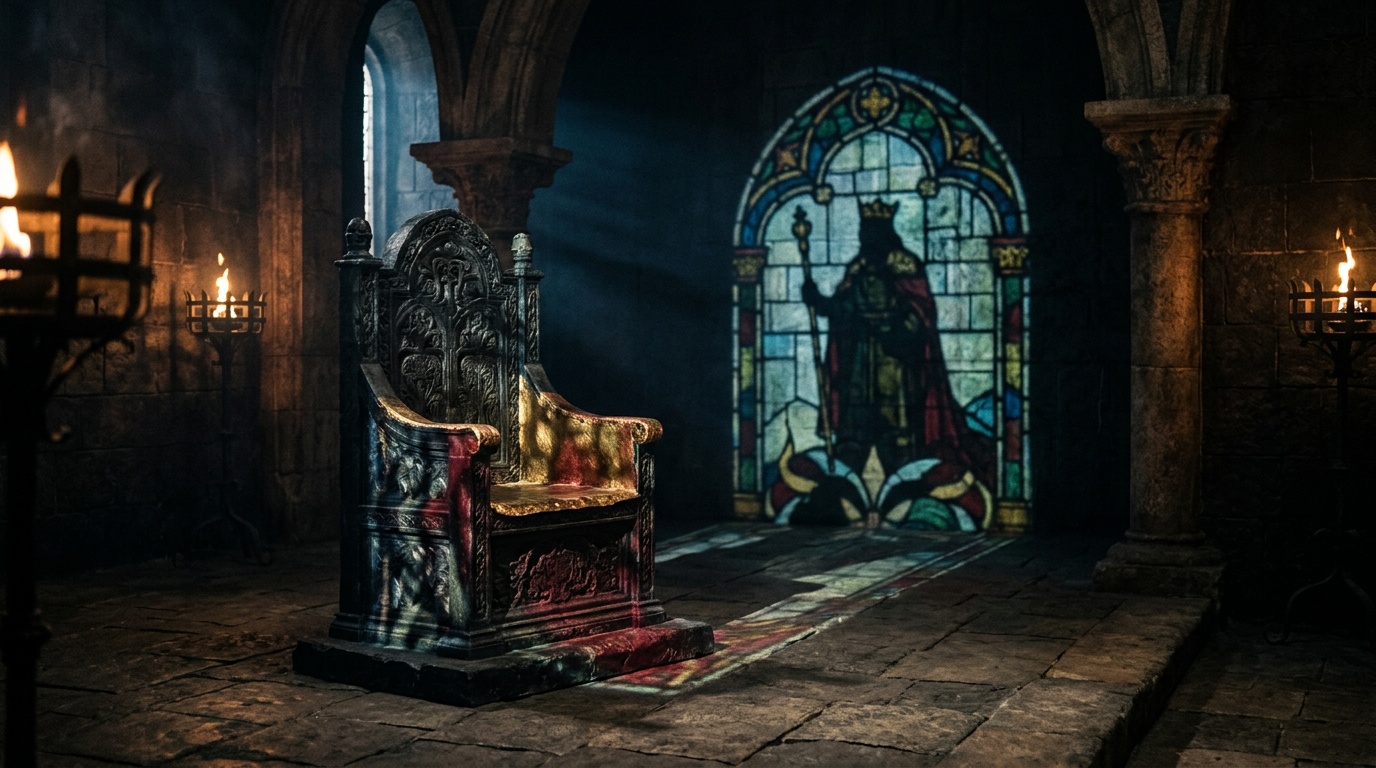
The Faith of the Seven has taken sides in the Dance of the Dragons, and that side is Green. The institution charged with consecrating Westerosi rulers was built inside the political orbit of House Hightower and has never been genuinely neutral about Targaryen dragon-rule. By blocking Rhaenyra's coronation through a procedurally impossible demand while denouncing dragons as profane magic, the Faith is running a coordinated legitimacy campaign that battlefield victories alone cannot answer.
How This Theory Works
The High Septon's demand for physical proof of Aegon II's death is worth examining on its own terms before anything else. While the Greens continue to operate as a functional military force, that proof is structurally impossible to deliver. Rhaenyra cannot produce a corpse that has yet to become one, and the High Septon is fully aware of this. The demand does not reflect a genuine evidentiary standard; it is a procedural stall dressed as a theological requirement, and its practical effect is to leave Rhaenyra governing the capital without a coronation for as long as the war persists.
That procedural obstruction becomes more pointed when paired with the Faith's public denunciation of dragons as profane magic. These two moves operate on different registers but push in the same direction. The coronation refusal denies Rhaenyra formal ecclesiastical legitimacy, the kind that allows a ruler to present herself to the lords and smallfolk as sanctified rather than merely victorious. The anti-dragon proclamation attacks something deeper: the foundational theological premise of Targaryen authority. Targaryen rule has always rested partly on the awe commanded by dragons, and the Faith is now supplying a religious vocabulary for treating that awe as impiety. Together, the two positions constitute a dual-front campaign against both Rhaenyra's formal standing and her dynasty's mythological claim to rule. Neither front requires the Faith to field an army.
The Hightower connection explains why this arrangement looks less like coincidence and more like structural alignment. The High Septon sits in Oldtown, the ancestral seat of House Hightower, and the Faith and the Hightowers have been institutionally intertwined across generations. The Greens drew their leadership from that same world: Otto Hightower was the architect of Aegon II's claim, and Alicent Hightower is the queen whose sons are fighting to hold the throne. When the institution tasked with legitimating succession happens to be headquartered in the home city of the faction most invested in one succession outcome, its neutrality deserves sustained skepticism. The Faith's current posture suggests the institution was organized within a political ecosystem that has never been oriented toward Rhaenyra, and the war has simply made that underlying alignment visible.
The historical precedent the show is invoking here sharpens the danger considerably. Maegor the Cruel fought an open war against the Faith Militant and answered the institution's resistance with fire. That precedent is not available to Rhaenyra. She is rationing food, governing a city stretched to its limits, and managing a treasury that cannot absorb a religious conflict layered on top of a civil one. Moving against the High Septon would hand the smallfolk a martyr and give the Greens a cause with genuine popular resonance. Declining to move leaves her holding the Iron Throne without a coronation, which is precisely the kind of legitimacy gap that a hidden prince and a cooperative High Septon can exploit indefinitely. The Maegor parallel suggests this dynamic is not new: the Faith has a long institutional memory for resisting Targaryens whose military supremacy is incomplete, and Rhaenyra's supremacy is very much incomplete.
The harder implication running through all of this is that the legitimacy gap Rhaenyra faces is not a temporary problem she can close by winning the right battle. The institution positioned to ratify her rule was shaped by generations of Hightower influence before the war began, and winning the war does not automatically reorganize the institution. She can take the throne, consolidate the capital, and still find herself governing without the consecration that transforms a victor into a recognized sovereign. That is what makes the Faith's posture so consequential: it converts a military conflict into a political and theological one, and in that second conflict, Rhaenyra has no equivalent institutional anchor to draw on.
Is this theory convincing?
Key Evidence
Coronation Withheld Pending Proof
The High Septon refuses to formally coronate Rhaenyra without absolute physical proof of Aegon II's death, a demand structurally impossible to meet while the Greens operate in the field.
Dragons Denounced as Profane Magic
The Faith publicly denounces dragons as 'profane magic,' attacking the theological premise of Targaryen legitimacy at its foundation rather than simply disputing the succession.
Hightower-Faith Institutional Ties
The High Septon's seat of power in Oldtown and the Hightowers' deep ties to the Faith create a structural alignment that makes the Faith's neutrality implausible and its obstruction politically legible.
Dual-Front Legitimacy Attack
The simultaneous denial of coronation and the anti-dragon propaganda campaign together constitute a coordinated assault on both Rhaenyra's formal legitimacy and her dynasty's mythological authority.
Maegor's Conflict as Historical Warning
The Faith's current posture echoes Maegor the Cruel's conflict with the Faith Militant, a precedent that ended in open religious warfare and suggests the institutional dynamic is cyclically dangerous for Targaryens who lack unchallenged military supremacy.
This theory was evaluated using Theory Atlas editorial standards, including evidence review, narrative fit, and competing interpretation analysis. Learn how Theory Atlas evaluates theories →
Other Theories for S3E03
The Greens Built a Throne She Could Only Lose
The Greens evacuated King's Landing rather than surrendering it, stripping the treasury, blocking ecclesiastical coronation, and coordinating an ideological campaign against dragons before withdrawing, leaving Rhaenyra to occupy a throne hollowed of every resource that makes a throne governable.
Rhaenyra's Bastard Hypocrisy Will Cost Her Navy
Rhaenyra's refusal to grant Addam of Hull the Velaryon name has made Corlys's continued loyalty structurally untenable, and his departure would lift the naval blockade that underpins her hold on King's Landing.

Ormund Hightower Weaponizes Rhaenyra's Own Mercy
Ormund Hightower has identified Rhaenyra's dependence on civilian legitimacy and is engineering that dependence into a military constraint.

Shared Grief Quietly Binds Two Enemy Queens
Rhaenyra has shifted from treating Alicent as a prisoner to be managed toward treating her as the only person alive who understands what losing children costs.
The Throne Already Judged Her Body
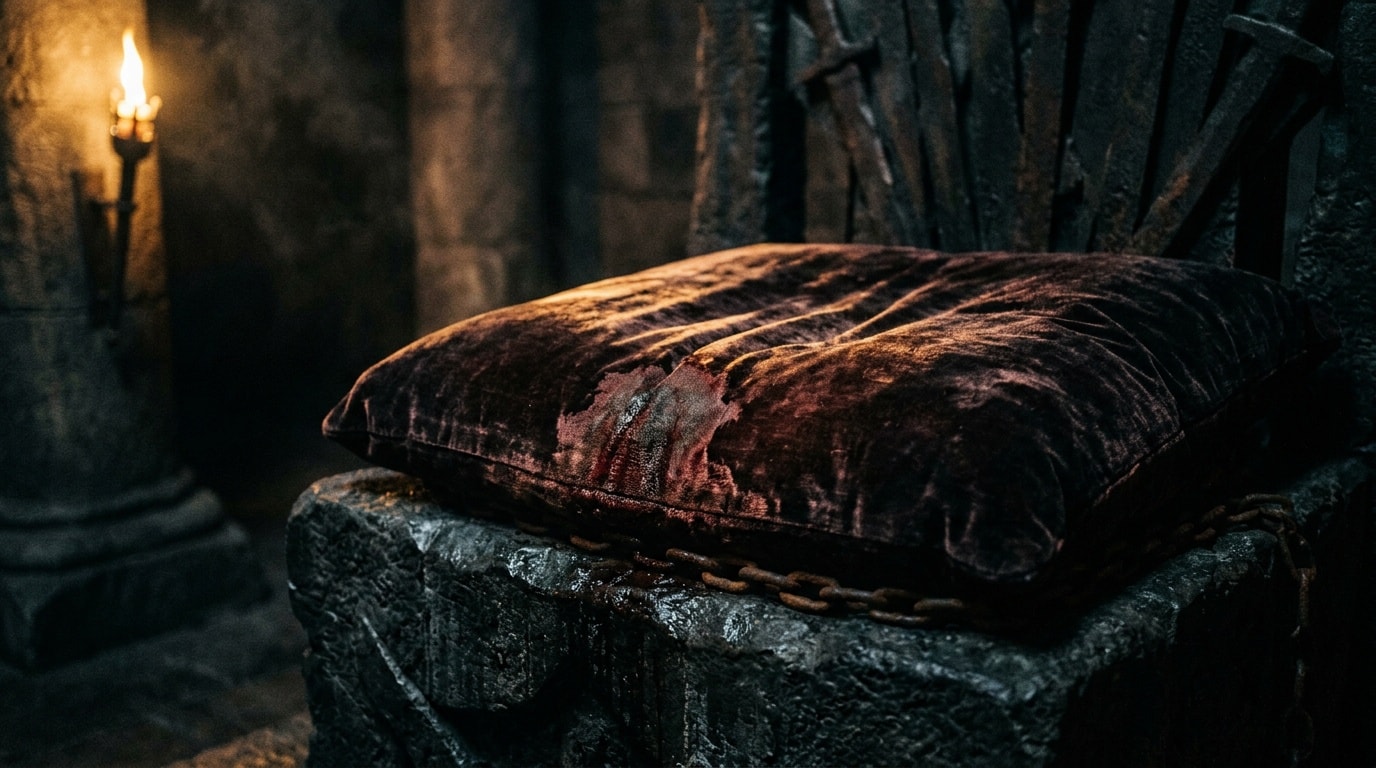
The show appears to be building toward a specific narrative payoff: the legend in Fire and Blood, in which the Iron Throne rejects Rhaenyra by causing her to bleed upon it, will ultimately be traceable to this moment of concealed menstruation.
Alicent's Dead Son Gambit Protects the Living One
Alicent's advice to declare Aegon II dead serves her sons, not Rhaenyra's reign: a formal death announcement removes the crown's incentive to keep searching for Aegon while shielding Daeron from scrutiny in the field.
Tessarion's Silence Exposed Daemon's Fatal Blind Spot
Daemon's lifelong intimacy with dragon-rider bonds should have made Tessarion's silence the first thing he questioned, and it was the one thing he never questioned at all.
Daemon's Report on Sunfyre Is a Lie
Daemon's declaration that Sunfyre is 'long dead and decaying' is a single-source assertion shaped to foreclose questions he could not safely answer, with no corroborating witness and a speaker who has a documented history of deciding what version of events Rhaenyra receives.