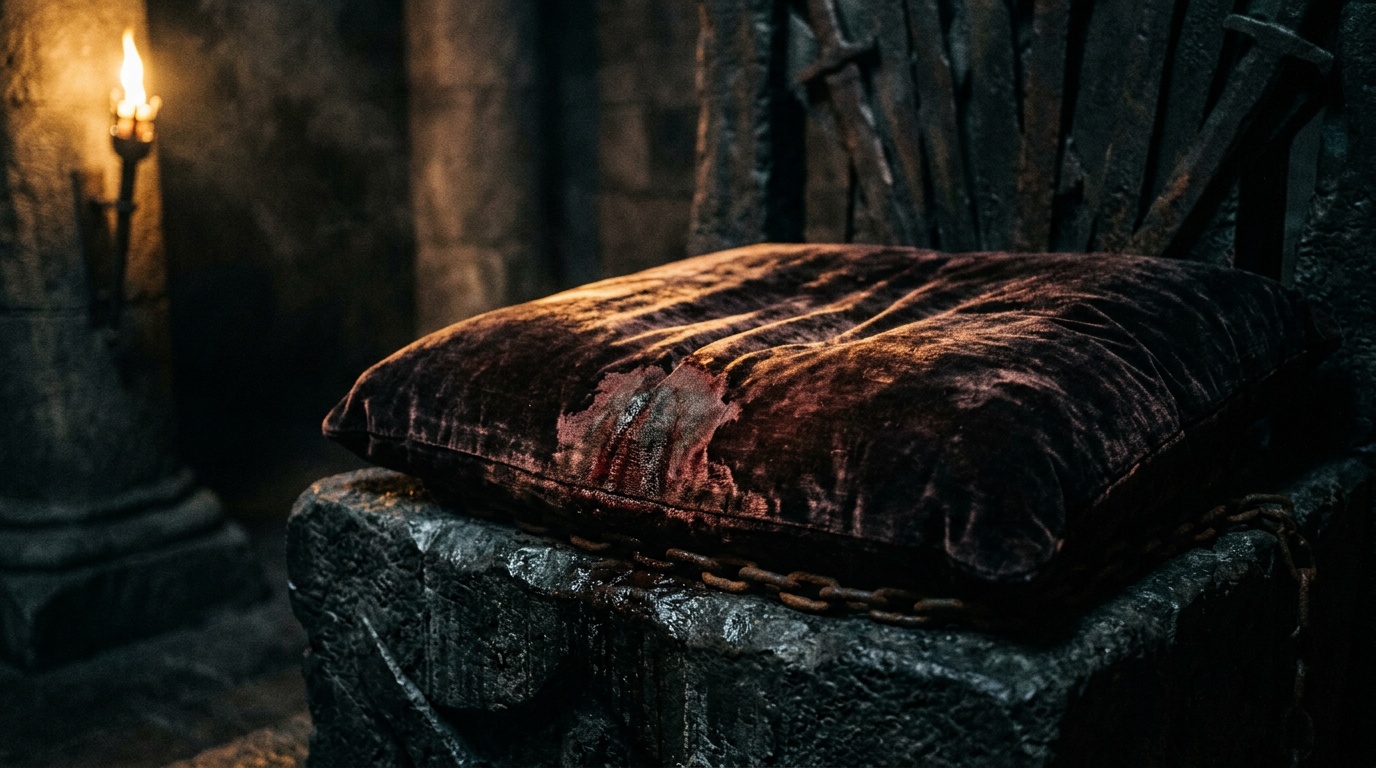
The Throne Already Judged Her Body
THE ARGUMENT
The show appears to be building toward a specific narrative payoff: the legend in Fire and Blood, in which the Iron Throne rejects Rhaenyra by causing her to bleed upon it, will ultimately be traceable to this moment of concealed menstruation. Rhaenyra's silence reads as a knowing act of self-erasure, a governing decision made in real time by a woman who understood that her experience would be converted into myth. Whether the series will make that loop explicit, or trust the audience to close it, remains unconfirmed.
How This Theory Works
Rhaenyra tells no one. Not her council, not her Hand, not a single male advisor. Only the women in her private chamber know she is menstruating on the throne during the first days of her reign. That is a political decision, arrived at under specific pressure: the High Septon is already withholding her coronation, the Faith is denouncing Targaryen rule as profane, and a queen visibly bleeding on the seat of power would give her enemies precisely the image they need. Her silence is governance. It is also, structurally, how female-specific experience gets excised from the record before anyone has to decide whether to include it.
The episode places that silence directly against the Rat Banquet, a public performance of shared privation staged to bind the smallfolk to her cause. Rhaenyra is constructing political theater while simultaneously managing a physical reality she cannot name aloud. Both are acts of rule. One produces a story the chronicles can repeat. The other vanishes. The callback to her earlier monologue about possessing the weak and feeble body of a woman but the spirit of a man positions the throne scene as a return to that same double bind, except now she is no longer making the argument to an audience. She is living it alone, with no one watching who can write it down. Her cramps compound the already severe pressures of her first days as queen, feeding a rage and exhaustion that shape her governing decisions in ways the record will attribute to temperament rather than circumstance.
The structure of witness matters here. The women in that chamber saw pain. The men who would eventually compose her reign saw nothing. This replicates, in miniature, the broader pattern by which female-specific experience shapes political outcomes without ever entering the official account. The decisions Rhaenyra makes during those first days are formed partly by what she is enduring, and that formative context will leave no trace in any chronicle.
This is where the Fire and Blood legend sharpens everything into something testable. The chronicle records blood on the throne and interprets it as the seat itself rejecting an unworthy claimant. The show's staging insists on the biological truth underneath that interpretation. The pointed and genuinely unconfirmed claim the theory makes is that Rhaenyra anticipated this transformation. She understood, in the moment, that her silence was not only protection against present enemies but a concession to the future record. The throne, designed and occupied exclusively by male rulers before her, did not judge her. The record did. And if the show intends to close that circuit explicitly, to let an audience watch a queen bleed and then watch a chronicle convert that bleeding into divine condemnation, then Fire and Blood stops functioning as ordinary unreliable narration. It becomes the proof that the chronicle was never built to record what actually happened to her body, only what could be made to mean something about her worthiness.
Is this theory convincing?
Key Evidence
Book Legend of Throne Rejection
Fire and Blood contains a line suggesting the Iron Throne rejected Rhaenyra because she was found bleeding upon it, and the show appears to be staging her menstruation as a deliberate, grounded recontextualization of that myth.
Concealment from Court and Council
Rhaenyra tells no one about her period except the women immediately around her, treating the physical experience as information too dangerous to share with any male advisors or political rivals.
Rage and Exhaustion Amplified
Rhaenyra's emotional state during her governing duties is described as more rageful and simultaneously more exhausted than usual, with her menstrual cramps given as a contributing factor that compounds the already severe pressures of her first days on the throne.
Episode One Body Lament Callback
In a prior episode Rhaenyra gave a monologue about having the weak and feeble body of a woman but the spirit of a man, and the menstruation scene in this episode functions as a return to that self-assessment, this time with the throne physically beneath her.
Female Witnesses Only
The only people who know about Rhaenyra's period are women in her private chamber, structurally replicating how female-specific experiences are systematically excluded from official political record while still shaping the decisions of those who bear them.
Throne as Site of Symbolic Judgment
The Iron Throne was designed and occupied exclusively by male rulers before Rhaenyra, and the show frames her menstruation there as a commentary on the arbitrary nature of the throne's supposed rejection of her, placing biological reality where legend placed divine condemnation.
This theory was evaluated using Theory Atlas editorial standards, including evidence review, narrative fit, and competing interpretation analysis. Learn how Theory Atlas evaluates theories →
Other Theories for S3E03
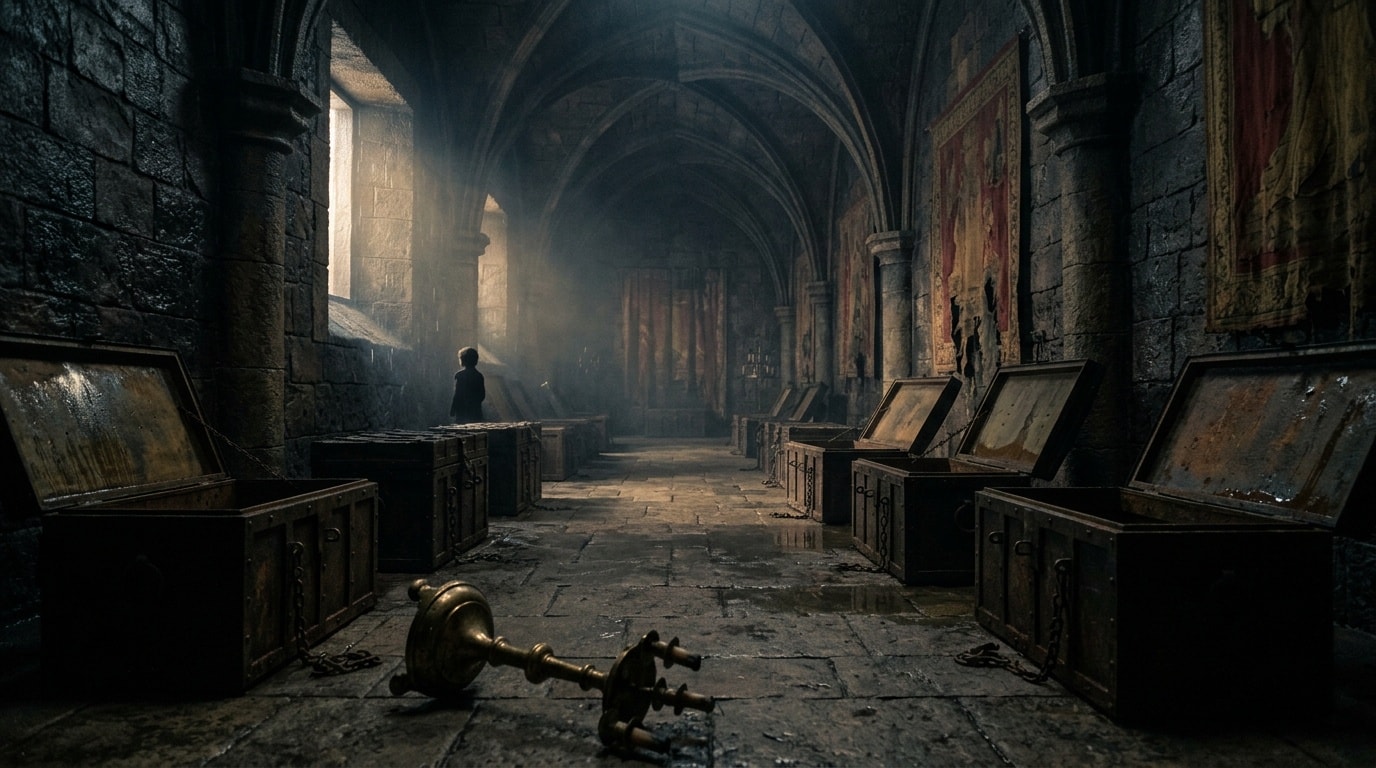
The Greens Built a Throne She Could Only Lose
The Greens evacuated King's Landing rather than surrendering it, stripping the treasury, blocking ecclesiastical coronation, and coordinating an ideological campaign against dragons before withdrawing, leaving Rhaenyra to occupy a throne hollowed of every resource that makes a throne governable.
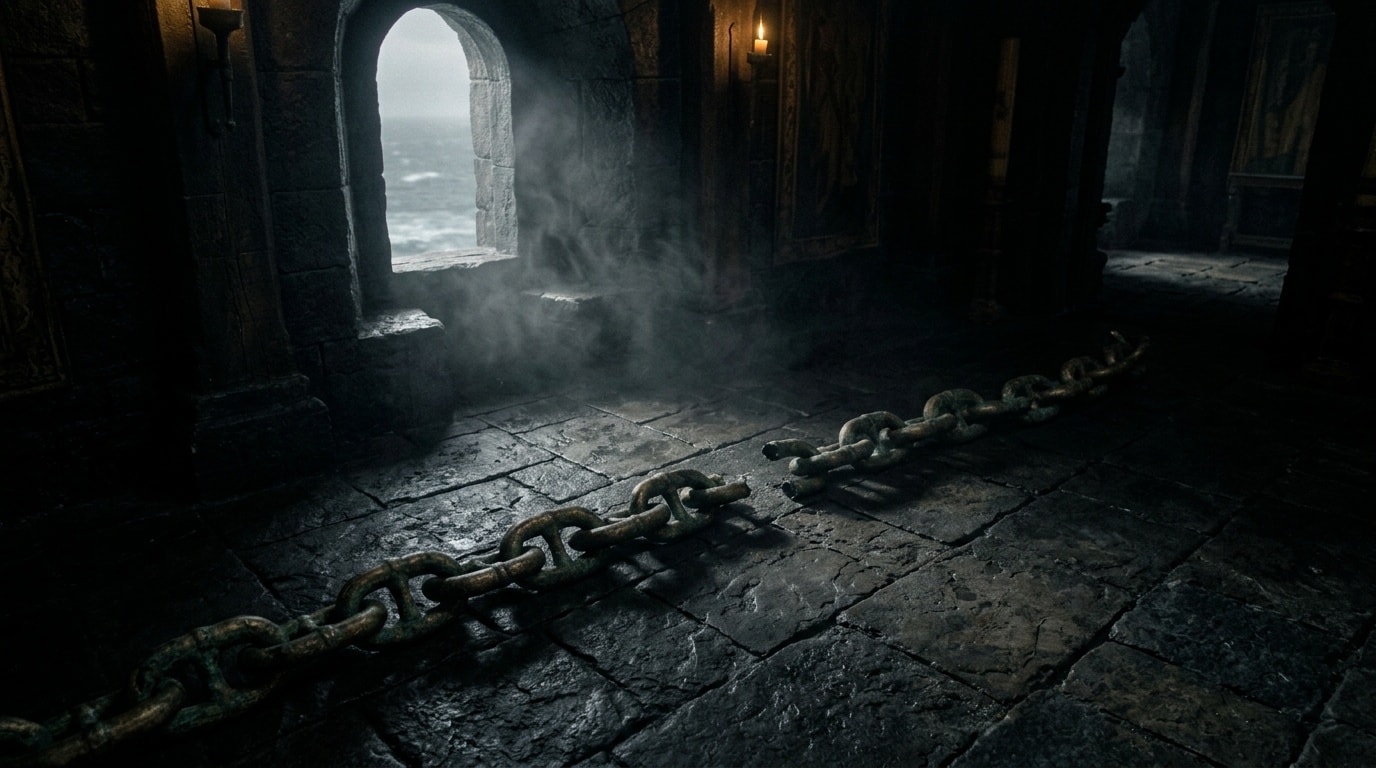
Rhaenyra's Bastard Hypocrisy Will Cost Her Navy
Rhaenyra's refusal to grant Addam of Hull the Velaryon name has made Corlys's continued loyalty structurally untenable, and his departure would lift the naval blockade that underpins her hold on King's Landing.

Ormund Hightower Weaponizes Rhaenyra's Own Mercy
Ormund Hightower has identified Rhaenyra's dependence on civilian legitimacy and is engineering that dependence into a military constraint.
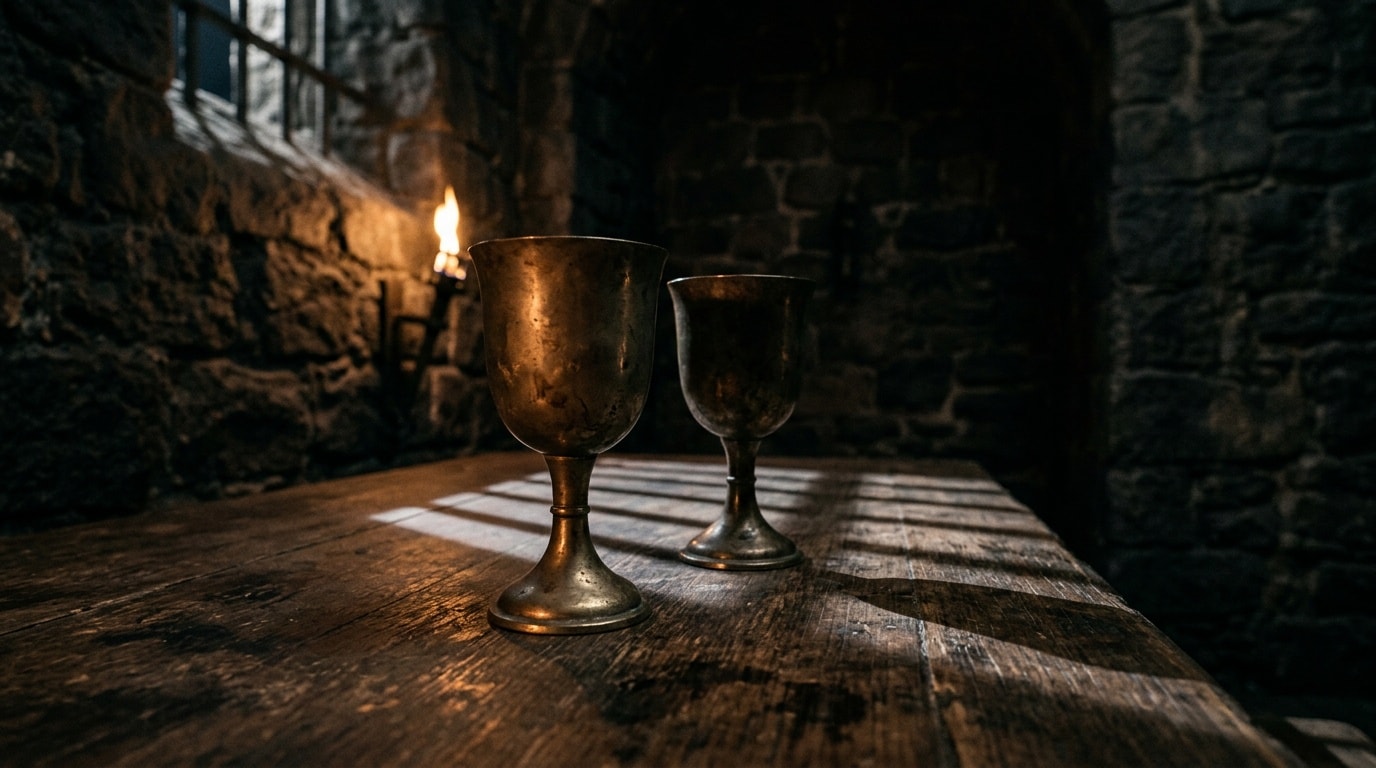
Shared Grief Quietly Binds Two Enemy Queens
Rhaenyra has shifted from treating Alicent as a prisoner to be managed toward treating her as the only person alive who understands what losing children costs.
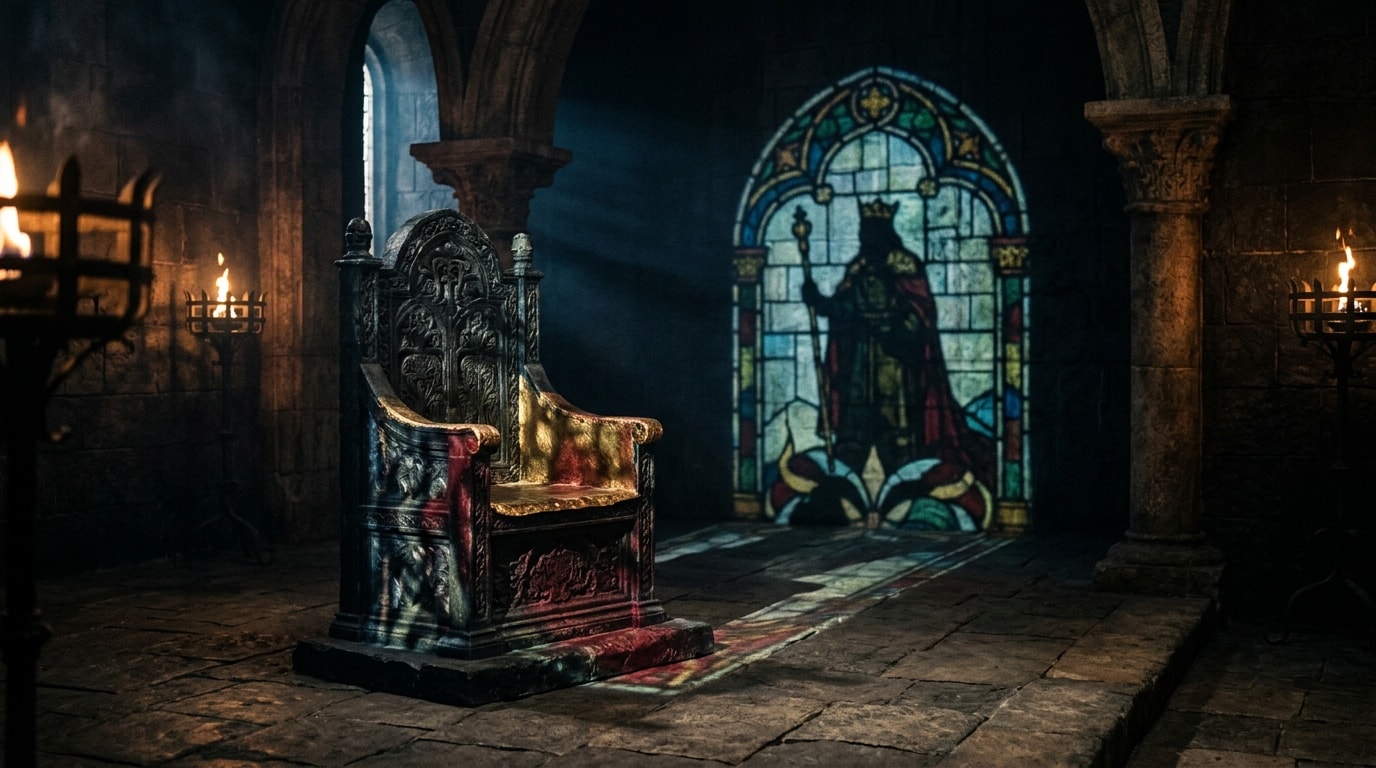
The Faith Has Already Chosen the Greens
The Faith of the Seven has taken sides in the Dance of the Dragons, and that side is Green.
Alicent's Dead Son Gambit Protects the Living One
Alicent's advice to declare Aegon II dead serves her sons, not Rhaenyra's reign: a formal death announcement removes the crown's incentive to keep searching for Aegon while shielding Daeron from scrutiny in the field.
Tessarion's Silence Exposed Daemon's Fatal Blind Spot
Daemon's lifelong intimacy with dragon-rider bonds should have made Tessarion's silence the first thing he questioned, and it was the one thing he never questioned at all.
Daemon's Report on Sunfyre Is a Lie
Daemon's declaration that Sunfyre is 'long dead and decaying' is a single-source assertion shaped to foreclose questions he could not safely answer, with no corroborating witness and a speaker who has a documented history of deciding what version of events Rhaenyra receives.